 Save
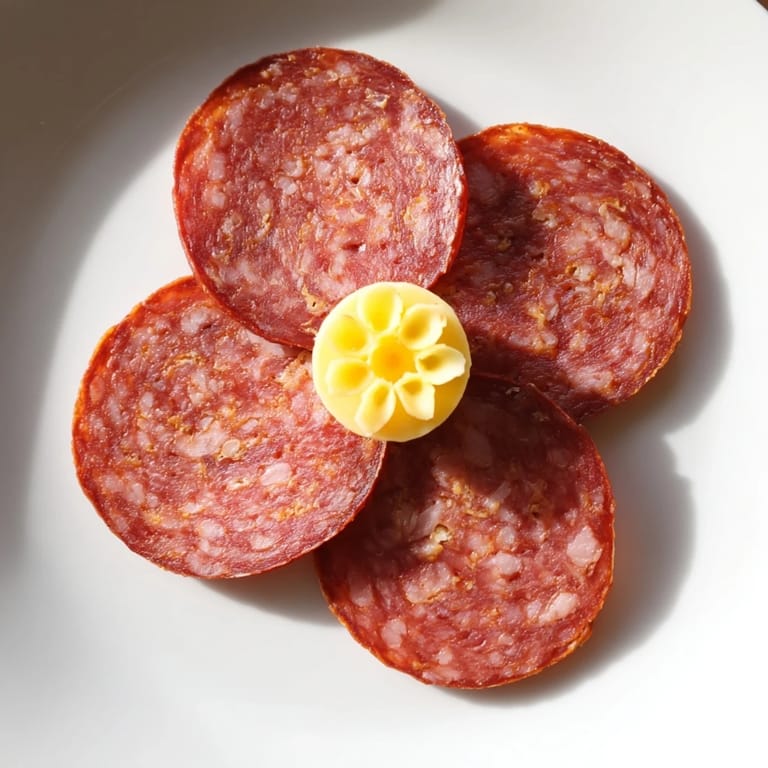
Save There's something about a charcuterie board that makes people pause mid-conversation and just stare. I discovered the Tudor Rose one afternoon while arranging salami on a plate for a friend's visit, and I realized that the simplest ingredients, when arranged with intention, become something people photograph before they eat. Five slices of salami, one button of cheese, and suddenly you've created an edible work of art that tastes as good as it looks.
I remember bringing this to a potluck where everyone else had brought elaborate hot dishes, and mine sat there looking like a tiny sculpture. A guest asked if I'd made the rose myself, and when I explained it was just salami and cheese arranged in a circle, she laughed and said it changed how she'd think about platters forever. Sometimes the best appetizers aren't about complexity, they're about seeing what's already in your pantry with fresh eyes.
Ingredients
- Salami slices: Use thin cuts about 6 to 8 centimeters across, and pick a good quality variety because these are the stars of the show and their flavor comes through clearly.
- Yellow cheese: A firm cheese like Gouda or Cheddar works best because it holds its shape and doesn't sweat or soften too quickly on the plate.
Tired of Takeout? 🥡
Get 10 meals you can make faster than delivery arrives. Seriously.
One email. No spam. Unsubscribe anytime.
Instructions
- Arrange your petals:
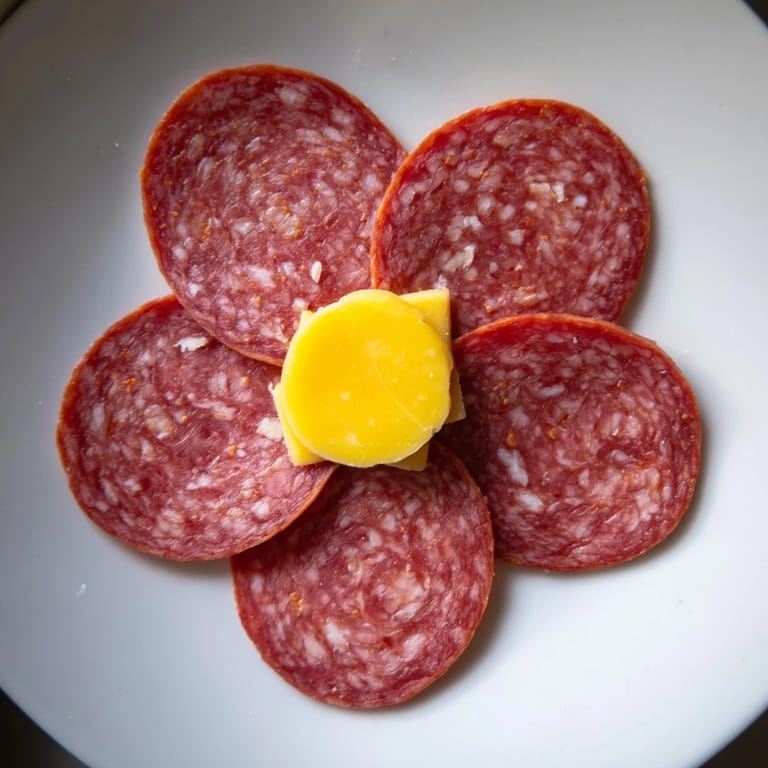
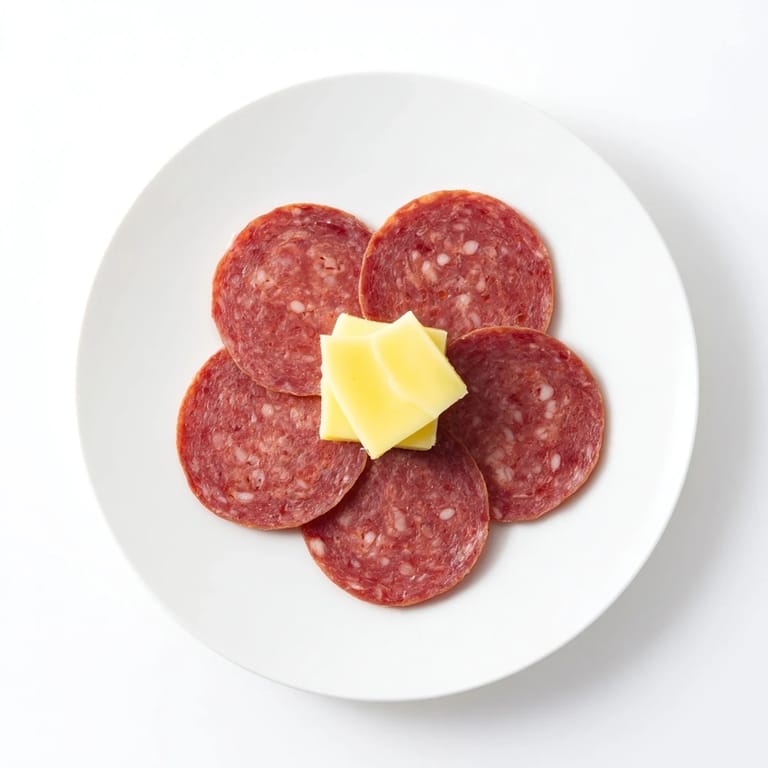
- Place the five salami slices on your plate in a circle, letting each one overlap slightly with the next so they nestle together like flower petals. The overlapping is what creates that symmetrical, intentional look.
- Add the button:
- Set the round cheese slice in the very center, right where all those salami petals meet and overlap. It should cover the inner edges and sit there like the heart of the flower.
- Fine-tune the shape:
- Step back and look at it from above, adjusting any petals that seem out of place. Symmetry is what makes this feel special, so take a moment to get it right.
- Serve with intention:
- Bring it straight to the table while the presentation is fresh and striking. If it's sitting out longer than twenty minutes, the cheese might begin to soften, so timing matters.
 Save
Save The first time I made this for my daughter's school event, I thought it was too simple, almost too obvious. But watching people stop and comment on how beautiful it was before eating it reminded me that sometimes restraint and clarity speak louder than complication. Food that's both pretty and delicious without being fussy has its own kind of elegance.
Playing with Color and Flavor
While the classic Tudor Rose uses standard salami and yellow cheese, I've experimented with different combinations depending on what's in my fridge. Prosciutto creates a softer, more delicate flower, and smoked paprika-spiced cured meat gives the whole thing a warmer tone. The cheese can shift too—I once used white cheddar and it looked almost like a daisy against the deep red meat. The structure stays the same, but the mood changes completely.
From Platter Centerpiece to Elegant Bite
This rose works equally well as a standalone appetizer or as the visual anchor of a larger board. I've learned that placing it slightly off-center on a platter, rather than dead in the middle, makes the whole arrangement feel more intentional and less rigid. Sometimes I surround it with fresh herbs like basil or parsley tucked between the petals, which adds freshness and keeps the whole thing looking alive and just-made.
Making It Your Own
The beauty of the Tudor Rose is that it invites play and personalization. I've served versions that were more rustic and versions that were meticulously symmetrical, and both had their moment. The core idea—cured meat arranged as petals with a cheese button—is a framework you can trust, not a rule you have to follow rigidly. Let your ingredients guide you and trust your eye.
- Serve with crackers or thin slices of good bread on the side to let guests compose their own bites.
- If you're making multiple roses for a larger party, assemble them just before serving so the cheese stays firm and the salami stays vibrant.
- This appetizer keeps well in the refrigerator for up to two hours, but tastes best when eaten fresh within the first thirty minutes.
 Save
Save The Tudor Rose taught me that the most memorable appetizers aren't always the most complicated ones. Sometimes they're the ones where you take two excellent ingredients and arrange them with care and intention.
Recipe Q&A
- → How do I create the Tudor Rose design?
Arrange five salami slices in a circle with slight overlaps to form a symmetrical flower, then place a round slice of yellow cheese in the center.
- → Can I substitute the salami or cheese?
Yes, feel free to use different cured meats or cheeses to customize flavors and colors while maintaining the floral layout.
- → What is the best way to serve this dish?
Serve immediately on a platter, optionally accompanied by crackers, fresh bread, or fresh herbs tucked between petals for extra color.
- → Is this suitable for gluten-free diets?
Yes, all primary ingredients are gluten-free, but double-check any accompanying items like crackers if included.
- → How can I enhance the visual appeal?
Add fresh basil or parsley between the salami petals and use a small round cutter for a neat cheese centerpiece.