 Save
Save My first encounter with hojicha was at a small tea shop in Kyoto, where the barista handed me a tiny cup of the roasted brew and smiled knowingly. Years later, I found myself standing in my kitchen wondering if that deep, toasty flavor could translate into something creamy and elegant, something that would surprise people who thought they knew panna cotta. The result was this layered parfait, which has since become my answer to the question "what dessert should we make tonight?" It feels sophisticated without the fuss, and every spoonful tastes like a quiet moment of indulgence.
I served this to my sister on a Saturday afternoon when she showed up unannounced, and her reaction to that first spoonful—the way her eyes widened, then closed as she tasted the subtle tea notes—told me everything. She kept saying "what is that flavor?" between bites, and I loved the mystery of it, the way hojicha manages to be both familiar and completely unexpected. That afternoon became the reason I make this whenever I want to turn an ordinary gathering into something memorable.
Ingredients
- Heavy cream (400 ml): The foundation of your panna cotta, and it needs to be real dairy cream for the silkiest texture; I learned this the hard way by once substituting something lighter.
- Whole milk (100 ml): This tempers the richness and lets the hojicha shine through without being overshadowed by cream.
- Hojicha tea leaves (2 tbsp): The star ingredient with its toasted, almost coffee-like character; source the highest quality you can find, as it will make a noticeable difference in depth and flavor.
- Granulated sugar (60 g): Sweetens the base while the hojicha adds its own subtle bitterness, creating a balanced flavor profile.
- Powdered gelatin (1 ½ tsp): The gentle thickener that sets without making the panna cotta rubbery; blooming it first ensures smooth, even texture.
- Cold water (2 tbsp): Used solely for blooming the gelatin, which prevents lumps from forming in your finished dessert.
- Vanilla extract (1 tsp): A quiet background note that supports the hojicha without competing for attention.
- Mixed fresh berries (150 g): Strawberries, blueberries, and raspberries provide brightness and acidity that cuts through the richness beautifully.
- Sugar for berries (1 tbsp): Optional, but macerated berries release their own juice and create a subtle syrup layer that elevates the whole dessert.
- Granola (80 g): The textural element that prevents this from feeling one-dimensional; buy quality or make your own the day before so it stays crisp.
Tired of Takeout? 🥡
Get 10 meals you can make faster than delivery arrives. Seriously.
One email. No spam. Unsubscribe anytime.
Instructions
- Bloom the gelatin:
- Sprinkle the powdered gelatin over cold water in a small bowl and let it sit for five minutes without stirring. It will look like a damp sponge when ready, and this step is non-negotiable if you want a smooth texture.
- Heat the cream base:
- Pour cream and milk into a saucepan and turn the heat to medium, watching until small bubbles form around the edges. You want it hot but not actively boiling, which would scald the dairy and create an unpleasant flavor.
- Steep the hojicha:
- Add the tea leaves to the hot cream, cover the saucepan, and step away for ten minutes. The kitchen will fill with that toasty, almost caramel-like aroma, which is your signal that the flavors are extracting beautifully.
- Strain and sweetify:
- Pour the mixture through a fine mesh sieve into a bowl, using the back of a spoon to gently press the leaves and extract every last bit of flavor. Return the infused cream to the saucepan, add sugar, and heat until the sugar dissolves completely, but do not let it boil.
- Bring it together:
- Remove from heat and immediately stir in your bloomed gelatin, whisking until you see no granules, then add vanilla extract. The hot cream will melt the gelatin perfectly, creating a silky base.
- Set the panna cotta:
- Pour the mixture into four serving glasses until they're just under halfway full, then transfer to the refrigerator for at least four hours. I usually do this step in the morning so it's ready by evening, though overnight is even better.
- Prepare the berries:
- Toss your mixed berries with sugar if desired and let them macerate for ten minutes, which allows them to release their juices and soften slightly. This creates a beautiful fruit syrup that pools at the bottom of each glass.
- Assemble the parfait:
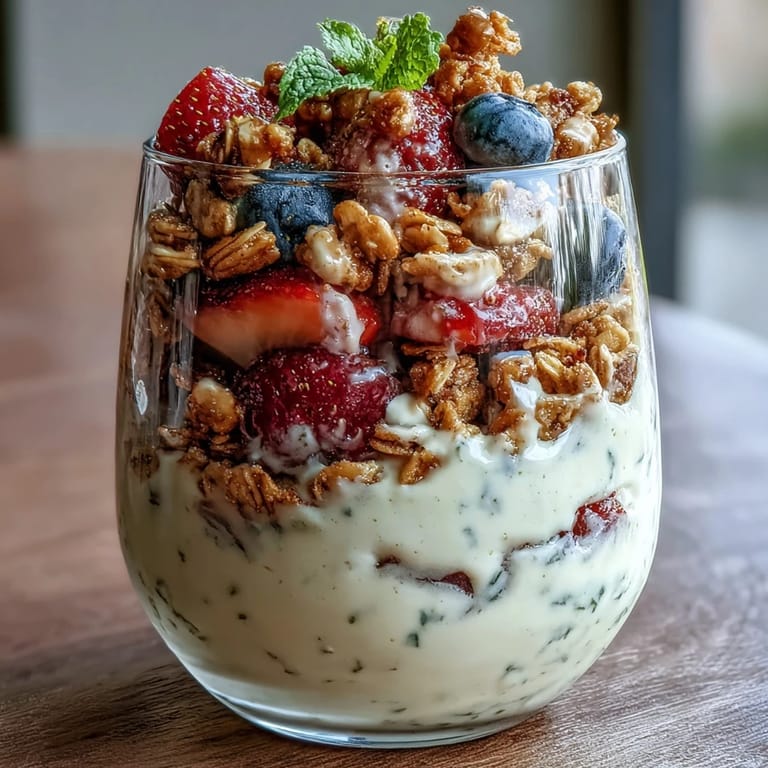
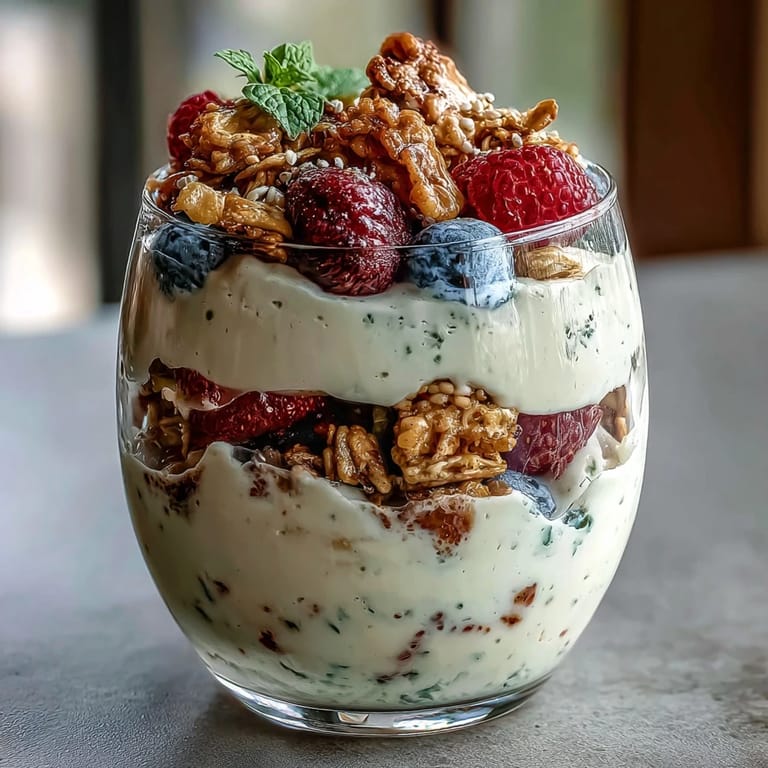
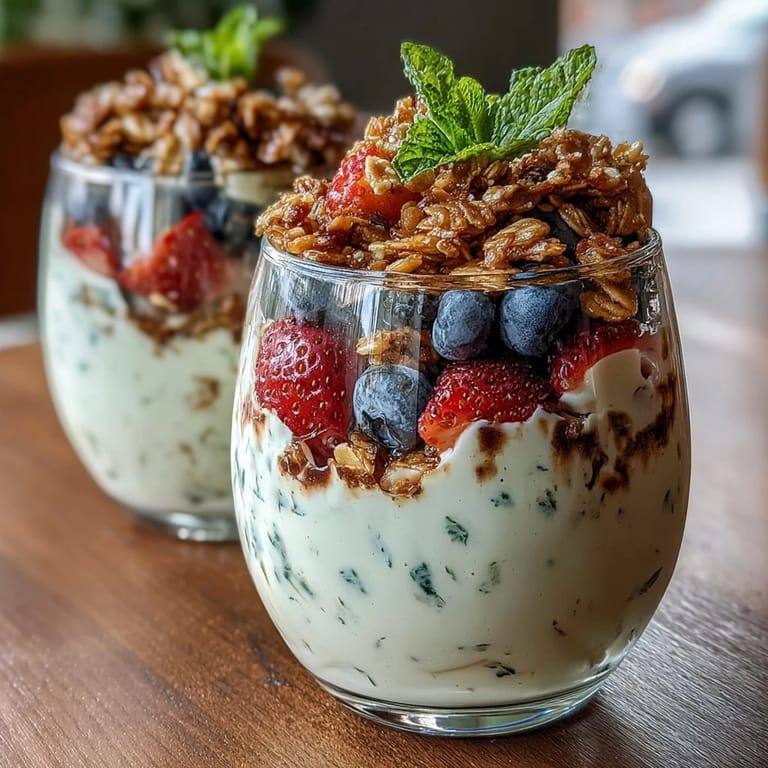
- Once the panna cotta is set and quivery to the touch, spoon granola over the top, then generously layer the berries and their juices. You can repeat the layers if you like a taller dessert, and serve immediately so the granola stays wonderfully crunchy.
 Save
Save There's something almost meditative about layering these parfaits, watching the creamy hojicha base disappear under a spoonful of granola, then crowning it all with jewel-like berries. What started as a kitchen experiment became a dessert that makes people slow down and actually taste what they're eating, rather than rushing through something sweet.
The Hojicha Difference
Hojicha is roasted green tea, and that roasting process transforms the flavor profile into something completely different from its unroasted counterpart. It's less grassy and more toasted, with hints of caramel, hazelnut, and cocoa that make it feel sophisticated without being harsh. When I first experimented with it in panna cotta, I was honestly skeptical that the subtle tea flavor would survive the cream, but it does—it becomes this warm, understated presence that makes you wonder what makes this dessert taste so interesting.
Making It Your Own
The beauty of this recipe is that it invites small variations that keep it fresh. I've made it with matcha for a brighter green tea version, and I've also played with the berry selection depending on the season—blackberries and raspberries in summer, pomegranate arils in winter. The granola layer is equally flexible; I sometimes swap it for crushed pistachios or candied nuts if I want to change the flavor profile, and it's still absolutely delicious.
Storage and Make-Ahead Tips
The panna cotta base can be made up to two days ahead and kept covered in the refrigerator, which makes this dessert incredibly convenient for entertaining. The berries are best macerated no more than an hour or two before serving so they don't become mushy, and the granola should stay in an airtight container until the last possible moment. The entire assembled parfait is best enjoyed within thirty minutes of layering, though the panna cotta and berries will keep for a day if you're okay with slightly softened granola.
- Make the panna cotta base the day before, which actually allows the flavors to settle and become even more cohesive.
- Assemble no more than thirty minutes before serving to preserve that crucial crunch and textural contrast.
- Store leftover panna cotta covered with plastic wrap, and eat the leftovers with a spoon straight from the glass, granola texture be damned.
 Save
Save This dessert has become my quiet way of showing people that simple ingredients can feel elegant and surprising when treated with a little attention and care. Serve it chilled, alongside maybe a cup of hot hojicha tea if you want to create a moment that lingers long after the last bite.
Recipe Q&A
- → What does hojicha taste like?
Hojicha is roasted Japanese green tea with earthy, nutty notes and a mild sweetness. It has less caffeine than other green teas and a warm, toasty flavor that pairs beautifully with creamy desserts.
- → Can I make this ahead of time?
The panna cotta layer can be prepared up to 2 days in advance and stored covered in the refrigerator. Add the granola and berry layers just before serving to maintain the crisp texture of the granola.
- → How do I know when the gelatin is fully bloomed?
Sprinkle the powdered gelatin over cold water and let it sit for 5 minutes. The mixture will absorb the water and become soft, spongy, and wrinkle-free when properly bloomed.
- → What can I substitute for gelatin?
For a vegetarian option, use agar-agar powder following package instructions. Alternatively, prepare a vegan version using coconut cream and agar-agar instead of dairy and gelatin.
- → How long should the tea steep?
Allow the hojicha leaves to steep in the hot cream mixture for 10 minutes, covered. This extracts maximum flavor while preventing the tea from becoming bitter. Strain well, pressing the leaves to release all the infused cream.
- → Can I use other berries?
Any combination of fresh berries works wonderfully. Try sliced strawberries, blueberries, raspberries, blackberries, or even diced stone fruits like peaches or plums when in season.