 Save
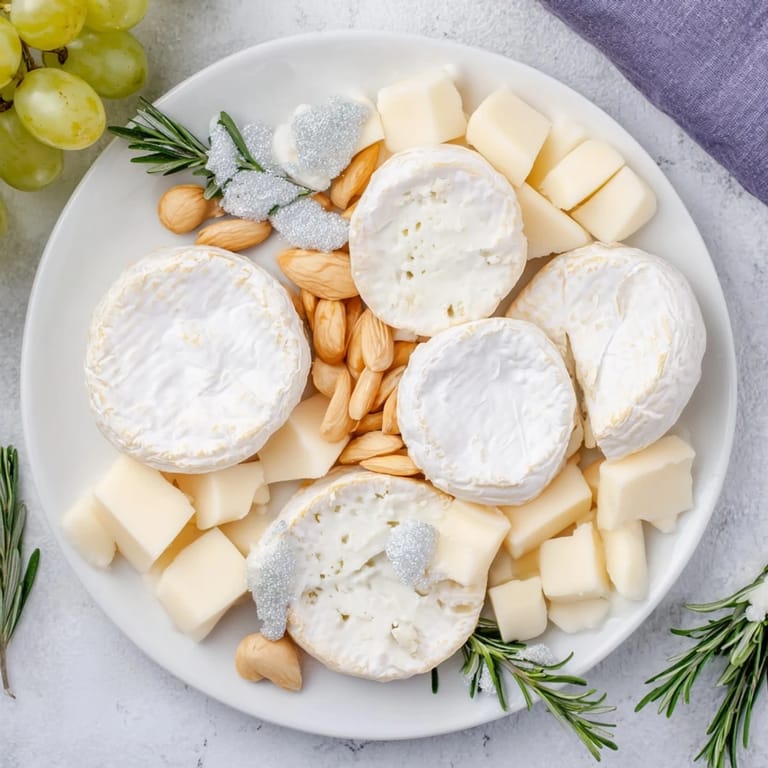
Save I'll never forget the moment I decided to host a winter dinner party on the coldest night of December. My kitchen was filled with soft candlelight and the faint scent of pine, and I wanted my appetizer board to match that magical feeling. That's when the Winter Wonderland Platter was born—a stunning arrangement of pale cheeses, silvery accents, and frosty garnishes that looked like it belonged in a snow globe. My guests walked in, and their eyes went straight to the board. It became the centerpiece everyone gravitated toward, and I realized that sometimes the most memorable moments around food have nothing to do with cooking and everything to do with presentation and thoughtfulness.
I remember my friend Maria arriving early that evening, and before she even took off her coat, she leaned over the board and gasped. She said it looked too beautiful to eat, but then grabbed a slice of Brie with a water cracker, dusted her fingers with a tiny bit of edible silver, and laughed like a kid. That's when I knew I'd created something special—not just food, but an experience that made people slow down and savor the moment.
Ingredients
- Fresh goat cheese (200 g): This is your creamy anchor, bringing a subtle tang that balances the sweetness of the honey and white chocolate. Leave it out of the fridge for 15 minutes so it's spreadable and soft.
- Brie or Camembert (150 g): Trim that rind if you want a completely white appearance, though honestly, a bit of it adds texture. It should be soft enough to yield gently to a knife at room temperature.
- Mild white cheddar or mozzarella (100 g, cubed): These cubes give your guests something to pick up and pop in their mouth without needing a cracker—they're little flavor pockets of comfort.
- Blanched almonds (100 g): Their pale color is crucial to the aesthetic, and they offer a satisfying crunch that pairs beautifully with soft cheeses.
- Macadamia nuts (100 g): Buttery and mild, they feel luxurious and elevate the board from simple to special.
- Dried white mulberries or white raisins (100 g): These add pops of subtle sweetness and texture, almost like little jewels scattered across your board.
- Fresh green grapes (1 small bunch): Their slight tartness cuts through the richness, and their juiciness is a refreshing contrast to nuts and cheese.
- White rice crackers (200 g) and plain water crackers (100 g): The rice crackers are naturally gluten-free, which is why I love them, but both offer neutral bases for cheese and spreads.
- Baguette slices, lightly toasted (1 small baguette): Toast them just until they're golden and crisp, which keeps them from absorbing moisture and becoming soggy as the board sits.
- Edible silver leaf or metallic dragées: Food-grade ones only—these are your magic dust, the finishing touch that makes guests feel like they're eating something from a winter fairytale.
- White chocolate curls: Shave these from a white chocolate bar using a vegetable peeler, and add them just before serving so they don't melt or get lost.
- Light blue sugared almonds or Jordan almonds: These tiny treasures add color contrast and a hint of nostalgia, like candy from your childhood.
- Fresh rosemary sprigs, dusted with powdered sugar: This is your snowy evergreen touch—brush them lightly with water or egg white and dust with powdered sugar for a frosted effect that lasts.
- Honey or white fig jam (1/4 cup): Honey is my preference because it's clear and golden, but white fig jam works beautifully too. Drizzle it into a small ramekin rather than on the board itself.
- Greek yogurt dip or whipped ricotta (1/4 cup): This creamy element gives guests a dip option that feels lighter than cheese but equally indulgent. Whip the ricotta with a bit of honey and lemon zest if you're using it.
Tired of Takeout? 🥡
Get 10 meals you can make faster than delivery arrives. Seriously.
One email. No spam. Unsubscribe anytime.
Instructions
- Start with your foundation:
- Take your large serving board out and let your eyes drift across it for a moment. Picture where each element will live. The cheeses should anchor the center—arrange them in a loose triangle or circle, leaving about an inch between each piece so guests can slide a knife in easily.
- Create the cracker landscape:
- Fan out your crackers and toasted baguette slices around the cheeses like you're laying down a path. Vary the angles and layers so it looks abundant and inviting, not stiff or formal. White rice crackers fan beautifully, so use them as your base and tuck water crackers and toasted bread between them.
- Scatter the nuts and fruits:
- Fill small bowls with blanched almonds, macadamia nuts, dried mulberries, and grapes. Place these bowls at different points around the board—think of them as little islands of variety. This gives guests options and makes the board feel fuller without overwhelming it.
- Add your wet elements:
- Set small ramekins of honey and yogurt dip at two opposite corners of the board. Make sure they're positioned where someone can easily reach them without disturbing other items.
- Introduce sweetness and whimsy:
- Now for the fun part—sprinkle white chocolate curls over empty spaces, especially near the pale cheeses and crackers where they'll contrast beautifully. Tuck light blue sugared almonds into little pockets and clusters. This is where the board transforms from nice to magical.
- Bring in the frost:
- Take your rosemary sprigs that you've dusted with powdered sugar and position them strategically around the board, almost like little evergreen trees in a snowy landscape. They're both decorative and functional—guests can actually eat them or use them as aromatic accents.
- Add your signature sparkle:
- If you're using edible silver leaf, tear it into small, delicate pieces and place them near the white cheeses or scattered across the board. If you prefer dragées, place them gently in clusters. This is your finishing touch—it should feel purposeful but not overdone.
- Serve with intention:
- Bring the board to the table immediately, or if you made it ahead, cover it loosely with plastic wrap and remove it about 10 minutes before guests arrive. All those pale cheeses taste better when they're not ice cold, and the board will feel fresher. Make sure small plates, napkins, and cheese knives are within arm's reach.
 Save
Save I think of that winter dinner party every time December rolls around, and I remember how my guests lingered around that board even after the main course was cleared. It became the thing they talked about most, not because the ingredients were rare or expensive, but because the care and intentionality showed. That's when I understood that a beautiful board is about creating a moment where people feel celebrated.
The Art of White Palette Design
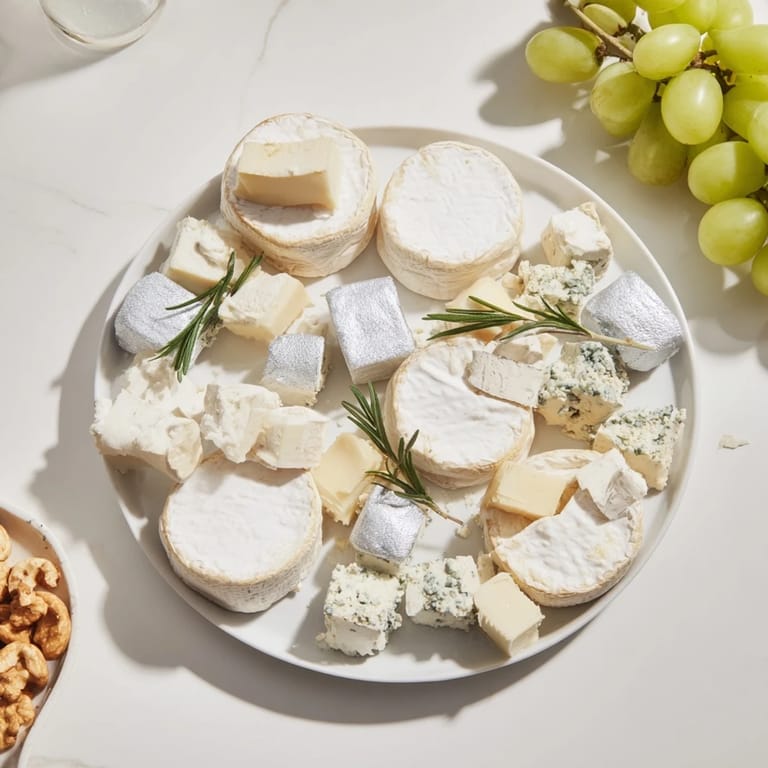
Creating a cohesive white and pale winter board requires thinking about texture and tone as much as color. Not all whites are created equal—some are bright and pure, others are warm and creamy, and some lean slightly blue. Goat cheese has a cool, bright white, while Brie is warmer and softer. Playing these against each other creates visual interest without breaking your color story. I learned this by accident when I added pale blue Jordan almonds and suddenly realized they weren't breaking the palette—they were completing it by echoing the subtle cool tones in the white chocolate and edible silver. The board feels unified because each element respects and builds on the others.
Choosing Your Cheeses Wisely
The beauty of a cheese board is that you can rearrange it slightly based on what's available or what you're craving. For this winter version, I gravitate toward cheeses that are naturally pale or have their whiteness accentuated by trimmed rinds. Goat cheese is your constant—creamy, tangy, and always white. But beyond that, you have flexibility. Ricotta salata works gorgeously, as does a really good fresh mozzarella or a mild English white cheddar. I've even used whipped cream cheese mixed with a tiny bit of white chocolate as a spread, which sounds odd but tastes like a sweet secret. The key is ensuring everything tastes good together, not that you follow an ingredient list exactly.
Timing, Prep, and Making It Look Effortless
The beauty of this board is that it looks like you spent hours when you really spent 20 minutes. But those 20 minutes matter. I prep everything the night before—toast the bread, wash the grapes, dust the rosemary, and arrange the nuts in small bowls. The morning of, I cut the cheeses, arrange them with the crackers, and hold everything in the fridge under plastic wrap. Then about 30 minutes before guests arrive, I pull it out, add the white chocolate curls (which melt slightly if they sit too long), sprinkle the final touches, and let it breathe at room temperature. This means I'm not stressed when people arrive, and I can actually be present instead of running between the kitchen and dining room.
- Cube your cheddar or mozzarella while the cheese is still cold—it's easier to handle and holds its shape better on the board.
- Use a damp paper towel to gently clean your rosemary sprigs before dusting them, which helps the powdered sugar stick and look more intentional.
- If you're adding the board to a table that will be warm, use a chilled board or even place ice packs underneath it wrapped in a tea towel—cheeses should stay cool but not cold.
 Save
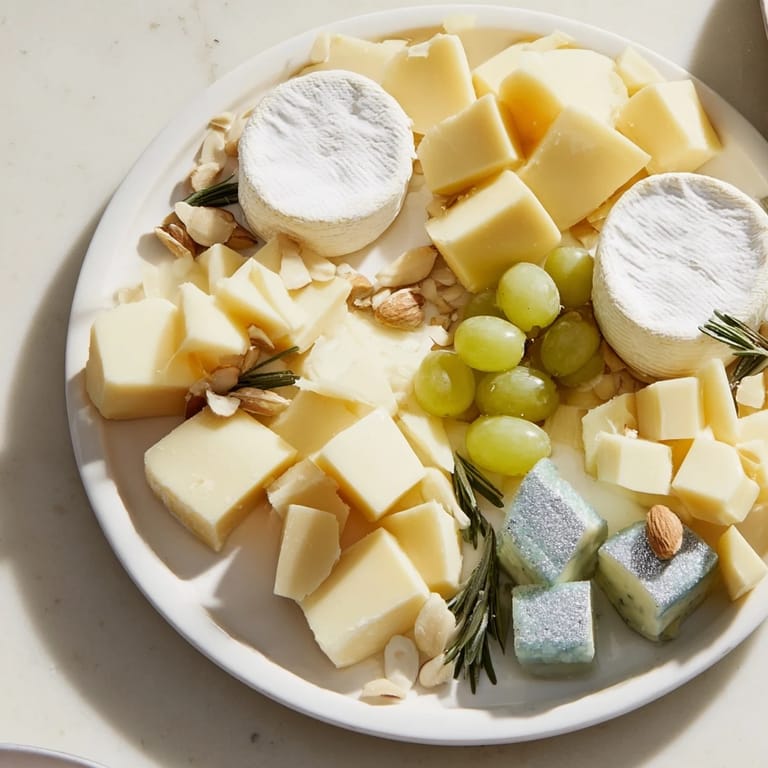
Save Every time I make this board, I remember that food is ultimately about connection. The Winter Wonderland Platter is my way of saying to people, you matter enough for me to make something beautiful.
Recipe Q&A
- → Can I substitute the cheeses for others?
Yes, pale cheeses like ricotta salata or Havarti work well and maintain the frosty theme.
- → How can I make this platter vegan-friendly?
Use plant-based cheeses and dips to replace dairy options for a vegan-friendly spread.
- → Are the silver leaf and dragées safe to eat?
Ensure you use food-grade edible silver leaf or metallic dragées specifically intended for culinary use.
- → What drinks pair nicely with this platter?
Dry sparkling wine or crisp Sauvignon Blanc complement the flavors and textures beautifully.
- → What are gluten-free options on this board?
Opt for white rice crackers and gluten-free bread to keep the platter suitable for gluten-sensitive guests.