 Save
Save One Tuesday afternoon, I was staring into my nearly empty fridge wondering how to turn roasted vegetables and leftover quinoa into something that felt intentional rather than thrown together. The answer came when I warmed up a simple vinaigrette and tossed it with fresh greens—they wilted just enough to feel luxurious, and suddenly all those separate components became something I actually wanted to eat. That warm salad bowl changed how I think about lunch, transforming it from an obligation into something I genuinely crave on cool days.
I made this for my brother on a gray November evening when he was going through a rough patch, and watching him finish the entire bowl without looking up from his fork told me everything. Food like this—warm, nourishing, without pretense—has a way of saying things you can't quite articulate. He's requested it nearly every time he visits since.
Ingredients
- Quinoa or brown rice: The foundation that anchors everything; I rinse quinoa to remove its natural bitter coating, a step that makes a surprising difference in flavor.
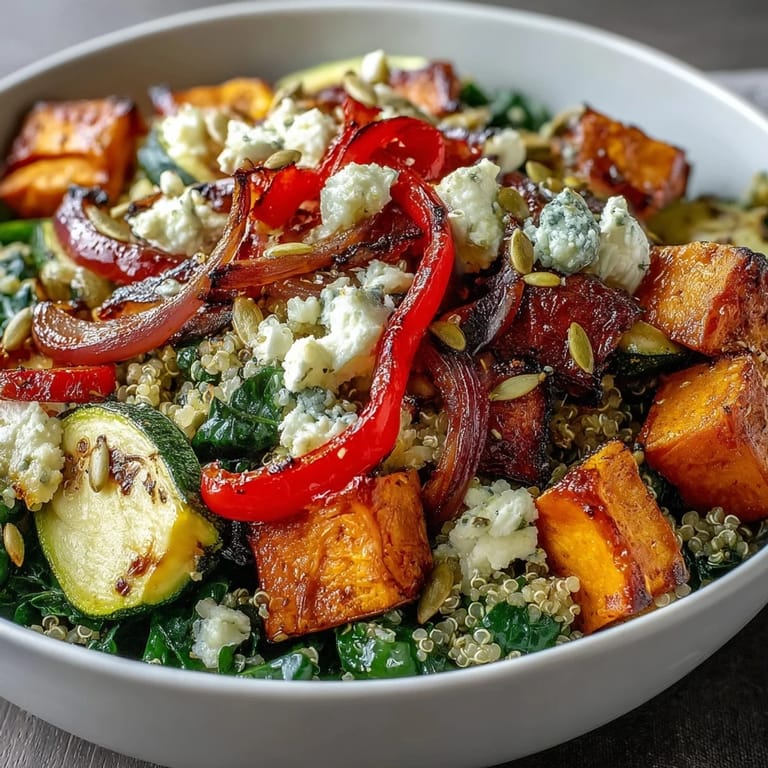
- Sweet potato, red bell pepper, red onion, zucchini: This particular combination of vegetables roasts at the same pace and creates natural sweetness and earthiness together.
- Smoked paprika: A single teaspoon adds depth that regular paprika simply cannot deliver, giving the roasted vegetables a subtle complexity.
- Baby spinach or kale: Kale holds up better to the warmth of the vinaigrette, but spinach wilts into something silky if that's what you have.
- Apple cider vinegar: The acidity cuts through the richness of the oil and brings everything into focus.
- Dijon mustard: This acts as an emulsifier, helping the vinaigrette cling to the greens and vegetables rather than just pooling at the bottom.
- Honey or maple syrup: A small amount balances the vinegar's sharpness and rounds out the flavor profile.
- Feta or goat cheese: Optional but recommended; the tang complements the warm vinaigrette beautifully.
- Toasted seeds: They add the one textural element that keeps each bite interesting.
Tired of Takeout? 🥡
Get 10 meals you can make faster than delivery arrives. Seriously.
One email. No spam. Unsubscribe anytime.
Instructions
- Heat your oven and prepare:
- Set the oven to 425°F and line a baking sheet with parchment paper. This temperature is hot enough to caramelize the vegetables without drying them out.
- Season and roast the vegetables:
- Toss your cubed sweet potato, bell pepper strips, onion slices, and zucchini with olive oil, smoked paprika, salt, and pepper, then spread them in a single layer. Roast for 25 to 30 minutes, stirring halfway through, until the edges turn golden and the sweet potato is fork-tender.
- Cook your grains:
- While vegetables roast, bring quinoa or brown rice to a boil with water or broth in a covered saucepan, then reduce heat and simmer until tender and the liquid is absorbed. Fluff with a fork and set aside.
- Warm the vinaigrette gently:
- In a small pan over low heat, whisk together olive oil, apple cider vinegar, Dijon mustard, honey, minced garlic, salt, and pepper just until it steams lightly—about 1 to 2 minutes. You want it warm, not hot, which preserves the delicate balance of flavors.
- Wilt the greens with intention:
- Pour half the warm vinaigrette into a large bowl with your spinach or kale, tossing gently until the greens soften and darken slightly. This step is where the magic happens.
- Assemble and serve right away:
- Divide cooked grains among four bowls, top each with wilted greens and roasted vegetables, then drizzle with the remaining vinaigrette. Add your chosen toppings and serve immediately while everything retains its warmth.
 Save
Save There's something deeply satisfying about a bowl where nothing fights for attention, where each element knows exactly what it's contributing. I've learned that the best meals are often the quiet ones—no fancy techniques required, just good ingredients treated with respect.
Building Your Perfect Bowl
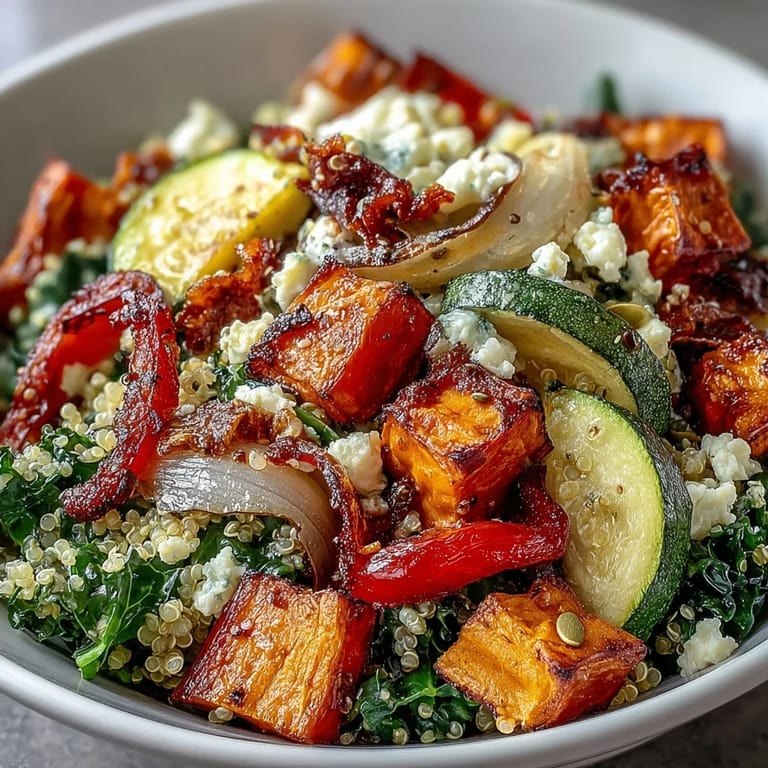
The real secret to this salad is treating it like a composition rather than a dump-everything-in-one-place situation. Layer your grains first as a base—they're sturdy enough to hold everything else. The wilted greens create a bridge between the warm grain base and the roasted vegetables, while the remaining vinaigrette ties every element together. I've found that this assembly method keeps everything distinct and delicious rather than turning into a soggy mess.
Variations That Actually Work
Farro gives you a chewier texture than quinoa, and I actually prefer it in cooler months when I want something that feels more substantial. Millet offers a delicate nuttiness that's especially lovely if you add toasted seeds for contrast. Roasted chickpeas bump up the protein significantly if you're looking to make this more filling, and they add a satisfying crunch that keeps every bite interesting.
The Warm Vinaigrette Difference
What separates a warm salad bowl from just tossing cold greens with hot vegetables is that warm vinaigrette—it acts as the connective tissue that makes everything feel intentional. The oil emulsifies with the vinegar to coat the greens rather than just dripping past them, while the mustard and honey create a complexity that a standard vinaigrette simply cannot achieve. This is the one element you should never skip or substitute carelessly.
- Make extra vinaigrette and store it in a jar for up to five days—it transforms simple roasted vegetables into something special when you're in a rush.
- If your vinaigrette breaks or looks separated, whisk it again over gentle heat and it will come back together.
- Never let the vinaigrette sit above a simmer or you'll cook off the delicate flavors you worked to build.
 Save
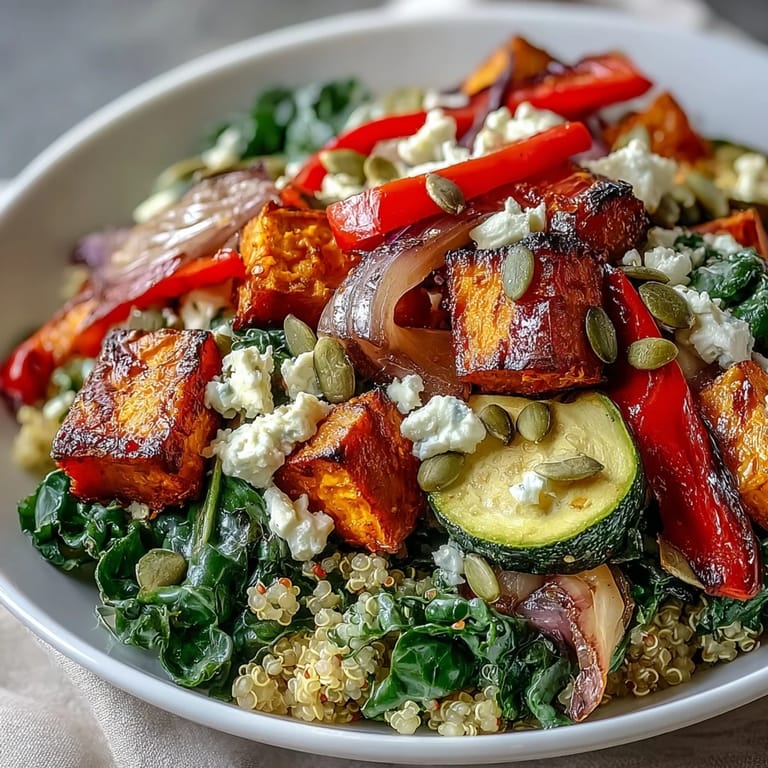
Save This warm salad bowl has become my answer to the question of what to eat when I want something that feels both nourishing and indulgent without any guilt. It's proof that simple food, when each component is treated with care, can be genuinely memorable.
Recipe Q&A
- → Can I make this bowl ahead of time?
Yes, prepare the grains and roasted vegetables up to 3 days in advance. Store separately in airtight containers and reheat before assembling. Make the vinaigrette fresh and toss with greens just before serving.
- → What grains work best in this bowl?
Quinoa and brown rice are excellent choices, offering nutty flavor and satisfying texture. Farro, millet, or wheat berries also work beautifully. Adjust cooking time according to package directions for your chosen grain.
- → How do I make this vegan?
Simply skip the cheese topping or substitute with nutritional yeast. Use maple syrup instead of honey in the vinaigrette. The bowl is naturally plant-based and protein-rich with the grains and vegetables.
- → Can I add more protein?
Absolutely. Roasted chickpeas, baked tofu, or grilled chicken pair wonderfully. You could also add a hard-boiled egg or edamame. The base bowl provides about 9g protein per serving.
- → What vegetables can I substitute?
Butternut squash, carrots, Brussels sprouts, or cauliflower roast beautifully alongside the listed vegetables. Use whatever seasonal produce you have on hand, keeping pieces similar in size for even cooking.