 Save
Save The first time I made lahmacun, I was standing in a friend's tiny Istanbul kitchen on a humid summer evening, watching her mother work the dough with such casual confidence that I thought I'd never master it. She'd laugh whenever I'd ask for measurements, just pouring flour into her palm and somehow knowing exactly how much water it needed. Years later, I finally understood that the magic isn't in precision—it's in knowing when the dough feels right against your fingertips, when it's developed that silky elasticity that promises something crispy and delicious. Now whenever I make these thin, savory flatbreads at home, I can almost hear her voice guiding me through the motions.
I remember bringing these to a potluck once, nervous nobody would touch them because they looked so different from everything else on the table. Within minutes they were gone, and three people asked me how to make them, which is when I realized this dish has a quiet, irresistible power—it doesn't need to look fancy to win people over. There's something about the combination of spiced meat, fresh herbs, and that paper-thin crust that just works.
Ingredients
- All-purpose flour (300 g): This is your foundation—it needs enough gluten development to create structure without being so heavy that your dough becomes tough and chewy instead of tender.
- Instant yeast (1 tsp): This amount gives you a gentle, forgiving rise that won't overproof if you're a little slow getting to the next step.
- Warm water (180 ml): Temperature matters more than you'd think; if it's too hot you'll kill the yeast, too cold and nothing happens.
- Ground lamb or beef (300 g): Lamb has a richer, more authentic flavor, but beef works beautifully too—just avoid anything too lean or it'll dry out under high heat.
- Tomato paste (2 tbsp): This concentrates the flavor and helps the topping cling to the dough without making everything soggy.
- Fresh parsley (2 tbsp): Add it just before assembling; if it sits in the meat mixture too long it'll blacken and lose that bright, fresh taste.
- Cumin and paprika (1 tsp each): These spices are what make lahmacun taste like itself—don't skip them or substitute something else.
Tired of Takeout? 🥡
Get 10 meals you can make faster than delivery arrives. Seriously.
One email. No spam. Unsubscribe anytime.
Instructions
- Mix and knead the dough:
- Combine your dry ingredients, dissolve the yeast in warm water, then bring it all together into a shaggy mass. Knead it for a solid 5 to 7 minutes until it stops sticking to your hands and feels smooth and slightly elastic—this is when you know the gluten is doing its job.
- Let it rise:
- Cover the dough and give it 30 minutes in a warm spot; you're not looking for a dramatic explosion of volume, just a gentle doubling that shows the yeast is active and happy.
- Build the meat topping:
- Mix everything together in a bowl, tasting as you go—this is your chance to adjust the seasoning before it hits the heat. The mixture should feel moist but not wet, clinging together when you squeeze a handful.
- Preheat your oven aggressively:
- Get it to 250°C (480°F) or as hot as your oven will go, and let a pizza stone or baking tray heat inside for at least 10 minutes. The thermal shock is what creates those crispy, blistered edges you're after.
- Portion and stretch the dough:
- Divide the dough into 8 pieces and roll each one as thin as you can manage without tearing—think pizza-thin, almost transparent in spots. This is the part that feels delicate at first but gets easier the more you do it.
- Top and bake:
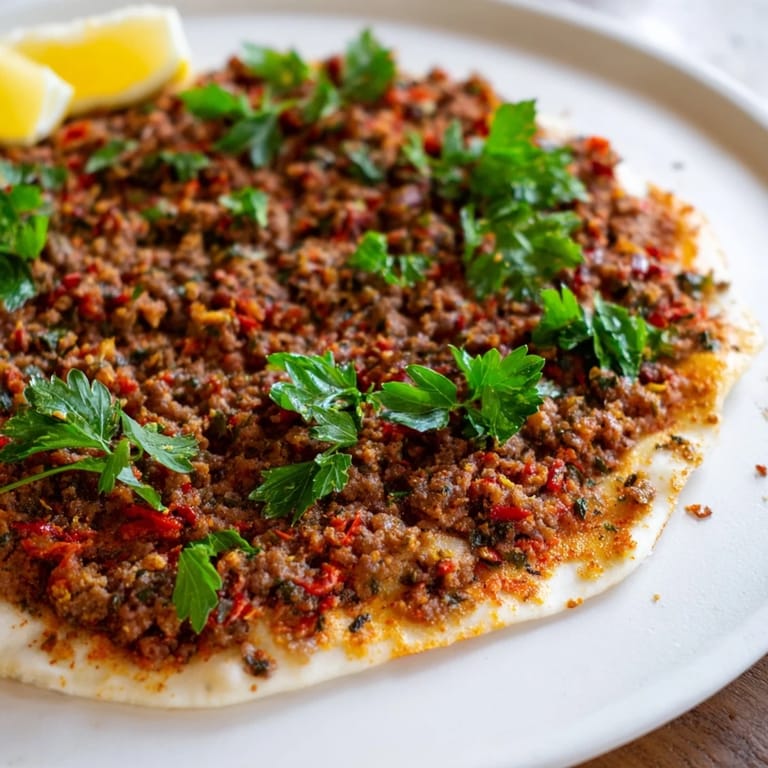
- Spread a thin, even layer of meat mixture across each dough round, leaving a tiny border. Transfer it to the screaming hot tray and bake for 6 to 8 minutes—any longer and the edges turn bitter, any shorter and the meat doesn't quite cook through.
- Finish and serve:
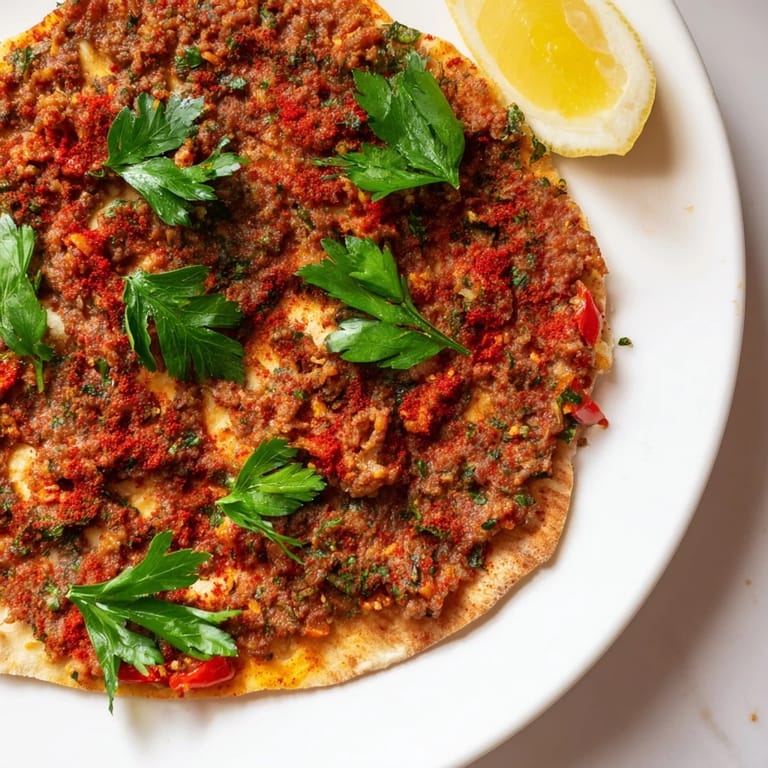
- Pull them out while they're still steaming, scatter fresh herbs on top, and squeeze lemon over everything. The acidity cuts through the richness in a way that makes you immediately want another one.
 Save
Save There was this one night when I was testing a batch and my partner walked in just as they came out of the oven, and the smell hit him so hard he actually stopped talking mid-sentence. That's when I knew I'd gotten it right—that cumin and charred meat aroma is unmistakable, and it fills a room faster than anything else I've ever made. It's a smell that says something delicious just happened in your kitchen.
Dough Texture and Timing
The dough should feel slightly sticky after mixing but not wet, and it firms up considerably as it rises. If you're nervous about handling it, a light dusting of flour on your work surface and rolling pin makes all the difference without toughening the dough. I've learned that working with it at room temperature (letting it rest between rolls if you're doing multiple pieces) keeps it forgiving and elastic instead of stiff and reluctant to stretch.
The Meat Mixture and Flavor Balance
This topping is inherently flexible—if you find it too spicy, dial back the chili flakes or skip them entirely. If it tastes flat, you probably need more salt or a squeeze of lemon juice to brighten it. The fresh parsley does serious work here, so don't think of it as decoration; it's built into the flavor profile and makes the difference between something that tastes one-dimensional and something that sings.
Serving and Variations
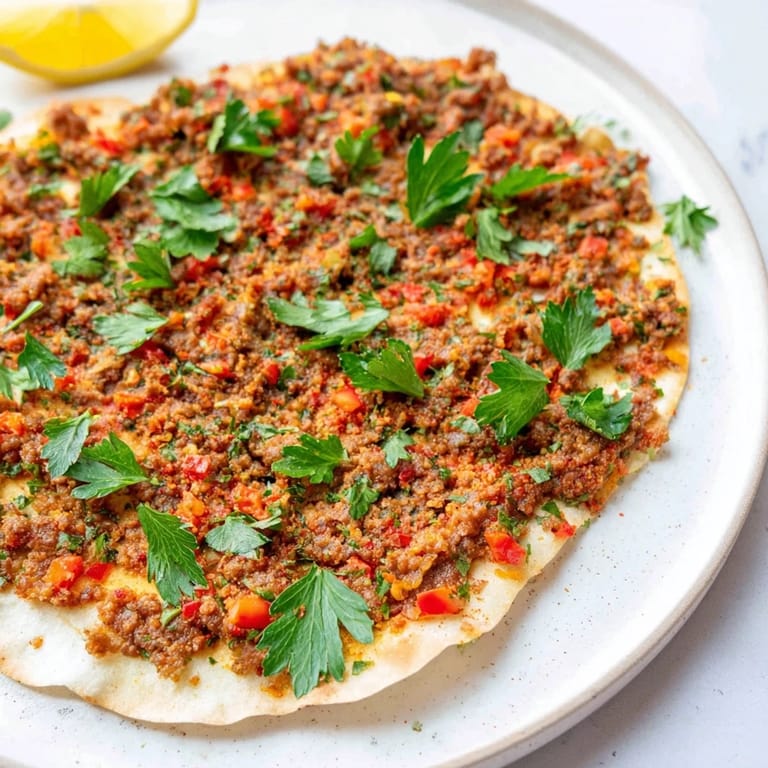
Lahmacun is most fun when you eat it warm and fresh, but it also survives being slightly cooled (though never refrigerated; cold lahmacun is a sad lahmacun). Some people fold them into quarters and eat them with their hands, others lay them flat and roll them up with fresh herbs and onions like a wrap. If you're feeding vegetarians, the mushroom and walnut substitute is genuinely delicious and doesn't feel like a compromise—just finely mince mushrooms and walnuts together, toast them briefly to bring out the nuttiness, then treat it exactly like the meat topping.
- Serve with lemon wedges on the side so people can add as much brightness as they want.
- Sliced raw onions and sumac are traditional and worth keeping on hand if you make these regularly.
- Ayran (Turkish yogurt drink) is the classic pairing, but a crisp white wine or even sparkling water works beautifully too.
 Save
Save These flatbreads remind me why simple cooking often tastes best—there's nowhere to hide, so every ingredient has to pull its weight. Once you make them once, they become something you'll keep coming back to, whether it's for an impromptu dinner with friends or just because you're craving that specific combination of crispy, savory, and bright.
Recipe Q&A
- → What makes lahmacun dough thin and crispy?
The dough is kneaded until smooth and rolled out very thin, then baked at a high temperature, producing a crisp texture.
- → Can I substitute the meat topping for a vegetarian option?
Yes, you can replace the minced meat with a mixture of minced mushrooms and walnuts for a vegetarian twist.
- → How do the spices enhance the meat topping?
Spices like cumin, paprika, and chili flakes add warmth and depth, complementing the savory minced meat and fresh vegetables.
- → What is the best way to serve lahmacun?
Serve warm garnished with fresh parsley and lemon wedges, optionally adding sliced onions and sumac for extra tang.
- → Can lahmacun be prepared in advance?
The dough can be prepared and refrigerated prior to baking, but it's best enjoyed fresh for optimal crispness.