 Save
Save I discovered The Tundra Trek while standing in my kitchen on a gray winter afternoon, staring at a mandoline and a handful of pale vegetables that seemed almost too delicate to slice. There's something about working with daikon and kohlrabi that makes you slow down—the way they catch the light, how they surrender to the blade without breaking. I'd been thinking about landscapes that feel quiet and minimal, places where every detail matters because there's so little to distract you. That's when it clicked: what if I could make that feeling edible?
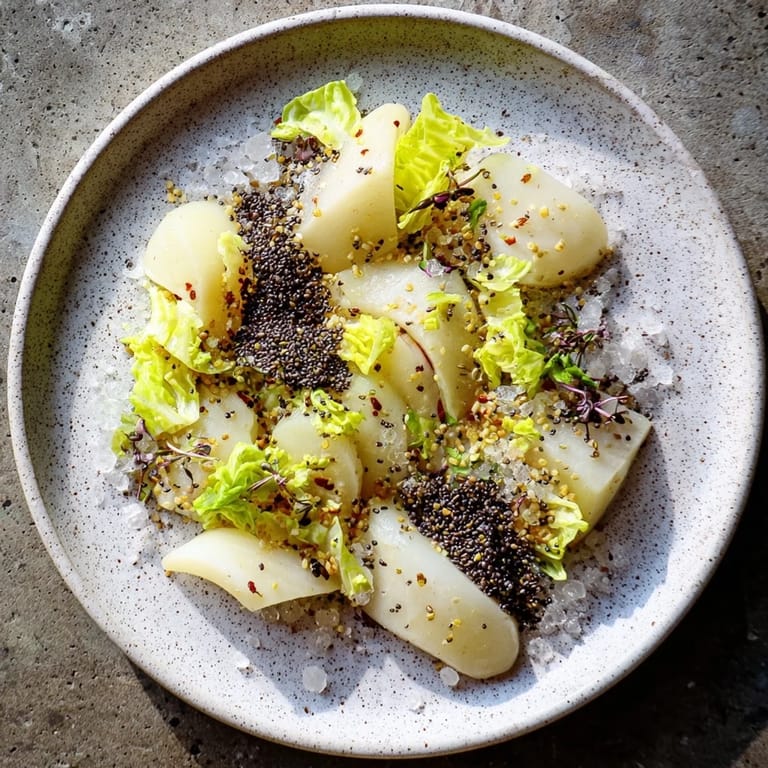
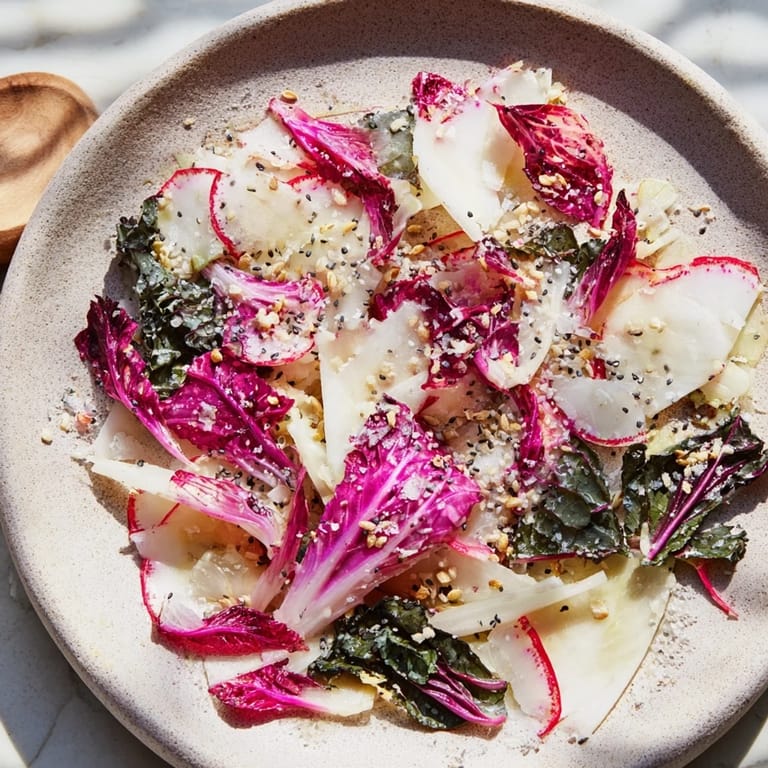
I made this for a dinner party where everyone arrived tired and overstimulated by their weeks. Within minutes of seeing it on that chilled stone platter—pale vegetables scattered like windblown snow—the whole table seemed to exhale. A guest leaned back and said, "I didn't know I needed quiet food right now." That's when I understood: sometimes a recipe isn't just about flavor; it's about giving people permission to pause.
Ingredients
- Daikon radish: The star's mild sweetness and crisp bite are what ground this whole dish—slice it thin enough that light passes through it.
- Kohlrabi: Often overlooked, but its delicate crunch and subtle earthiness anchor the texture story beautifully.
- Belgian endive: Those pale leaves are your canvas; they're bitter enough to make everything else taste brighter.
- Cauliflower florets: Finely chopped means they act more like a garnish texture than a vegetable, which is exactly what you want here.
- Coconut flakes (unsweetened): They add a whisper of umami and visual texture that mimics scattered landscape elements.
- White and black sesame seeds: Toast them lightly yourself—that moment when the smell shifts is your cue to stop; it changes everything about their flavor.
- Microgreens: Pea shoots or radish sprouts add that final living, verdant touch; they're the last thing you add because they're delicate.
- Flaky sea salt: Finish salt, not cooking salt—it should sparkle and have real presence.
- Extra-virgin olive oil: Quality matters here since there's nowhere to hide; choose one you'd drink if you had to.
- Fresh lemon juice: Squeeze it just before you need it; bottled juice tastes apologetic by comparison.
- White wine vinegar: The acidity is bright without being aggressive, which lets the vegetables speak.
- White pepper: It's softer and more elegant than black pepper in this context; you're building atmosphere, not heat.
Tired of Takeout? 🥡
Get 10 meals you can make faster than delivery arrives. Seriously.
One email. No spam. Unsubscribe anytime.
Instructions
- Chill your canvas:
- Pop that stone or marble platter into the freezer for 15 minutes—this isn't just for show. The cold surface keeps everything crisp longer and makes each bite feel like a small shock of freshness.
- Build your dressing:
- Whisk the olive oil, lemon juice, vinegar, and white pepper together in a small bowl until they're emulsified and look almost creamy. This takes maybe a minute, but that minute matters.
- Scatter your vegetables:
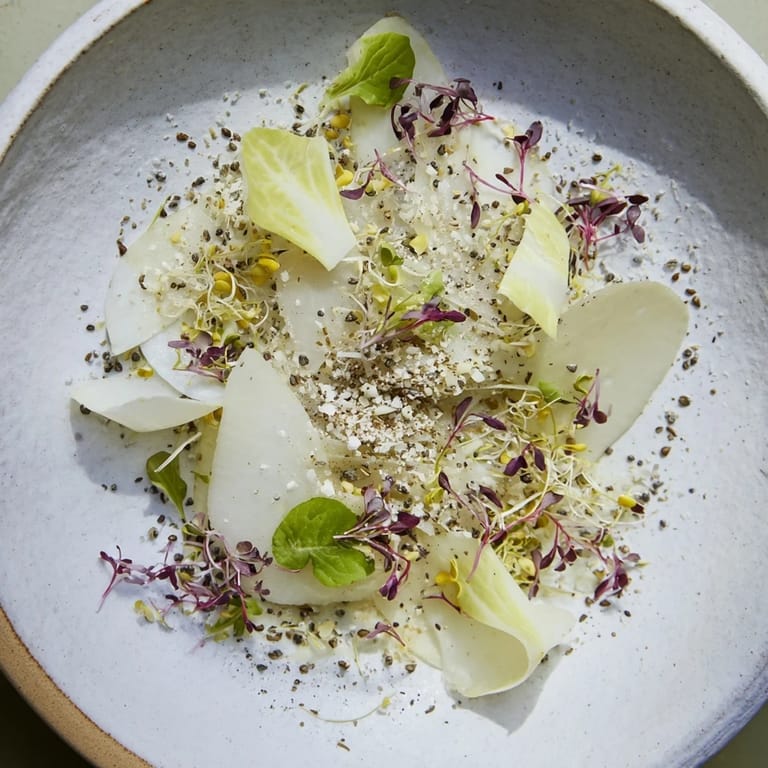
- Take the chilled platter out and begin arranging the daikon, kohlrabi, and endive leaves across it with intention but not fussiness—think windblown, not calculated. Leave negative space; that emptiness is part of the design.
- Add texture and dimension:
- Sprinkle the finely chopped cauliflower, coconut flakes, and both types of sesame seeds over the vegetables in a random pattern. Step back and look at what you've created—does it feel balanced or does one area feel too heavy?
- Dress lightly:
- Drizzle the dressing across the arrangement with a gentle hand; you're not drowning it, you're highlighting it. The vegetables should still look crisp and defined.
- Finish and serve:
- Add the microgreens last (they bruise if you do them too early) and finish with a few flakes of sea salt. Serve immediately while everything is still cold and the textures are at their peak.
 Save
Save There's a specific moment when someone tastes this dish where their expression shifts from curiosity to something deeper—recognition, maybe, that food can be both minimal and generous at the same time. A friend once told me it reminded her of the first time she really looked at a frozen landscape instead of just seeing "winter." That's the feeling I was after: visibility through simplicity.
The Art of Negative Space
In cooking, we're often taught to fill every corner, to pile and layer and make things abundant. The Tundra Trek inverts that—it asks you to trust that emptiness has weight too. When you're arranging these vegetables on the cold stone, resist the urge to cover every inch. The gaps between them matter as much as the vegetables themselves; they're what make your eye travel, what create rhythm. I learned this by mistake the first time I made it, when I over-arranged everything and it felt cluttered instead of curated. Now I think of the platter like a landscape: mountains, valleys, and sky.
Playing with Temperature and Texture
This dish is a masterclass in contrast if you pay attention to it. Cold vegetable meets warm body temperature in your mouth, creating this almost shocking sensation. The crispness of the raw vegetables against the soft give of the coconut flakes, the tiny crunch of sesame against the delicate microgreens—texture is doing as much work as flavor here. I once served this to someone who swore they didn't like raw vegetables, and they were surprised by how alive and varied it felt. The secret is that each component stays distinct; nothing gets mushy or lost in a heavy dressing.
Variations and Flavor Riffs
Once you understand the structure of this dish, it becomes a conversation starter in your kitchen. You can swap the dressing for yuzu juice and rice vinegar if you want something more Asian in spirit, or add a drizzle of aged balsamic if you want depth. For protein, smoked whitefish flakes scattered across work beautifully, or even some chilled poached shrimp if you're feeding a crowd. The bones of the dish—the pale vegetables, the cold platter, the minimalist arrangement—stay the same, but the flavor story can shift with your mood.
- Try yuzu juice for a bright, citrusy Asian-inspired twist that still feels delicate.
- Add smoked whitefish flakes or chilled shrimp if you need protein without heaviness.
- Serve alongside chilled aquavit or dry white wine for a meal that feels Northern and sophisticated.
 Save
Save This dish taught me that elegance doesn't require complication. Sometimes the most powerful food is the food that knows exactly what it is and doesn't apologize for being simple. Serve it when you want people to slow down and really taste what's in front of them.
Recipe Q&A
- → What vegetables are used in this dish?
Daikon radish, kohlrabi, Belgian endive, and finely chopped cauliflower florets form the basis of the crisp vegetable layers.
- → How is the dish visually styled?
Ingredients are sparsely arranged over a chilled stone or marble plate to mimic the scattered, windswept flora of an arctic tundra.
- → What accents add texture and flavor?
Toasted white and black sesame seeds, unsweetened coconut flakes, and microgreens provide contrasting textures and a subtle depth in flavor.
- → What kind of dressing is used?
A light dressing made from extra-virgin olive oil, fresh lemon juice, white wine vinegar, and white pepper complements the fresh vegetables.
- → Can this dish accommodate protein additions?
Yes, smoked whitefish flakes or chilled poached shrimp can be scattered atop for added protein and flavor complexity.