 Save
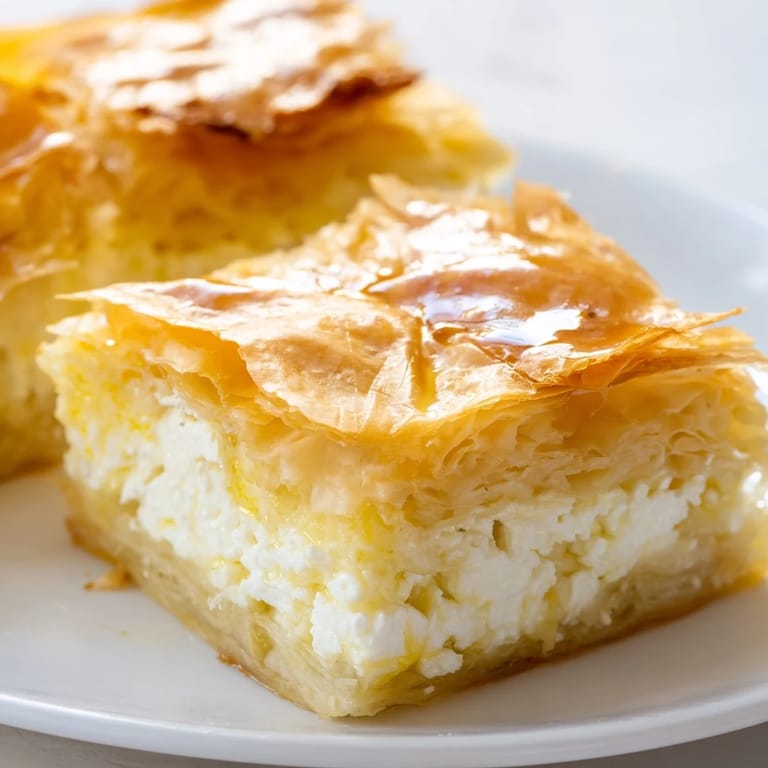
Save My neighbor Milica invited me to her kitchen on a Saturday afternoon, and within minutes the smell of phyllo crisping in the oven had me completely mesmerized. She moved through her gibanica with such ease, layering sheets of pastry like she was conducting a quiet symphony, and I realized this wasn't just a recipe to her—it was muscle memory passed down through generations. That day, watching her brush oil between each delicate layer and hearing the satisfying crackle as it baked, I understood why this Serbian cheese pie is so beloved across the Balkans. When she pulled it from the oven and cut into those golden squares, the steam rising and the cheese stretching between the crispy layers, I was completely sold.
I made this for my book club, convinced it would be the star of the spread, and I was right—though I nearly panicked when my first batch came out paler than I expected. The second time around, I learned that brushing the top layer generously with oil and adding that optional egg yolk glaze makes all the difference between good and absolutely golden. When everyone tasted it warm, still steaming from the oven, one friend asked for the recipe before she'd even swallowed her first bite, and that's when I knew I'd nailed it.
Ingredients
- Cottage cheese (300 g): The base of your filling—creamy and mild, it balances the sharp saltiness of feta beautifully.
- Feta cheese, crumbled (200 g): This is where the character comes in; don't skip it or use a milder cheese, feta's tang is essential.
- Eggs (4 large): They bind everything together and help the filling set up slightly so it doesn't turn into a soupy mess.
- Plain yogurt (100 ml): Adds subtle tang and moisture; it keeps the filling from drying out during baking.
- Sunflower oil (50 ml, plus 2 tbsp for brushing): Use neutral oil here—it doesn't compete with the cheese and brushes on smoothly without burning.
- Sparkling water (50 ml): This is the secret that makes the filling lighter and airier than you'd expect, almost cloud-like in texture.
- Salt and black pepper: Go easy on the salt at first since feta is already salty; taste as you go and adjust.
- Phyllo dough (500 g, about 12 sheets): Keep it thawed but cold, and work quickly once you open the package or it dries out fast.
- Egg yolk (1, optional): If you want that restaurant-quality golden glaze, this does the job.
Tired of Takeout? 🥡
Get 10 meals you can make faster than delivery arrives. Seriously.
One email. No spam. Unsubscribe anytime.
Instructions
- Get your oven and dish ready:
- Heat your oven to 180°C (350°F) and lightly grease a 23x33 cm baking dish with oil—this prevents sticking and adds to the bottom crust's crispness.
- Mix the cheese filling:
- Combine cottage cheese, crumbled feta, eggs, yogurt, oil, sparkling water, salt, and pepper in a bowl and whisk until smooth and creamy. The mixture should feel light, almost mousse-like—that's the sparkling water doing its magic.
- Layer the first sheets:
- Place one phyllo sheet in the dish and brush it lightly with oil using a pastry brush. Repeat with two more sheets, brushing each one; these bottom layers become the crispy foundation.
- Add the first layer of filling:
- Spread 3–4 tablespoons of cheese mixture over your phyllo base, using an offset spatula or the back of a spoon to distribute it evenly.
- Continue the layering dance:
- Add 2–3 more phyllo sheets, brushing each with oil, then spread another layer of filling. Keep repeating this pattern—phyllo, oil, filling, phyllo, oil, filling—until you've used all your ingredients. You should end with 2 clean phyllo sheets on top.
- Finish the top:
- Brush the top layer generously with oil. If you're using the egg yolk glaze, beat it lightly and brush it over the very top for that golden, glossy finish that looks like it came from a bakery.
- Cut before baking:
- Using a sharp knife, score the gibanica into squares or diamonds while it's still in the pan; this makes serving easier and helps heat penetrate evenly.
- Bake to golden perfection:
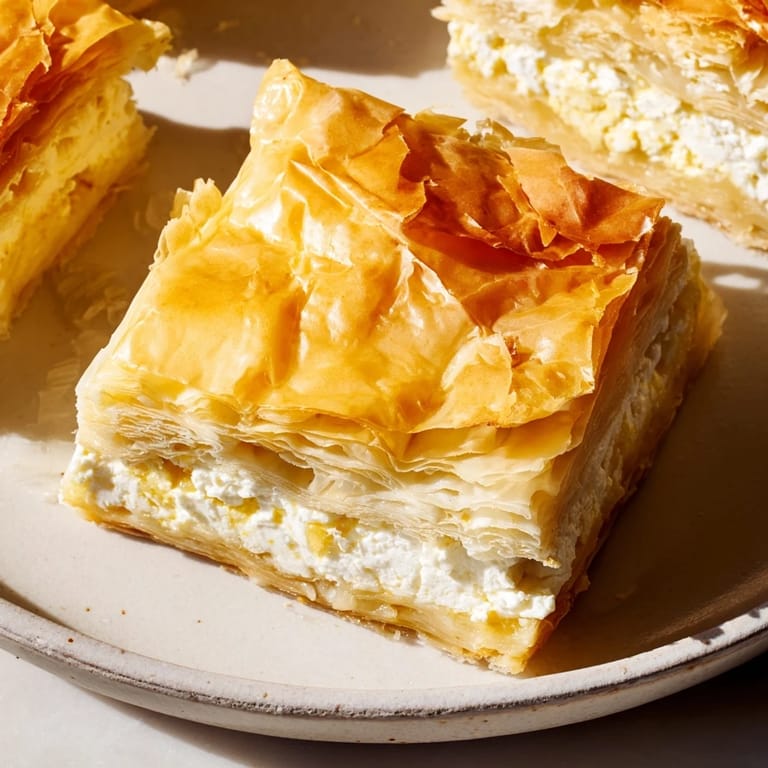
- Slide into the oven for 35–40 minutes until the top is deep golden and the phyllo sounds crispy when you tap it. You'll know it's done when the smell is absolutely irresistible.
- Cool and serve:
- Let it rest for 10 minutes—this is hard to resist but essential, as it helps the filling set slightly. Serve warm or at room temperature; it's delicious either way.
 Save
Save The first time I brought this to a family gathering, my uncle (who grew up in Belgrade) took one bite and got quiet for a moment. Then he smiled and said it reminded him of his mother's kitchen, which felt like the highest compliment I could receive. That's when I truly understood that good food isn't just about technique—it's about carrying a piece of someone else's story into your home and making it your own.
The Art of Layering
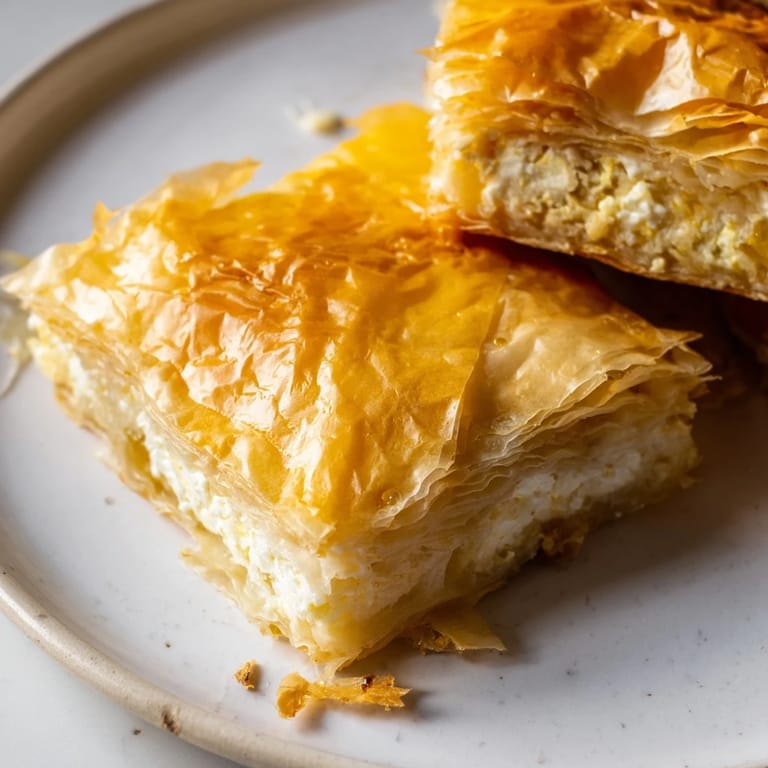
Layering phyllo is less about perfection and more about developing a rhythm; Milica taught me to think of it as meditation rather than a stressful task. Each sheet gets its gentle brush of oil, each pocket of filling gets smoothed to the edges so no air bubbles trap steam, and by the time you're halfway through, your hands know exactly how much pressure to use. The magic happens in those thin, crispy layers—they're what makes gibanica feel luxurious, almost delicate, even though it's deeply savory and filling.
Variations and Customizations
Once you understand the basic structure, gibanica becomes endlessly flexible. Some cooks add a tablespoon of sour cream to the filling for even richer flavor, while others layer in fresh herbs like dill or parsley between the cheese layers for a green fleck and herbal note. I've seen versions made with spinach mixed into the filling, others with crumbled Serbian kajmak (a creamy dairy product) for extra indulgence, and even a version where people brush melted butter instead of oil for a more golden, buttery crust.
Serving and Storage Wisdom
Gibanica shines when served warm with a crisp side salad—tomato, cucumber, and red onion tossed with a little vinegar and oil is the traditional pairing that cuts through the richness beautifully. It keeps well in the fridge for up to three days and reheats wonderfully; just warm it gently in a 160°C oven until the phyllo re-crisps rather than the microwave, which will make it rubbery.
- Serve it as a standalone appetizer, a light lunch with salad, or part of a spread of Balkan meze for maximum impact.
- Freeze unbaked gibanica for up to a month—just add a few extra minutes to the bake time from frozen.
- Cut it into generous squares or delicate diamonds depending on whether you're serving as a main or appetizer.
 Save
Save Every time I make gibanica now, I think of that Saturday in Milica's kitchen and how she turned a simple recipe into something that carries memory and warmth. It's the kind of dish that reminds you why we cook for people we love.
Recipe Q&A
- → What type of cheese is used in this dish?
The filling combines cottage cheese and crumbled feta, creating a creamy and tangy mixture.
- → How do you achieve the crispy phyllo layers?
Brushing each phyllo sheet lightly with sunflower oil before layering helps achieve a crisp, golden texture when baked.
- → Can I prepare the dish ahead of time?
Yes, you can assemble it in advance and refrigerate before baking. Leftovers store well and reheat nicely.
- → Is there a way to make it gluten-free?
Substituting traditional phyllo with gluten-free sheets allows for a gluten-free version without compromising texture.
- → What is the recommended bake temperature and time?
Bake at 180°C (350°F) for about 35–40 minutes until the top is golden brown and crisp.