 Save
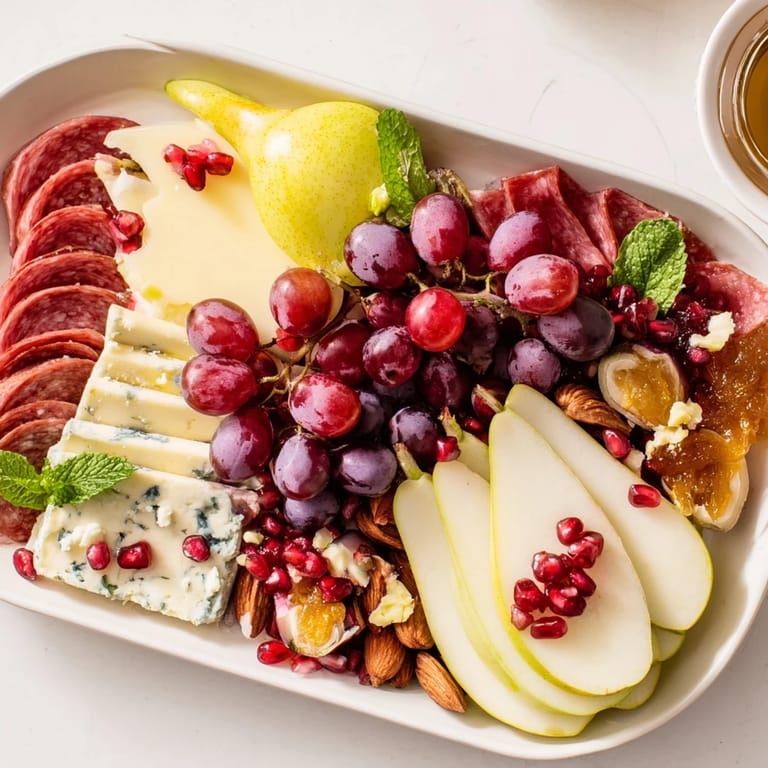
Save I still remember the evening I discovered that a cheese board didn't have to be chaotic—it could be a work of art. My grandmother had just returned from a trip to Spain, and she arranged a simple diagonal line of jamón and manchego on her kitchen counter like she was painting with food. When she scattered pomegranate seeds across it, something clicked. Those ruby-red arils caught the afternoon light like jewels, and suddenly everyone at the table stopped talking and just stared. That's when I realized: the most memorable appetizers aren't just delicious, they're conversations starters. This Pomegranate Jewel Cascade is my love letter to that moment.
I'll never forget hosting my book club for the first time in my new apartment. I was nervous, honestly, but when I placed this board on the table just as everyone arrived, the whole room went quiet. Someone gasped—actual gasps!—and suddenly we weren't just eating appetizers, we were sharing something beautiful. By the time dessert rolled around, that board was picked clean, and everyone was asking for the secret. The secret, I've learned, is that beautiful food tastes better, feels more intentional, and brings people closer together.
Ingredients
- Creamy goat cheese, sliced: The soft, tangy counterpoint to everything else. Slice it with a hot knife for clean edges that look intentional.
- Aged Manchego, sliced: Nutty and firm, this Spanish beauty anchors the board with sophistication. Its pale golden color is absolutely essential to the visual flow.
- Blue cheese, crumbled: The bold, brave flavor that makes people pause mid-bite. Don't skip it—it's the dramatic moment your board needs.
- Prosciutto, thinly sliced: Drape it gently; let it fold into soft ruffles. It adds elegance and that salty whisper that makes you want another bite.
- Spicy salami, thinly sliced: This is your heat, your intrigue. It promises adventure and delivers it.
- Pomegranate arils: The stars of the show. Fresh, tart, juicy. They're not just pretty—they're the flavor compass that guides every other bite.
- Red grapes, halved: Their natural sweetness softens the intensity of the cheeses. Halving them lets people pop them in their mouths easily.
- Pear, thinly sliced: Delicate and slightly sweet, pears bridge the gap between fruit and cheese with grace. Slice them just before serving so they don't brown.
- Apple, thinly sliced: A little tartness, a little crunch. It keeps the palate interested and honest.
- Dried apricots, halved: Chewy sweetness with depth. They whisper of sunlit orchards.
- Dried figs, sliced: Earthy, complex, and absolutely timeless. They elevate everything around them.
- Toasted pistachios: Crunch is non-negotiable. Toast them yourself if you can—the aroma alone is worth it, and they taste fresher.
- Roasted almonds: More crunch, more texture. These add a gentle sweetness that softens the sharper elements.
- Honeycomb piece: Luxury in its simplest form. A small piece goes a long way and makes people feel like royalty.
- Fig jam: This is the bridge between sweet and savory. It transforms a simple cracker into something memorable.
- Crusty baguette, sliced: The foundation. Choose one with a proper crust and an airy crumb. It should feel substantial in your hand.
- Artisan crackers: Variety here is key. Mix textures—some seeded, some herbed. They're the blank canvas for flavor combinations.
- Fresh mint leaves: The final flourish. Mint adds brightness and aroma. It tells everyone this board was made with intention.
Tired of Takeout? 🥡
Get 10 meals you can make faster than delivery arrives. Seriously.
One email. No spam. Unsubscribe anytime.
Instructions
- Envision your cascade:
- Take a moment before you start arranging anything. Lay your hand diagonally across your board from top left to bottom right. This invisible line is your guide, your rhythm. It's what will make everything feel intentional rather than random.
- Build your cheese foundation:
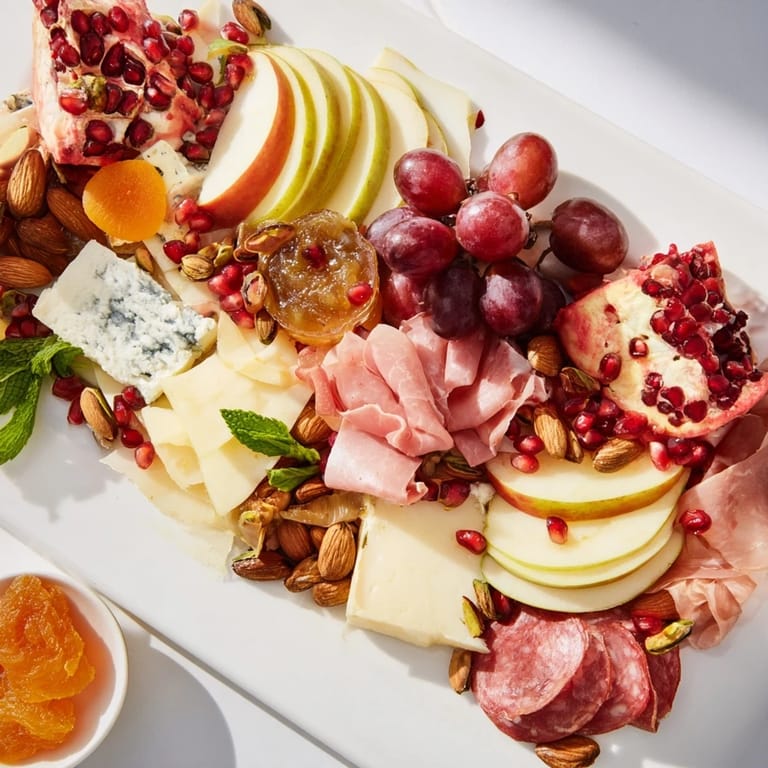
- Start placing your cheeses along this diagonal line, alternating between the goat cheese, Manchego, and blue cheese. Leave small gaps—this isn't puzzle-fitting, it's choreography. The white, pale gold, and blue should dance together as they flow down the board.
- Layer the cured meats with tenderness:
- Drape your prosciutto and salami in soft, gentle folds between the cheese sections. Let the edges overlap and ruffle. Think of it like fabric; these meats should look like they're flowing, not stacked. This is where personality enters the board.
- Weave in fresh and dried fruits:
- Now comes the part that feels like play. Scatter your fresh fruit slices, grape halves, apricots, and figs along the same diagonal line. This isn't random; you're creating a visual rhythm. The fresh fruits should peek out like treasures among the denser elements.
- Crown it with pomegranate jewels:
- This is the magical moment. Take your pomegranate arils and sprinkle them generously across the entire diagonal, paying special attention to creating little clusters where the colors feel dull or the design needs visual punctuation. Stand back. This is where people gasp.
- Add textural contrast with nuts:
- Tuck your toasted pistachios and roasted almonds into the spaces between fruit and cheese. They should look like they're nestled, not scattered. This is where your board gains dimension and invites touch.
- Position your sweet anchors:
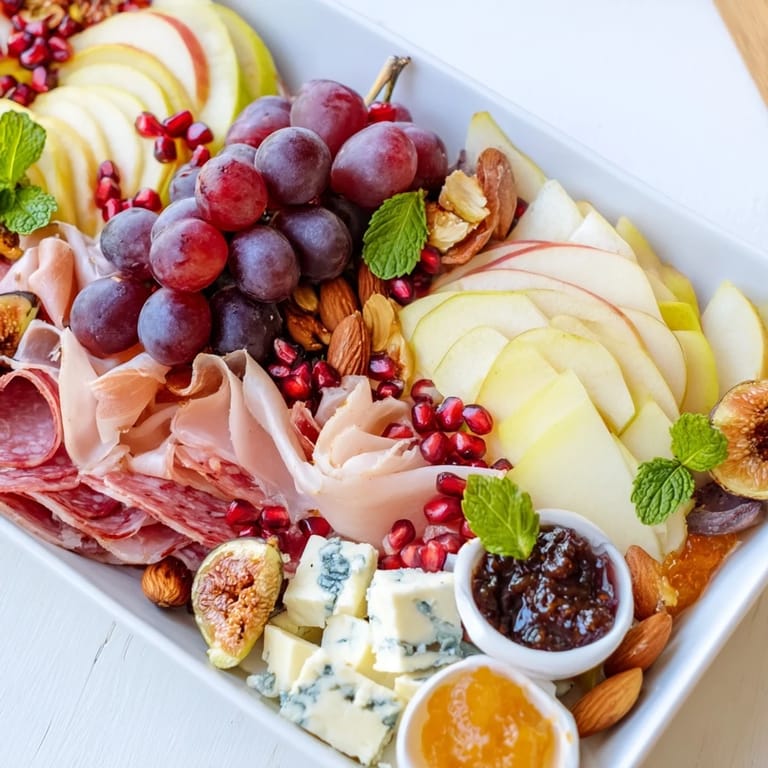
- Place your small bowls of honeycomb and fig jam at either end of the cascade. These are the exclamation points that frame your design. They're also your invitation for people to experiment with flavor combinations.
- Fan out your bread and crackers:
- Along both sides of your diagonal masterpiece, arrange your baguette slices and crackers in loose, welcoming lines. They should look easy to grab, like you've created a path into the experience you've built.
- Scatter mint for the final flourish:
- Tear your fresh mint leaves gently and distribute them across the board like you're sprinkling blessings. These aren't just garnish; they're the aroma that greets your guests, the freshness that lingers on their palate.
- Serve with intention:
- Bring the board to your table at room temperature, when every flavor is at its peak. Pause for a moment. Watch how people react. This is the part that always makes me smile.
 Save
Save I hosted a wedding shower last spring, and a guest who'd been quiet most of the afternoon suddenly came alive at this board. She started telling stories about her travels through Spain and Italy, connecting each ingredient to a memory. The board had transformed her from a guest into a storyteller, and everyone gathered closer to listen. That's when I understood: this isn't just appetizers. This is permission to slow down, to savor, to remember why we gather around tables in the first place.
The Art of the Cascade
The diagonal line isn't just aesthetic—it's functional. When you arrange ingredients along a single flowing direction, everything becomes easier to navigate. Your guests' eyes follow the line naturally, discovering flavors in a sequence that feels intentional. The cascade also creates visual depth; some ingredients sit forward, others recede, and together they tell a more interesting story than a scattered, random arrangement ever could. I've learned that the boards that look most effortless are actually the ones where I've been most deliberate about placement. Every gap, every overlap, every color transition matters.
Customization Is Your Superpower
This board is a template, not a rulebook. If you love Brie more than goat cheese, use Brie. If pomegranates aren't in season, raspberries scattered across the board create nearly the same jewel-like effect. I've made versions with roasted vegetables, fresh berries, and candied nuts depending on the season and the people I'm serving. The magic isn't in following instructions perfectly; it's in understanding the principles—contrast of textures, balance of flavors, intentionality in placement—and making choices that feel true to your table. Last summer, I substituted aged Cheddar and smoked almonds for a fall-themed version, and honestly, it might have been even better than the original.
Pairing and Timing Tips
A crisp rosé or sparkling wine is the obvious choice, and for good reason—the bubbles cleanse your palate between bites, and the acidity complements both the tangy cheeses and the salt of the cured meats. If you're serving non-drinkers, a pomegranate spritzer echoes the board's star ingredient beautifully. I always serve this board as the opening act of a gathering, never as an afterthought. When it's the first thing your guests experience, it sets a tone of intention and celebration. Build it 30 minutes before people arrive so it reaches room temperature, but not so far ahead that the fruit begins to oxidize. The window is small, but that's part of the magic—it forces you to be present in the process.
- Slice your baguette on a slight angle for more surface area and visual interest
- Keep a squeeze of lemon nearby to brush on apple and pear slices if you're making the board more than 15 minutes ahead
- Remember that your board will be picked apart; arrange things you expect to go quickly in the most accessible spots
 Save
Save This board taught me that appetizers aren't just about hunger—they're about welcome, celebration, and the quiet art of paying attention to beauty. Make this, and you'll create a moment people remember.
Recipe Q&A
- → What cheeses work best for this board?
Creamy goat cheese, aged Manchego, and crumbled blue cheese provide a balanced range of textures and flavors in this spread.
- → Can this be adapted for vegetarians?
Yes, simply omit the cured meats and increase the quantity of nuts or add roasted vegetables to maintain variety.
- → How should the pomegranate be prepared?
Use only the arils, gently sprinkled in clusters along the diagonal for a striking jewel-like effect.
- → What accompaniments pair well with this board?
Honeycomb, fig jam, crusty baguette slices, and artisan crackers complement the flavors and textures nicely.
- → Is this suitable for gluten-free diets?
Yes, by substituting gluten-free crackers for the baguette and artisan crackers, it can accommodate gluten sensitivities.
- → How should it be served?
Arrange all components on a large board at room temperature for easy access and optimal flavors.