 Save
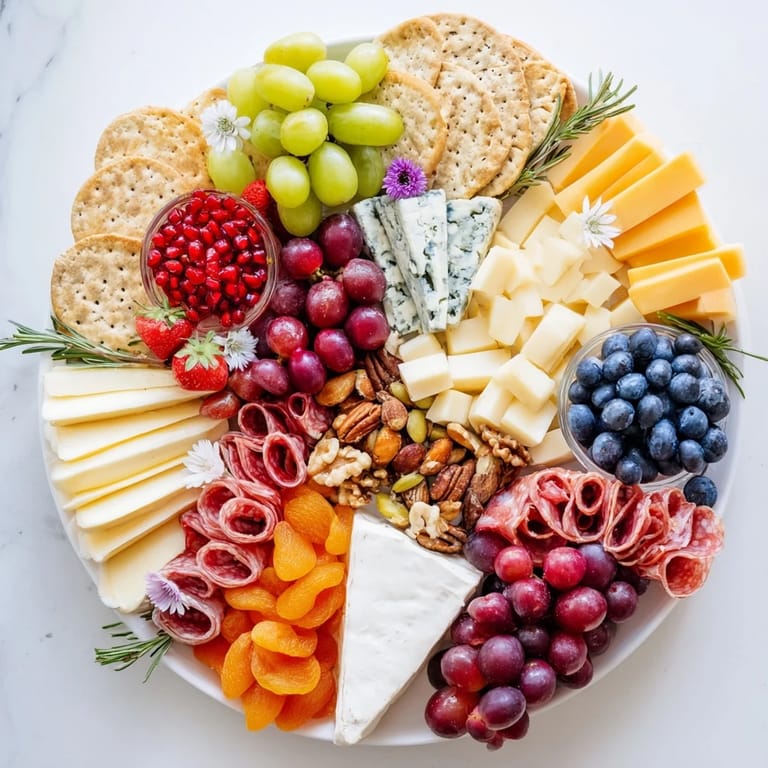
Save I'll never forget the first time I saw The Nutcracker Suite performed during the holiday season—the moment those stage lights hit the grand ballroom scene, I was absolutely mesmerized. Years later, when hosting a holiday gathering, I wanted to capture that same sense of theatrical grandeur on my dining table. That's when I created this Nutcracker-inspired grazing board: a towering celebration of color, elegance, and abundance that transforms a simple appetizer into an edible work of art. Every element is intentionally placed, every hue carefully chosen, like a masterpiece unfolding before your guests' eyes.
I remember standing in my kitchen the night before a big dinner party, feeling the familiar pre-party panic, when my sister walked in and asked what my plan was. I gestured to my scattered ingredients—five types of cheese, colorful fruits everywhere, nuts in bowls—and she laughed. "Just make it beautiful," she said. That single suggestion changed everything. Instead of stress, I felt creativity wash over me. Three hours later, I stepped back to admire this towering board, and when my guests arrived and gasped, I realized I'd created something that wasn't just food—it was conversation, it was memory, it was theater on a table.
Ingredients
- Brie (150 g): The creamy white anchor of your board. Let it sit at room temperature for 20 minutes before serving so guests can actually spread it on crackers without frustration
- Aged cheddar (150 g): Choose a sharp, richly golden variety—this is your yellow block's star and it needs presence
- Blue cheese (150 g): A bold, polarizing beauty that creates drama. Position it where adventurous eaters will find it first
- Gouda (150 g): Smooth, slightly sweet, and that gorgeous orange-amber color that catches the light. This one bridges the gap between familiar and adventurous
- Cranberry goat cheese (100 g): The jewel tone of your cheese selection. Its soft texture and subtle tang make it a gateway cheese for skeptics
- Prosciutto (100 g): Buy it sliced paper-thin from the deli counter, not pre-packaged. The difference in texture and delicacy is everything
- Salami and soppressata (200 g combined): Slice these thick enough to hold their shape but thin enough to curl slightly. They're your red block's foundation
- Red and green grapes (2 cups): Choose the firmest ones you can find. They roll around less and stay exactly where you place them
- Blueberries (1 cup): Buy fresh, rinse gently, and pat completely dry. Wet berries slide around and stain everything—learned that the hard way
- Strawberries (1 cup): Slice these just before assembly. Exposed cut surfaces brown quickly and lose their shine
- Dried apricots (1 cup): Their chewiness and natural sweetness provide textural contrast that keeps people reaching back
- Pomegranate seeds (1 cup): These ruby jewels are pure visual drama. Their tartness cuts beautifully against the sweetness of chocolate and macarons
- Marcona almonds (1/2 cup): Buttery and slightly sweet—these are the good ones. Worth every penny for their color and taste
- Pistachios (1/2 cup): Their bright green hue is non-negotiable for the color story. Keep them in their shells if your guests don't mind the theater of shelling
- Candied pecans (1/2 cup): Make or buy these. They provide warmth and crunch that plain nuts simply cannot match
- Mixed olives (1/2 cup): Variety matters here. Mix green castelvetrano with kalamata for color contrast and flavor complexity
- Crackers and baguette (1/2 cup and 1/2 baguette): Toast the baguette slices lightly to prevent sogginess. Use interesting crackers, not plain saltines
- White and dark chocolate bark (300 g combined): Look for chocolate with character—something with sea salt in the white, maybe a hint of lavender in the dark
- Macarons and petit fours (24 pieces): Buy from a good bakery or artisan maker. These are your dessert punctuation mark, so they need to be beautiful
- Fresh rosemary sprigs and edible flowers: These aren't decoration—they're proof that you care about every detail. They transform "nice board" into "unforgettable board"
Tired of Takeout? 🥡
Get 10 meals you can make faster than delivery arrives. Seriously.
One email. No spam. Unsubscribe anytime.
Instructions
- Build Your Stage:
- Start with your foundation. Arrange cake stands, pedestals, and platters to create varying heights—this is where the magic happens. Your tallest tier should reach about shoulder height, creating a dramatic centerpiece. Steady everything with a few test touches. Nothing should wobble. Trust me, a toppling grazing board mid-party is the opposite of elegant
- Anchor Your Neutrals:
- Begin at the base tier, arranging crackers in overlapping clusters and baguette slices in a casual lean. Scatter marcona almonds in a loose handful near the edge. These neutral elements anchor the color story you're about to tell. They're the stage floor to your performance
- Create Color Blocks:
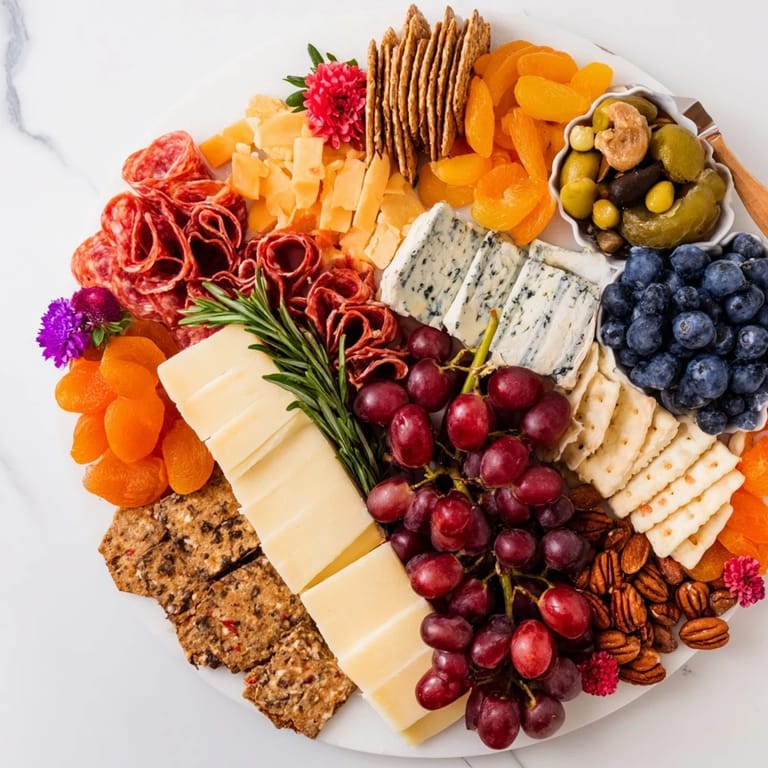
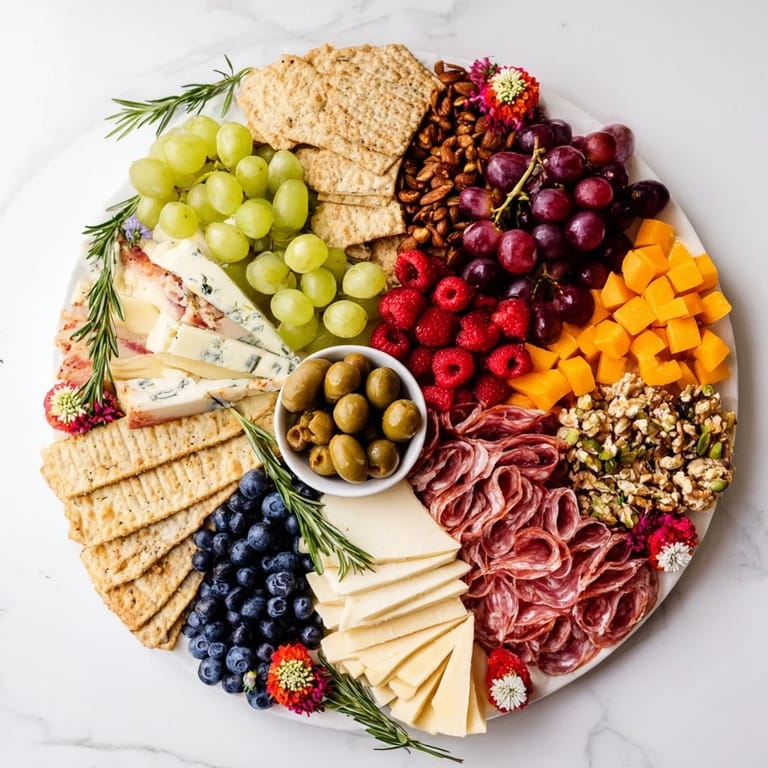
- This is where intention meets artistry. Organize each ingredient by color, creating distinct sections rather than mixing. Think of painting with food—reds here, yellows there, blues creating distance and drama. Clear color boundaries create visual impact that makes people pause and admire before they eat
- Place Your Cheese:
- Cut some pieces into shapes, leave others as whole wedges. Angle them to show their cross-sections and color. Brie at the front where guests can access it easily. Blue cheese positioned near other bold flavors so it doesn't feel lonely. Each cheese gets its own moment of glory
- Drape the Charcuterie:
- This is pure theater. Fold prosciutto gently into loose waves between cheese sections. Arrange salami slightly overlapped to show multiple slices at once. Let your hands move with intention here—this part takes five minutes but looks like you labored for an hour
- Fill with Fruit:
- Layer grapes in clusters, creating small mountains of color. Scatter berries deliberately, not carelessly. Arrange strawberry slices in a gentle fan. Let some fruit spill slightly into adjacent sections—this controlled overflow creates abundance. Pomegranate seeds deserve to be scattered individually where they'll catch the light
- Scatter Nuts and Sweets:
- Pistachios in one corner, candied pecans in another. Olives in a small bowl set into the board. Chocolate pieces arranged in a section that feels balanced. Position macarons and petit fours where they're visually striking but not dominating—they're the encore, not the main act
- Garnish with Purpose:
- Tuck rosemary sprigs between sections where they add height and green. Scatter edible flowers just before guests arrive—they wilt if left too long. These final touches say you care about details the way a musician cares about a single perfect note
- Final Check and Serve:
- Step back. Look at it from your guests' perspective. Is there balance? Do colors tell a story? Are all tiers stable and accessible? Then, set it down, take a breath, and watch people's faces when they see what you've created. That moment is why we make beautiful food
 Save
Save What I remember most from that first Nutcracker board wasn't the compliments—though there were many. It was watching my eight-year-old niece's face light up when she realized she could reach the petit fours herself, and seeing my grandmother actually eat cheese and fruit together because the board made her brave enough to try something new. In that moment, I understood that this wasn't really about impressing anyone. It was about creating something so beautiful that it gave people permission to enjoy themselves fully, to feel celebrated just by how much care had gone into the presentation of their food.
The Art of Color Blocking
The true power of this board lies in its theatrical use of color. When you organize by hue rather than ingredient type, something shifts in how people perceive abundance. A chaos of random items feels cluttered; a carefully arranged spectrum of color feels intentional and elegant. Think of it like a painter's palette—the colors matter as much as the ingredients themselves. I learned this when my first board looked beautiful individually but felt scattered as a whole. Once I committed to color zones, it transformed. The visual impact became undeniable, and suddenly people understood they were eating something special before they even tasted it.
Building Height and Drama
One of the biggest mistakes I see people make with grazing boards is keeping them flat. Height changes everything. When you use cake stands, pedestals, even overturned bowls beneath platters, you create a three-dimensional conversation piece instead of just a platter. Your guests can see every element from multiple angles. Light plays across the different levels, making colors more vivid. And practically speaking, tiered arrangement makes more space in a smaller footprint—you can fit 12–16 servings of ingredients on a board that seems modest from above.
Pairing and Service Suggestions
This board is flexible enough to adapt to your celebration, and thoughtful pairing elevates the entire experience. Sparkling wine highlights the tartness of berries and cuts through rich cheese. A light red wine—something like a Pinot Noir—complements the charcuterie without overwhelming the delicate flavors. For non-alcoholic options, herbal teas like chamomile or peppermint echo the rosemary garnish and feel seasonally appropriate. The beauty of a grazing board is that guests pace themselves, so you don't need to time courses. Just keep the board refreshed: remove any items that look tired, top up the fruits and nuts, and watch people return multiple times throughout your gathering.
- Sparkling wine or Prosecco pairs beautifully with the fruit and lighter cheese elements
- A Pinot Noir or Beaujolais complements the charcuterie and aged cheeses without overpowering the board
- Always let guests know where to find napkins, small plates, and cheese knives—hidden supplies take away from the presentation
 Save
Save Making this Nutcracker board taught me that elegance doesn't require complicated technique—it requires intention and an appreciation for beauty in simplicity. It's the kind of dish that makes people feel celebrated without making you feel stressed.
Recipe Q&A
- → How do I assemble the multi-tiered grazing board?
Use a large board or stack multiple platters on cake stands or pedestals to create height. Begin with neutral items at the base and layer colorful blocks of cheeses, charcuterie, fruits, and sweets on top.
- → Can I customize the colors on the board?
Absolutely. Arrange ingredients by color blocks and swap items to match your theme or preferences, ensuring visual contrast and balance.
- → What vegetarian substitutions work well?
Omit the charcuterie and add extra cheeses, marinated vegetables, or roasted nuts to maintain variety and texture.
- → How should I store leftovers?
Store components separately in airtight containers in the refrigerator. Keep crackers and bread sealed tightly to maintain freshness.
- → What pairings complement this board?
Pair with sparkling wine, light red wine, or herbal teas to enhance the flavors and festive atmosphere.