 Save
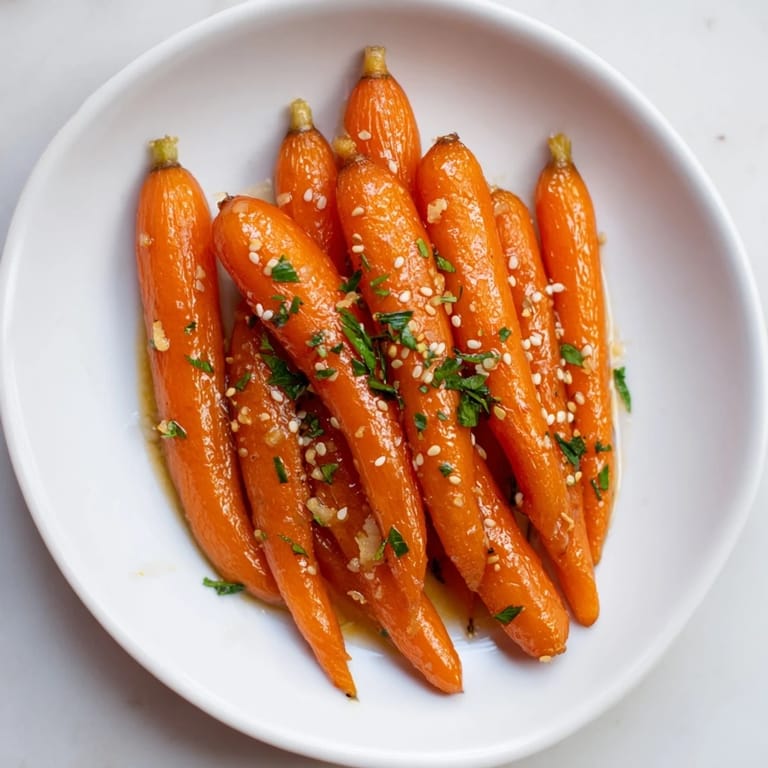
Save I discovered this recipe on an ordinary Tuesday while staring at a bunch of baby carrots that needed rescuing from the back of my fridge. Something about the way the afternoon light hit them made me think about transformation—how heat and a good glaze could turn something humble into something people actually fought over at dinner. That's when I grabbed the honey and soy sauce, convinced I was onto something.
The real test came when I made these for my neighbor who claimed she didn't eat vegetables. She stood in my kitchen watching them roast, the glaze bubbling and turning glossy, and by the time I pulled them out, she'd already claimed the corner piece with the crispiest edges. That's when I knew this recipe had staying power.
Ingredients
- Baby carrots (500g/1 lb), peeled and trimmed: Look for ones about the same size so they cook evenly—thin ones at the edges, thicker ones toward the center of the tray, if you're being particular about it.
- Honey (2 tbsp): The sweetness anchor, but it's tempered by everything else so they don't taste like candy.
- Soy sauce (2 tbsp): Use tamari if you're avoiding gluten—the flavor is nearly identical and you won't regret it.
- Olive oil (1 tbsp): This helps the glaze coat evenly and prevents sticking.
- Sesame oil (1 tsp): Just a whisper of this, but it makes people ask what's in them.
- Garlic, finely minced (1 clove): Don't skip this or use powder—the fresh stuff matters here.
- Freshly ground black pepper (½ tsp): White pepper works too if that's what you have, but black looks better when you're plating.
- Toasted sesame seeds (1 tsp) and fresh parsley or cilantro (2 tbsp) for garnish: These are optional but absolutely worth doing—they add a final flourish that makes the dish feel intentional.
Tired of Takeout? 🥡
Get 10 meals you can make faster than delivery arrives. Seriously.
One email. No spam. Unsubscribe anytime.
Instructions
- Get your oven ready and set the stage:
- Heat your oven to 200°C (400°F) and line a baking sheet with parchment paper. This takes two minutes but saves you from scrubbing caramelized glaze later.
- Build the glaze:
- In a large bowl, whisk together the honey, soy sauce, olive oil, sesame oil, minced garlic, and black pepper until it looks cohesive and the garlic is distributed. Don't overthink it—a minute of whisking is all you need.
- Coat the carrots thoroughly:
- Tip the baby carrots into the glaze and toss them around until every single one is coated. Use your hands if you need to—sometimes a spoon just doesn't reach everywhere.
- Arrange and roast:
- Spread the carrots in a single layer on your prepared baking sheet, leaving any glaze clinging to the sides of the bowl behind at first. Pour the remaining glaze over the top, then slide everything into the oven.
- The turning point:
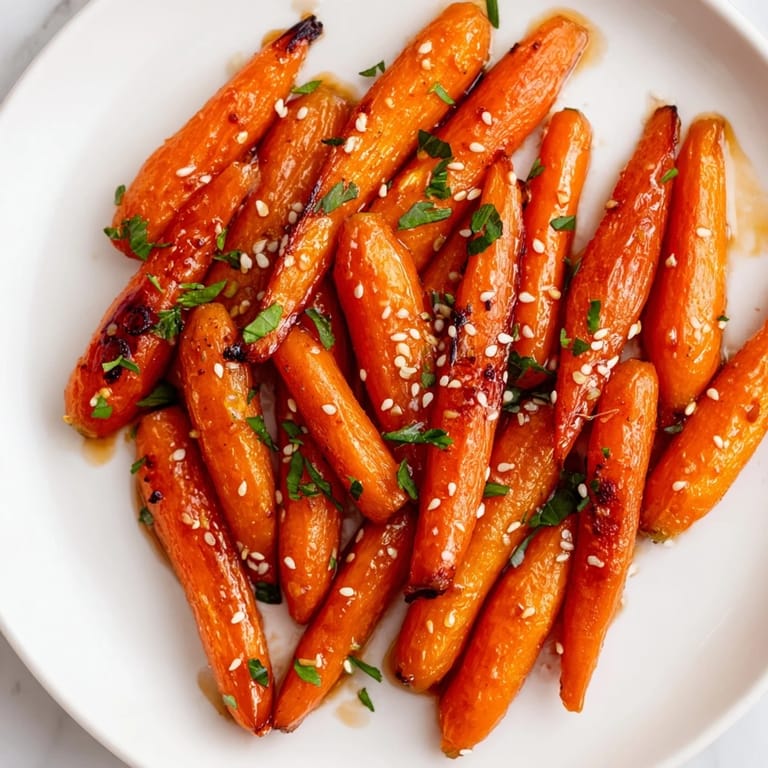
- After about 12 minutes, give the carrots a gentle toss or flip them over. This ensures even caramelization and keeps the thinner ones from overdoing it while the thicker ones catch up. They're done when they're fork-tender and the edges have deepened to a golden-brown.
- Finish and serve:
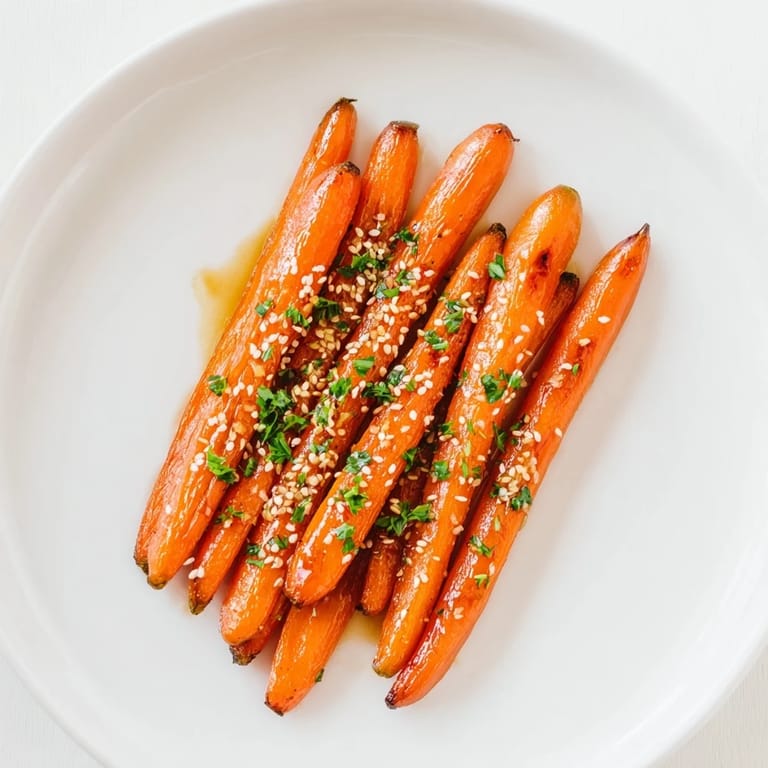
- Transfer everything to a serving dish, scatter sesame seeds and fresh herbs over the top if you're using them, and serve while they're still warm enough that the glaze is slightly glossy.
 Save
Save There was a moment, maybe halfway through cooking, when my partner wandered into the kitchen and just stood there breathing in. No words, just that look that tells you something smells good. That's when I realized this recipe wasn't just about getting vegetables on the table—it was about creating that small, sensory moment that makes dinner feel special.
Timing and Flexibility
The beauty of this recipe is how forgiving it is. If your carrots are smaller, they might be done in 18 minutes—just check with a fork. If they're chunky, give them the full 25. I've made these ahead and reheated them with a splash of water, and they revive beautifully. The glaze doesn't break, the carrots don't dry out, and everything tastes like you just pulled it from the oven.
Variations That Work
Swap maple syrup for honey and these become vegan without anyone noticing. Add a pinch of chili flakes to the glaze if heat is your thing, or a tiny splash of rice vinegar for brightness. I've even added a spoonful of miso paste once and immediately wondered why I'd never thought of that before. The core recipe is flexible enough to adapt to whatever you've got or whatever you're craving.
What Makes This Recipe Work
The secret is balance. The honey wants to be sweet, the soy sauce keeps things savory and complex, and the sesame oil adds a background note that people can't quite identify but absolutely respond to. Everything works together, which is why this side dish disappears faster than the main course.
- Don't use regular soy sauce if you need gluten-free—tamari tastes nearly identical and won't compromise your guests.
- Toasted sesame seeds are worth the extra minute—they add a textural pop that makes each bite more interesting.
- Serve these warm or at room temperature, but never straight from the fridge.
 Save
Save This recipe proved to me that side dishes don't need to be complicated to be memorable. Sometimes the simplest combinations, made with attention and care, become the ones people ask you to bring to every gathering.
Recipe Q&A
- → What type of soy sauce should I use for gluten-free?
Use tamari soy sauce as a gluten-free alternative to regular soy sauce to maintain flavor without gluten.
- → Can I substitute honey in the glaze?
Yes, maple syrup can replace honey for a vegan-friendly glaze while keeping the sweetness.
- → How do I ensure the carrots roast evenly?
Arrange the carrots in a single layer on a lined baking sheet and turn them halfway through roasting for even caramelization.
- → What additional flavors can enhance this dish?
A pinch of chili flakes can add subtle heat to complement the sweet and savory glaze.
- → How long should the carrots be roasted?
Roast the carrots for 20–25 minutes at 200°C (400°F) until tender and caramelized.