 Save
Save My first spanakopita came together on a rainy Athens afternoon when my grandmother's neighbor stopped by with a warm slice wrapped in newspaper. The phyllo was impossibly crisp, the filling fragrant with dill and something earthy I couldn't quite name. I asked for the recipe that evening, and she laughed—said the secret was patience and not being afraid of the butter. Years later, I finally understood what she meant.
I made this for a dinner party once when I was still learning, convinced something would go wrong. But watching my friends tear into their squares, their faces lighting up—that's when I stopped worrying about perfection and started enjoying the cooking itself.
Ingredients
- Fresh spinach (2 lbs) or frozen (1 lb, thawed and drained): The backbone of everything—fresh gives brightness, frozen is more forgiving and honestly works beautifully once you've squeezed out every drop of water.
- Yellow onion (1 medium) and scallions (2): These soften into sweetness during the sauté, building the savory foundation that makes people ask what you did differently.
- Fresh dill (3 tbsp) and fresh parsley (1/4 cup): Dried dill works if that's what you have, but fresh dill is where this dish comes alive—peppery, slightly anise-like, unmistakably Greek.
- Feta cheese (8 oz, crumbled) and ricotta or cottage cheese (1/2 cup optional): Feta brings salt and tang; ricotta adds richness that makes the filling feel luxurious without being heavy.
- Eggs (2, lightly beaten): These bind everything together and give the filling structure so it doesn't fall apart when you cut and serve.
- Ground nutmeg (1/4 tsp), black pepper (1/2 tsp), salt to taste: Nutmeg is the quiet player here—just enough to make people wonder what they're tasting.
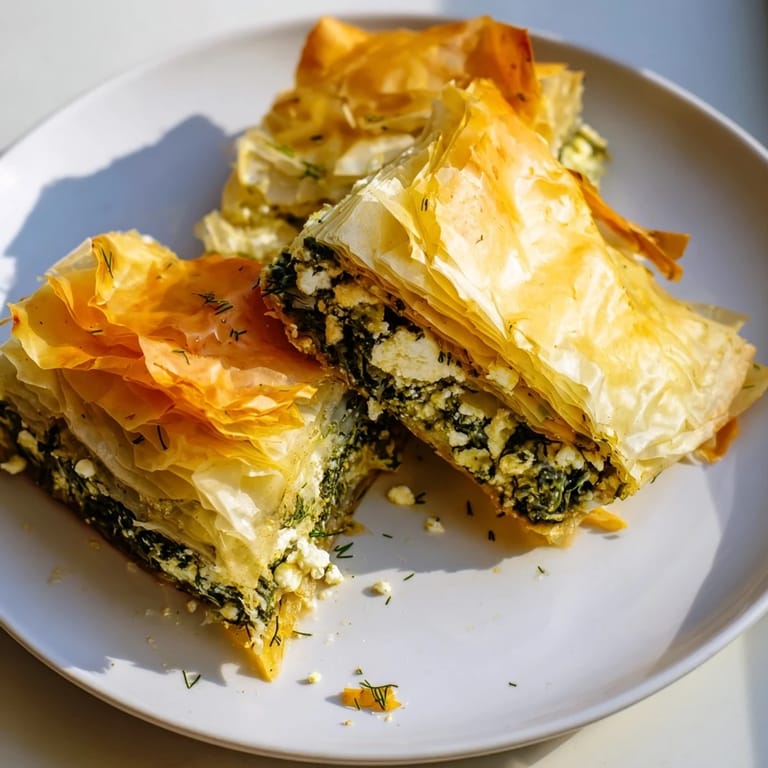
- Phyllo dough (1 lb, thawed): Handle it gently; it tears, but those tears actually disappear once the oil hits them during baking.
- Olive oil or melted butter (1/2 cup) for brushing: This is what makes the phyllo crackle and sing—don't skimp, but don't drown it either.
Tired of Takeout? 🥡
Get 10 meals you can make faster than delivery arrives. Seriously.
One email. No spam. Unsubscribe anytime.
Instructions
- Get your mise en place ready:
- Preheat your oven to 350°F and lightly grease your 9x13-inch baking dish. Chop your spinach, onion, scallions, dill, and parsley while everything is still fresh and fragrant—the smell alone reminds you why you're cooking.
- Build the base with softened aromatics:
- Heat 2 tbsp olive oil in a large skillet over medium heat and add your chopped onion and scallions. Let them soften and turn translucent, about 5 minutes, until they smell sweet and mild.
- Wilt and dry the spinach:
- Add your chopped spinach to the pan in batches if it's fresh—it'll seem like an impossible mountain at first, then collapse into something manageable. Cook until wilted and most of the liquid has evaporated; this takes patience, but it's the move that keeps your spanakopita from being soggy.
- Combine and season the filling:
- Let the spinach cool slightly, then transfer everything to a bowl and mix in your dill, parsley, crumbled feta, ricotta if using, beaten eggs, nutmeg, pepper, and salt. Taste and adjust—the filling should taste bright and well-seasoned on its own.
- Layer the phyllo base:
- Lay one sheet of phyllo in your prepared dish, letting the edges hang over the sides naturally. Brush lightly with oil or melted butter—you're not trying to soak it, just coat it enough so it crisps. Repeat with 6 to 7 more sheets, brushing each one, building your foundation.
- Spread the filling:
- Once your base is ready, spread the spinach-feta mixture evenly across the phyllo, pressing gently so it settles into an even layer.
- Seal with the top layers:
- Layer your remaining phyllo sheets on top, brushing each with oil or butter just as you did with the base. Tuck the overhanging edges down into the sides of the dish to create neat edges.
- Score for portion control:
- Using a sharp knife, score the top layers into squares or diamonds—this is about creating clean serving lines, not cutting all the way through to the filling. Your future self will thank you when it's time to serve.
- Bake until golden and crisp:
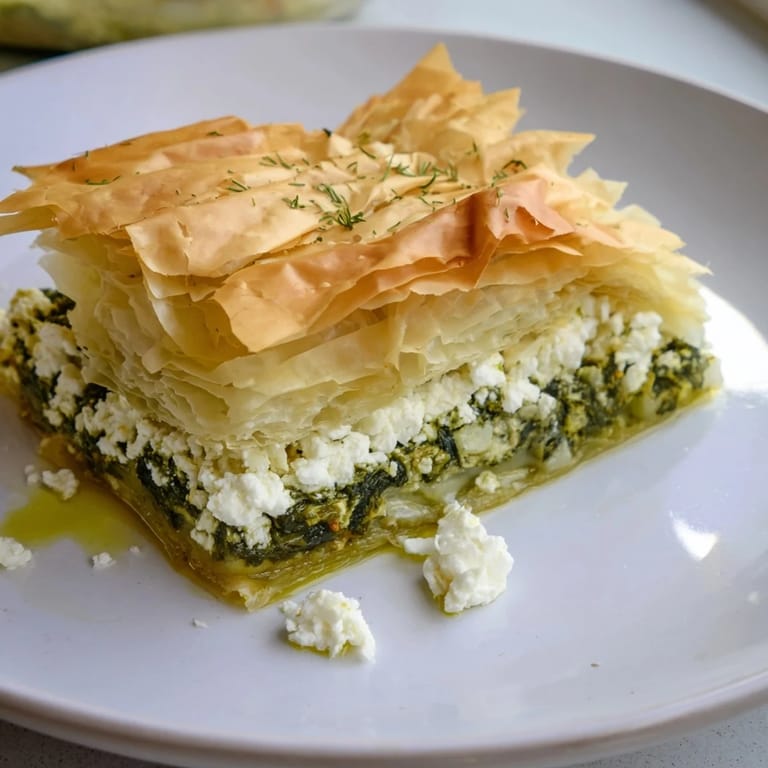
- Bake for 35 to 40 minutes until the top is deep golden brown and the phyllo sounds crisp when you tap it. Let it cool for 10 minutes before serving; this gives the filling time to set so your slice stays together.
 Save
Save There's something almost meditative about brushing phyllo sheet after phyllo sheet with oil, the repetition becoming a kind of conversation between your hands and the dough. When it comes out of the oven and the kitchen fills with that golden, buttery aroma, you know you've made something real.
Why Phyllo Deserves Your Respect
Phyllo looks delicate and acts delicate, but it's actually forgiving in ways home cooks don't expect. Yes, it tears—but a thin layer of oil seals those tears so invisibly that imperfection becomes invisible. The real danger isn't in handling it clumsily; it's in being stingy with the oil and ending up with a dense, cardboard-like crust. Every sheet needs its kiss of butter or oil, applied gently with a pastry brush, and in return, you get this impossible crispness that's almost hollow when you bite it.
The Filling: Where Flavor Lives
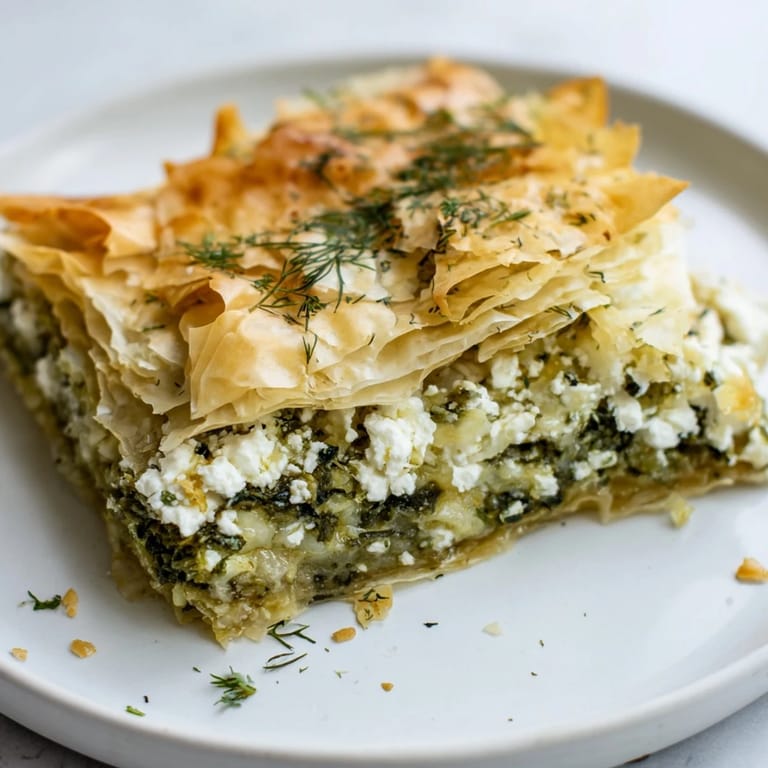
The spinach and feta are only half the story; it's dill and nutmeg that transform this from a vegetable pie into something that tastes like you've been to Greece. Fresh dill has a brightness that dried simply can't replicate, and nutmeg—used sparingly—adds a whisper of warmth that makes people pause and ask what that flavor is. This is the part where you taste as you go, adjusting salt and seasoning until it feels right on your tongue.
Serving and Storing Your Spanakopita
Spanakopita is best served warm, but it's also genuinely good at room temperature, which makes it perfect for eating straight from the cooling pan with your hands like you're a guest at your own table. Wrapped carefully, it keeps for three days in the fridge and can be reheated gently in a 300°F oven for about 10 minutes to restore some of its crispness.
- Pair it with a crisp white wine like Assyrtiko or Sauvignon Blanc, and consider a simple Greek salad on the side to cut through the richness.
- If you want a lighter version, use less oil when brushing the phyllo, though you'll sacrifice some of that shattered, crispy magic.
- Chard or a mix of spring greens work beautifully in place of spinach if you want to experiment or change things up based on what's at your market.
 Save
Save This spanakopita is the kind of dish that tastes like care—like someone wanted to feed you something good and took the small steps to make it sing. Make it once, and it becomes a comfort you want to return to.
Recipe Q&A
- → What type of spinach works best?
Fresh spinach yields the best texture and flavor, but well-drained frozen spinach can be used as a convenient alternative.
- → Can I substitute other greens for spinach?
Yes, chard or a mixed greens blend can replace spinach for a slightly different taste and texture.
- → How do I keep the phyllo dough crisp?
Brushing each phyllo layer with olive oil or melted butter helps create a golden, flaky crust that stays crisp after baking.
- → Should the filling be drained before use?
Excess moisture should be squeezed from the cooked spinach to prevent soggy pastry and ensure a firm filling.
- → What cheeses are included in the filling?
Feta cheese is the main component, often complemented by ricotta or cottage cheese for creaminess.
- → What herbs enhance the filling's flavor?
Dill and parsley brighten the filling, contributing aromatic and fresh notes typical of Greek cuisine.