 Save
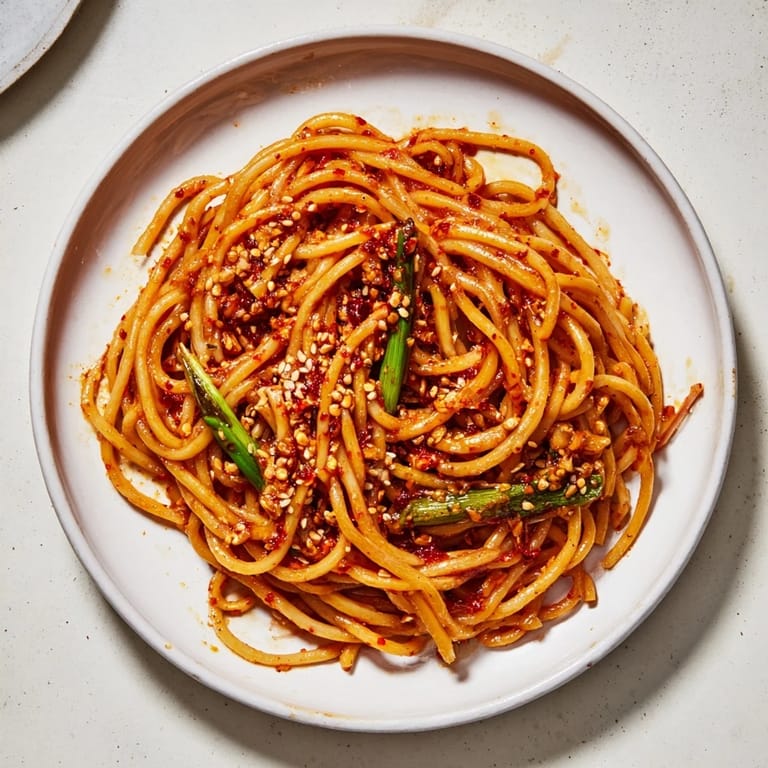
Save I made these noodles at midnight on a Tuesday, standing in my kitchen with the window cracked open because the chili oil smoke had started creeping into every corner. My neighbor had just given me a bag of Sichuan peppercorns from their garden trip, and I was desperate to use them before they lost their tingle. The sizzle when hot oil hit the garlic bowl was so loud it made me jump, but the smell that followed—toasty, spicy, alive—made it worth every startled nerve.
I served this to my roommate on a cold evening, and she ate directly from the pot while watching something on her phone, completely unbothered by the heat or the oil that got on her fingers. That's when I knew it was the kind of dish that doesn't need ceremony—just hunger and an open mouth. She's made it three times since without asking for the recipe, just showing up at my kitchen asking where the sesame oil goes.
Ingredients
- Wheat noodles (200g): Use fresh or dried Chinese wheat noodles if you can find them; they're chewier and soak up oil better than regular pasta, but linguine works fine in a pinch.
- Garlic (4 cloves): Mince it finely so it doesn't bite too harshly when raw; the oil will mellow it out, but raw garlic chunks are not your friend here.
- Scallions (2): Separate the white and green parts—the whites go into the oil for a cooked, mellow flavor, and the greens stay raw as a bright finish.
- Toasted sesame seeds (1 tablespoon): Buy them already toasted if possible; raw seeds taste flat and won't give you that nutty depth.
- Chili flakes (2½ tablespoons): Sichuan or Korean varieties have more personality than generic red pepper flakes, and you can always add more if you're braver than me.
- Sichuan peppercorns (½ teaspoon, optional): These create a numbing sensation that sounds weird until you taste it—it's not heat, it's a buzzing tingle that opens your mouth up.
- Ground white pepper (¼ teaspoon): Don't skip this; it adds a ghost of heat that plays nicely with the chili without overpowering it.
- Sugar (½ teaspoon): Balances the spice and acidity, making the whole dish sing instead of just burn.
- Salt (½ teaspoon): Taste as you go; you might need a bit more depending on your other ingredients.
- Neutral oil (3 tablespoons): Use something with a high smoke point like canola or grapeseed—olive oil will taste off here.
- Light soy sauce (1½ tablespoons): The backbone of your sauce; it brings umami and saltiness without overpowering the heat.
- Chinese black vinegar (1 tablespoon): This is the secret weapon—rich, slightly sweet, and complex in ways that regular vinegar isn't.
- Dark soy sauce (1 teaspoon, optional): Just for color and a deeper salty note; skip it if you only have one kind of soy sauce.
- Toasted sesame oil (½ teaspoon): A little goes a long way; too much and it tastes medicinal, too little and you miss the warmth.
Tired of Takeout? 🥡
Get 10 meals you can make faster than delivery arrives. Seriously.
One email. No spam. Unsubscribe anytime.
Instructions
- Boil the noodles:
- Cook them according to the package until they're tender but still have a slight chew, then drain them in a colander and set them aside. Save about 2 tablespoons of that starchy cooking water—it acts like a glue that helps everything cling to the noodles.
- Build your chili oil base:
- In a heatproof bowl, combine the minced garlic, white parts of the scallions, chili flakes, Sichuan peppercorns if using, white pepper, sugar, and salt along with the sesame seeds. This is your flavor bomb waiting to wake up.
- Heat the oil until it shimmers:
- In a small saucepan over medium-high heat, warm the neutral oil until it's shimmering and moving freely but not smoking—you want it hot enough to bloom the spices, not burn them. This takes about 2 minutes of watching.
- Pour the hot oil over the spices:
- Carefully pour the hot oil over your chili-garlic mixture and listen for the sizzle—it should sound dramatic and smell even more dramatic. Stir everything together quickly so the spices toast evenly and nothing burns.
- Make your sauce:
- In a large bowl, whisk together the light soy sauce, black vinegar, dark soy sauce if using, and sesame oil, then stir in that reserved noodle water to dilute it slightly and make it coat better.
- Bring it all together:
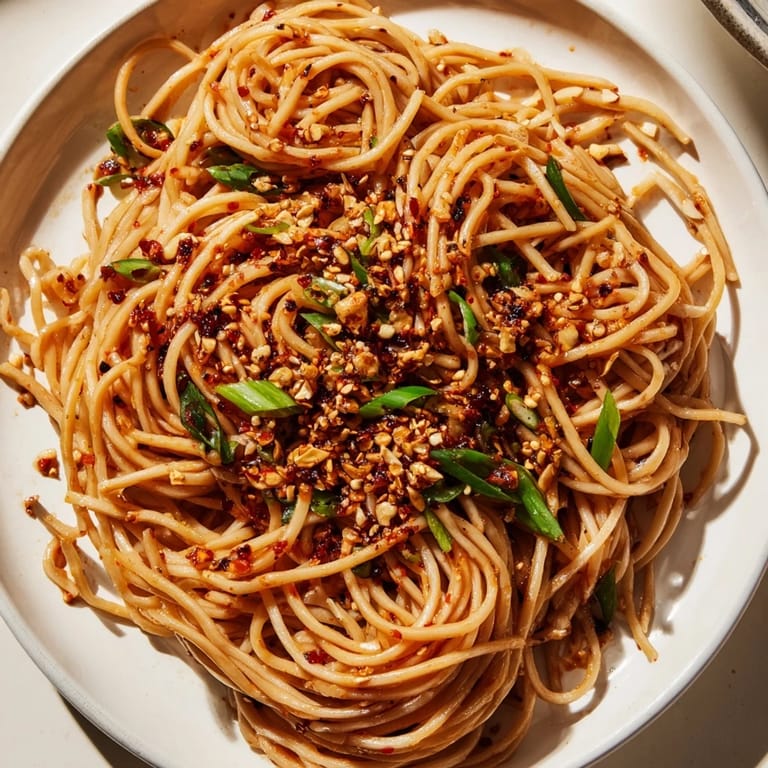
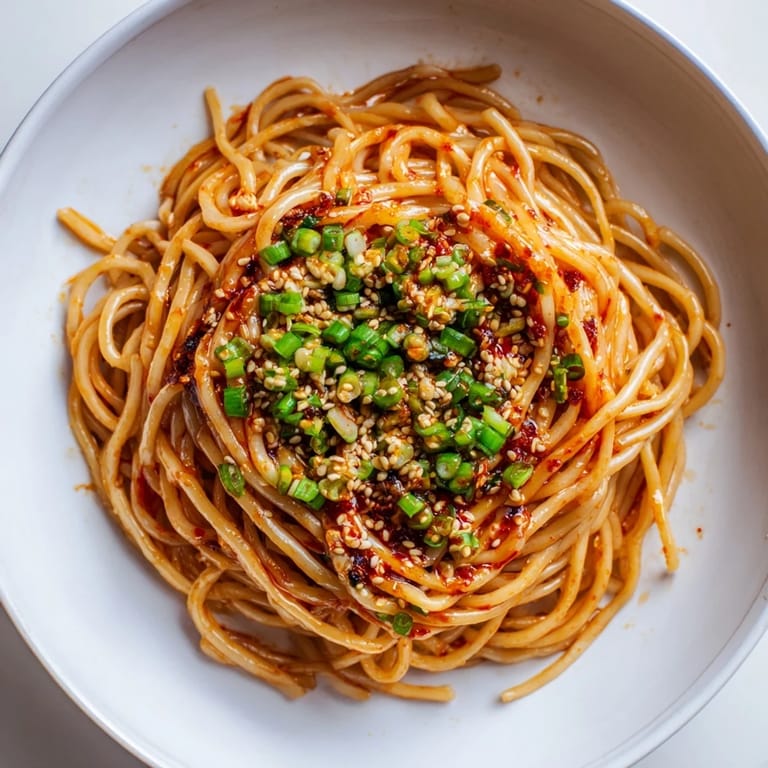
- Add the drained noodles to your sauce bowl, then pour the entire chili oil mixture over top—all the oil, all the garlic, everything. Toss hard and fast until the noodles are glossy and evenly coated in that red-gold oil.
- Finish and serve:
- Scatter the green parts of the scallions and a handful of extra sesame seeds on top, then eat immediately while the noodles are still warm and the oil is still fragrant. This dish doesn't keep; it's meant to be devoured.
 Save
Save My favorite moment with this dish was when my friend's six-year-old nephew tried a tiny bit off a fork and immediately chugged water, then asked for more because he wanted to be brave like his uncle. That's when food stops being about technique and becomes about connection—about sharing something that makes your eyes water and your mouth sing.
Why the Oil Matters
The entire dish lives or dies by that chili oil, and I learned this the hard way by using cold oil once and wondering why everything tasted flat and separated. Hot oil blooms the spices, wakes up the chili flakes, and turns raw garlic into something golden and mellow instead of sharp and unpleasant. The sizzle and smell aren't just for drama—they're proof that the aromatics are toasting and releasing all their hidden flavors into the oil.
Playing with Heat
If you're spice-sensitive, start with 1½ tablespoons of chili flakes and work your way up; if you love heat like my friend does, go up to 3 tablespoons and add the Sichuan peppercorns without question. I've served this to people who can barely handle jalapeños and people who eat ghost peppers for fun, and the beauty is that everyone can adjust it to their own threshold. The vinegar and sugar are there to smooth out the edges anyway, so the heat feels less aggressive than it looks.
Making It a Full Meal
On nights when I'm hungrier or need more sustenance, I'll add sautéed mushrooms, crispy tofu, shredded rotisserie chicken, or even a handful of steamed bok choy right before tossing everything together. The noodles are the canvas, and the chili oil is the paint, so you can decorate however you want without changing the core character of the dish. Just remember to keep whatever you add warm so it doesn't cool down your noodles.
- Sautéed mushrooms or tofu soaks up the oil and becomes irresistibly rich.
- A poached or soft-boiled egg on top turns this into something borderline luxurious.
- If you're adding vegetables, give them a quick toss in the same oil to keep the flavor cohesive.
 Save
Save This dish has become my go-to when I'm tired but not willing to compromise on flavor, and somehow it always feels like someone else made it for me. That's the real magic here—twenty minutes and you've got something that tastes like care.
Recipe Q&A
- → What type of noodles work best?
Wheat noodles like Chinese wheat noodles or linguine hold the sauce well and provide a chewy texture.
- → How can I adjust the spice level?
Modify the amount of chili flakes and Sichuan peppercorns to control the heat according to your preference.
- → Can I add protein or vegetables?
Yes, sautéed vegetables, tofu, or shredded chicken complement the noodles and add extra texture and nutrition.
- → What is the purpose of pouring hot oil over the aromatics?
The hot oil releases intense flavors and aromas from the garlic and spices, creating the signature fragrant chili oil base.
- → How should I serve the dish?
Serve immediately, garnished with green scallion parts and toasted sesame seeds, tossing once more before eating.