 Save
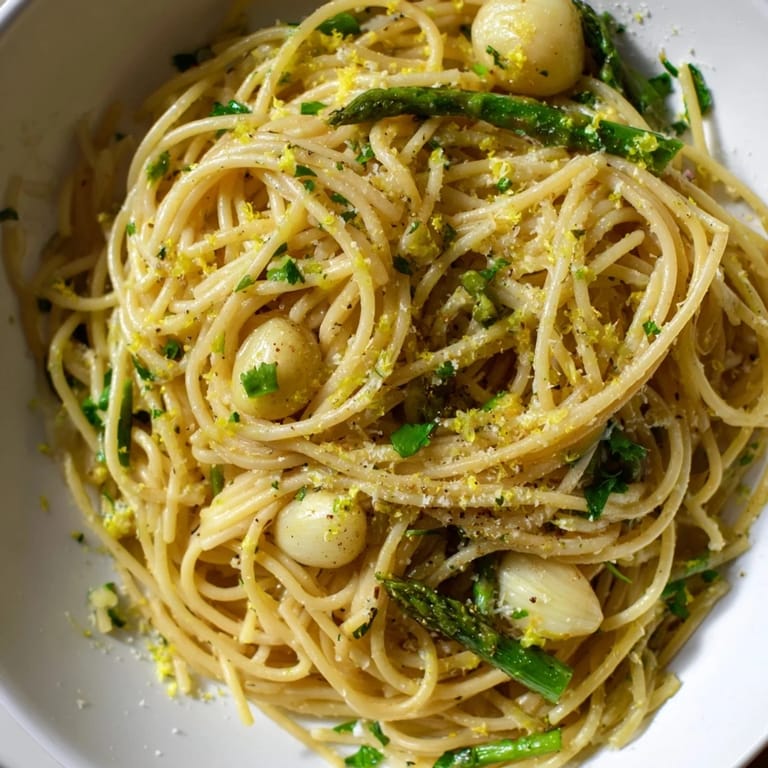
Save The first time I roasted garlic heads whole, I stood by the oven door, mesmerized by how those tight, papery bundles transformed into buttery, golden cloves. My kitchen filled with this mellow sweetness that made me realize garlic doesn't always have to be sharp and assertive. Now I keep roasted garlic in my fridge constantly, ready to fold into pasta, spread on toast, or just eat straight from the clove.
I made this for my sister last spring when she came over complaining about being exhausted from work. She watched me squeeze those soft roasted cloves out of their skins, half skeptical, and then practically licked her plate clean. Now she texts me whenever asparagus goes on sale at the grocery store.
Ingredients
- 1 large head garlic: Roasting transforms sharp raw cloves into something spreadable and sweet, almost like a savory confit
- 1 bunch fresh asparagus: Look for tight, compact tips and firm stalks, avoid woody stems that bend too easily
- 12 oz spaghetti: The long strands twine perfectly around asparagus pieces and catch that garlicky olive oil
- 1/4 cup extra-virgin olive oil, plus more: This is your sauce base, so use oil you actually like the taste of
- 1/2 teaspoon sea salt: Since Parmesan is naturally salty, taste before adding more at the end
- 1/4 teaspoon freshly ground black pepper: Grind it fresh right before you need it
- 1/4 teaspoon red pepper flakes: Just a whisper of heat that makes everything else taste brighter
- 1/2 cup grated Parmesan cheese: Buy a wedge and grate it yourself, the pre-grated stuff resists melting
- Zest of 1 lemon: Avoid the bitter white pith when zesting, you just want the fragrant yellow outer layer
- 2 tablespoons fresh parsley: Flat-leaf parsley has more flavor than the curly variety
Tired of Takeout? 🥡
Get 10 meals you can make faster than delivery arrives. Seriously.
One email. No spam. Unsubscribe anytime.
Instructions
- Roast the garlic until golden:
- Slice the top third off your garlic head so the cloves are exposed, drizzle with olive oil, wrap tightly in foil, and roast at 400°F for 30 minutes until cloves are soft and golden brown.
- Roast the asparagus:
- After the garlic has been roasting for 15 minutes, toss asparagus on a baking sheet with olive oil, salt, and pepper, then roast for 12-15 minutes until just tender with slight char.
- Cook the pasta:
- Boil spaghetti in generously salted water until al dente, then reserve 1/2 cup of the starchy pasta water before draining.
- Prep the garlic:
- Let the roasted garlic cool briefly, then squeeze the soft cloves out of their skins and mash gently with a fork into a rough paste.
- Build the sauce base:
- Warm 1/4 cup olive oil in a large skillet over medium heat, add the mashed garlic, and sauté for 1-2 minutes until fragrant.
- Combine everything:
- Add roasted asparagus and cooked spaghetti to the skillet, tossing well and adding pasta water as needed to create a silky coating.
- Finish with brightness:
- Stir in Parmesan, lemon zest, parsley, and red pepper flakes, then taste and adjust seasoning before serving immediately.
 Save
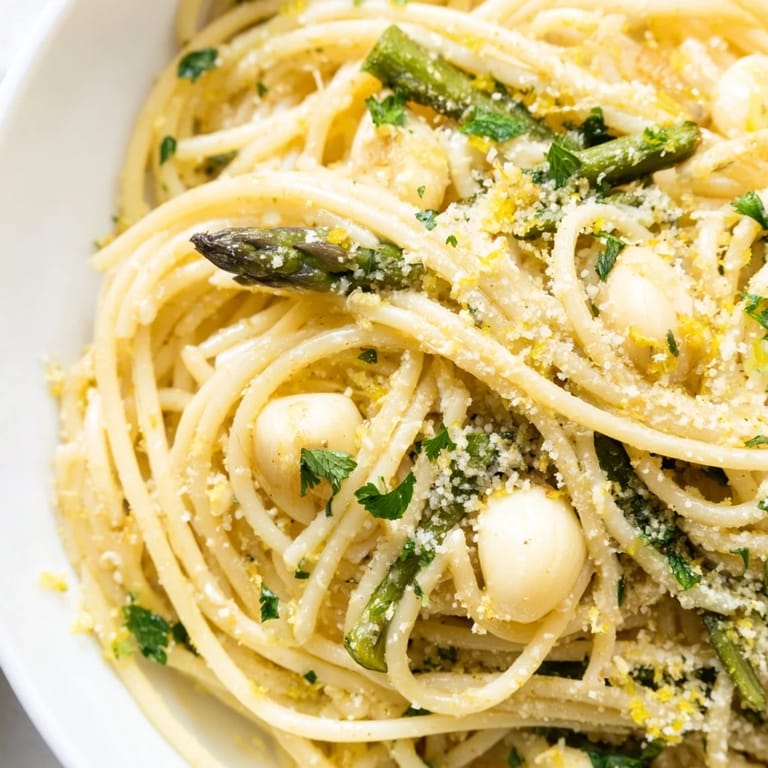
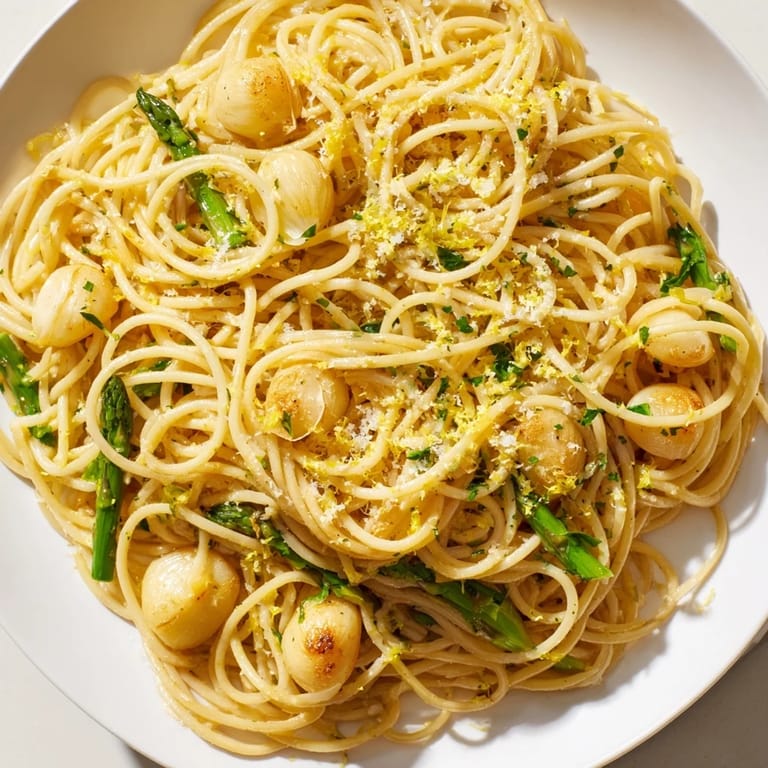
Save This pasta became my go-to spring dinner because it feels special without requiring any actual technique beyond patience.
Making It Your Own
Sometimes I add toasted pine nuts in the last minute of tossing for crunch, or swap parsley for fresh basil when I have it on hand. The structure stays the same but the personality shifts.
Timing The Oven
Putting the asparagus in halfway through the garlic roasting time is the only real timing trick. If you forget and add them later, the garlic might be done before the asparagus catches up.
Serving Suggestions
This pasta wants a simple green salad with a sharp vinaigrette to cut through the roasted garlic richness.
- Crusty bread for sopping up any remaining garlicky oil
- A crisp white wine like Sauvignon Blanc or Pinot Grigio
- Extra lemon wedges at the table for those who love brightness
 Save
Save Simple food often means the most, especially when spring finally arrives and fresh produce feels like a revelation.
Recipe Q&A
- → How do I know when the garlic is properly roasted?
The garlic is ready when the cloves are soft and golden, typically after 30 minutes at 400°F. They should squeeze easily from their skins and have a mellow, slightly sweet aroma. Don't worry if they brown a bit—this adds deeper flavor.
- → Can I prepare this ahead of time?
You can roast the garlic and asparagus up to 2 days in advance and store them separately in the refrigerator. Cook the pasta fresh just before serving, then combine with the roasted vegetables for best texture and flavor.
- → What if I don't have fresh asparagus?
Fresh green beans, broccoli, or zucchini work beautifully as substitutes. Adjust roasting time slightly depending on the vegetable's thickness—aim for tender-crisp texture.
- → Why is pasta water important in this dish?
The starchy pasta water emulsifies with the olive oil to create a silky coating that clings to the spaghetti. It prevents the dish from feeling dry and helps distribute flavors evenly throughout.
- → How can I make this vegan?
Simply omit the Parmesan cheese or substitute it with nutritional yeast or vegan Parmesan alternative. The roasted garlic and asparagus provide plenty of flavor on their own. Consider adding toasted nuts for texture and protein.
- → What wine pairs well with this pasta?
A crisp Sauvignon Blanc or Pinot Grigio complements the fresh lemon zest and delicate flavors perfectly. The acidity cuts through the olive oil and enhances the roasted garlic's sweetness.