 Save
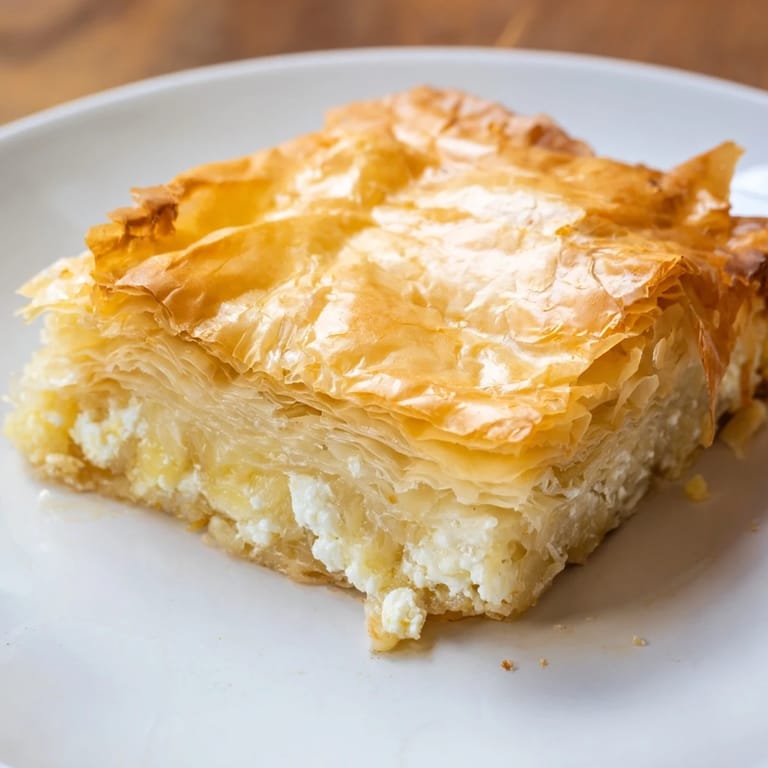
Save My first banitsa came wrapped in newspaper from a small bakery near my grandmother's apartment in Sofia, still warm enough that the phyllo crackled when I unwrapped it. I was maybe twelve, visiting for the summer, and she'd sent me out with exact change and strict instructions not to peek inside until I got home. That golden, buttery pastry filled with creamy cheese and soft eggs changed something in me—suddenly breakfast wasn't just fuel, it was an event. Years later, when I finally learned to make it myself, I realized the magic wasn't complicated: just patience with the layers, respect for the phyllo, and enough butter to make it sing.
I made this for a potluck once and watched people go quiet mid-conversation, forks pausing, eyes closing a little as they tasted it. Someone asked if I'd bought it from a Bulgarian restaurant, and I got to deliver the small joy of saying no, just my kitchen and some phyllo. That moment crystallized it for me: banitsa isn't just about feeding people, it's about the small pride of sharing something that tastes like it comes from somewhere else, somewhere with history.
Ingredients
- Feta cheese, 400 g crumbled: The backbone of banitsa—buy it a day ahead so it's not ice-cold, which makes it harder to fold smoothly into the egg mixture.
- Plain yogurt, 250 ml: This adds tang and moisture; don't skip it or use Greek yogurt, which is too thick and will make the filling dense.
- Unsalted butter, 60 g melted: Use real butter, not oil—there's something about how it browns the phyllo that nothing else replicates.
- Whole milk, 50 ml: Just enough to loosen the filling so it spreads without tearing the delicate dough.
- Large eggs, 4: Room temperature is ideal; they whisk more smoothly and cook more evenly.
- Phyllo dough, 1 package (about 400 g), thawed: Thaw it in the refrigerator overnight—rushing this with heat makes it brittle and prone to cracking.
- Salt, 1/2 tsp: Go easy; the feta already brings salt, and over-salting can make the filling watery.
- Freshly ground black pepper, 1/4 tsp: Grind it fresh right before assembling; pre-ground loses its bite.
Tired of Takeout? 🥡
Get 10 meals you can make faster than delivery arrives. Seriously.
One email. No spam. Unsubscribe anytime.
Instructions
- Prepare your oven and dish:
- Preheat to 180°C (350°F) and brush your 23 x 33 cm baking dish with melted butter, getting into the corners so nothing sticks. A metal dish conducts heat beautifully; ceramic works but bakes slower.
- Make the filling:
- Whisk the eggs, yogurt, milk, salt, and pepper in a large bowl until completely smooth—any lumps of egg will stay lumpy when baked. Gently fold in the crumbled feta with a spatula, keeping some texture rather than mashing it into paste.
- Protect your phyllo:
- Unroll it and immediately cover with a barely damp kitchen towel; phyllo dries out in seconds, and dried phyllo cracks instead of folds. Keep it covered between layers as you work.
- Build the first layers:
- Lay one phyllo sheet in the dish, brush it very lightly with melted butter—you want to taste the pastry, not oil—and repeat with three more sheets. Don't oversaturate or the filling will make the bottom soggy.
- First filling layer:
- Spread about one-quarter of your cheese mixture evenly across the phyllo, leaving just a tiny margin at the edges.
- Layer and fill alternately:
- Add 3–4 more phyllo sheets, buttering each one carefully, then spread another quarter of the filling. Repeat this rhythm: dough, butter, dough, butter, filling, until you've used all the filling and you're ending with a stack of 3–4 final phyllo sheets, each buttered.
- Cut into portions:
- Use a sharp knife and a gentle sawing motion to cut the assembled banitsa into squares or diamonds—pressing down hard will crush the layers. Cut all the way through to the bottom so the filling distributes evenly as it bakes.
- Final butter and bake:
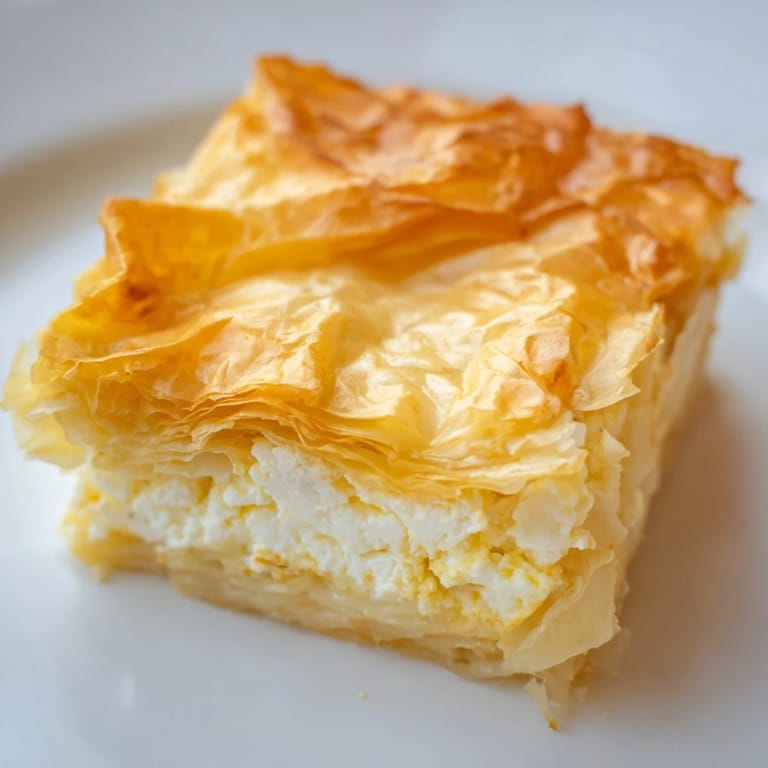
- Drizzle any remaining melted butter over the top and slide into the oven for 30–35 minutes, until the phyllo is deep golden and crispy to the touch. The filling will puff slightly and the edges will pull away from the dish just a bit when it's done.
- Rest and serve:
- Let it cool for 10 minutes—this lets the filling set just enough so it doesn't pour out when you cut it. Serve warm or at room temperature with a cold glass of ayran or a fresh tomato-cucumber salad alongside.
 Save
Save There's a moment, just after you pull banitsa from the oven, when the whole kitchen smells like toasted butter and salt and something indefinably Eastern European—something that makes you feel less like you're cooking and more like you're honoring a tradition. That's the moment I knew I'd made it right.
The Phyllo Principle
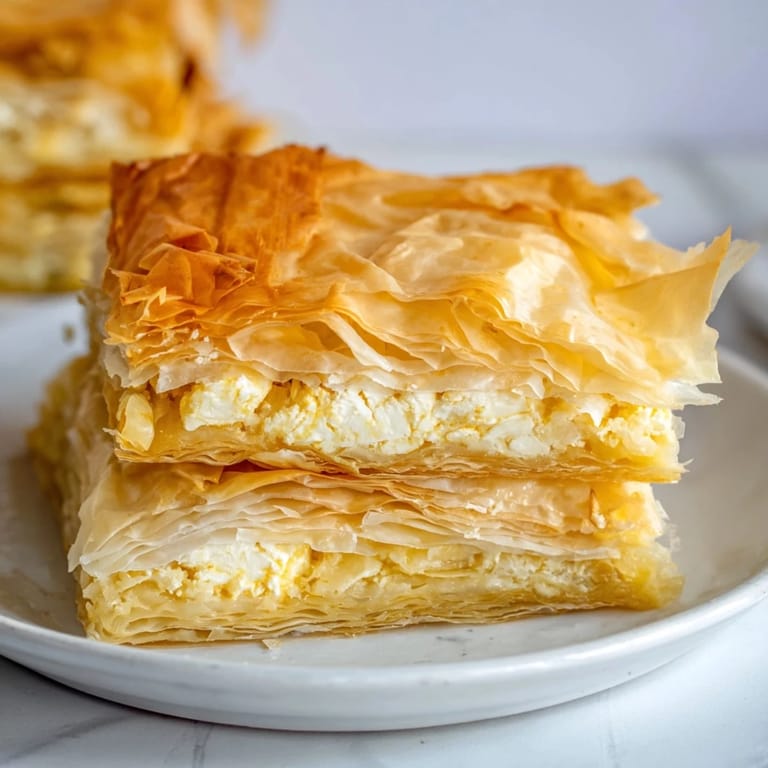
Phyllo is temperamental until you understand what it wants: it's not fragile so much as it's impatient. Rush it, and it shatters. Let it dry out, and it becomes papery. The secret is treating it like someone who needs attention but not fussing—cover it, work quickly but not frantically, and it'll give you those magnificent crispy layers that make banitsa sing. Some people use oil instead of butter on phyllo; I've tried both, and butter always wins on flavor.
Filling Variations That Actually Work
The classic cheese-and-egg filling is perfect as-is, but if you want to play with it, add chopped fresh dill or parsley just before folding in the feta—about a handful, maybe two tablespoons—and it lifts the whole thing into something brighter. Some people use half feta and half Bulgarian sirene cheese if they can find it, or even ricotta if they want something milder, though you'll lose some of that distinctive salty tang. I've added a pinch of nutmeg once and never again; it felt wrong in a way I couldn't quite explain until I realized banitsa is supposed to taste like savory simplicity, not like someone got creative.
Making It Your Own
Banitsa works cold from the refrigerator, warm from the oven, and even at room temperature the next day, which makes it perfect for meal prep or bringing to a picnic. Some people cut it into smaller squares for appetizers, some make it in a round dish instead of rectangular, and some even roll individual banitsa cigars with filling inside phyllo tubes. Once you understand the basic idea—crispy layers, creamy filling, butter everywhere—you can twist it however you want.
- Pair it with cold ayran (that yogurt drink) or even with a simple green salad if you want to feel virtuous.
- Leftovers reheat beautifully in a 160°C oven for about 10 minutes; don't use a microwave unless you enjoy rubber texture.
- Make extra and freeze unbaked banitsa on a tray, then bake from frozen (add 10 minutes to the baking time) whenever hunger strikes.
 Save
Save Every time I make banitsa, I'm reminded that some of the best foods aren't complicated—they just ask for good ingredients, a little patience, and respect for technique. Once you've made this once, you'll make it again and again.
Recipe Q&A
- → What type of cheese is best for Bulgarian banitsa?
Feta cheese is traditional for banitsa, offering a salty and tangy flavor that complements the eggs and phyllo layers.
- → How do you keep phyllo dough from drying out during preparation?
Cover phyllo sheets with a damp towel while working to prevent them from drying and becoming brittle.
- → Can I add herbs to the filling?
Yes, fresh dill or parsley can be mixed into the filling for extra aroma and flavor.
- → What is the best way to bake banitsa for a crispy top?
Brush each phyllo layer with melted butter and bake until the pastry turns golden brown and crisp, usually around 30-35 minutes.
- → Is Bulgarian banitsa suitable for vegetarians?
Yes, since it contains dairy and eggs but no meat, it fits a vegetarian diet.
- → Can I substitute other cheeses in this dish?
Bulgarian sirene or ricotta can be used for a milder taste while maintaining the creamy texture.