 Save
Save My grandmother's kitchen always smelled like beets on soup day—earthy and almost sweet, a smell that meant the whole apartment would warm up for hours. She'd stand at her stove in a faded apron, stirring this crimson pot with the kind of focus most people reserve for important decisions, and somehow that's when she'd tell the best stories. Ukrainian borscht isn't just soup; it's the kind of dish that makes people slow down at the table, the kind that tastes different depending on who made it and why.
I made this for my partner on a grey January afternoon when we'd both been stuck inside too long, and watching their face when they took that first spoonful was worth every vegetable I'd grated. They asked for seconds before finishing the first bowl, and then we just sat there with the pot between us, occasionally getting up for more. That's when I knew this recipe belonged in my regular rotation.
Ingredients
- Beef chuck or brisket (400 g): You want a cut with enough marbling to break down into the broth and flavor everything—chuck is forgiving and becomes tender without falling apart into shreds.
- Beets (3 medium): These are the soul of the dish, so don't skip them or substitute with canned; fresh beets give you that true color and subtle earthiness that makes people stop and ask what it is.
- Carrots (2 medium): Grated carrots melt into the broth and add a gentle sweetness that doesn't compete with the beets.
- Potatoes (2 medium): Diced pieces keep their shape and soak up all the flavors around them; they're your texture anchor in the soup.
- Green cabbage (1/4 small head): Shredded fine, it adds a slight bite and helps balance all that richness from the beef and sour cream.
- Tomato paste (2 tablespoons): This isn't optional—it adds depth and a subtle tang that ties the whole thing together.
- Onion, garlic, bay leaves, and peppercorns: These are your foundation; they build flavor in the broth while everything else is cooking.
- Sunflower oil, sugar, and white vinegar: The oil carries the sautéed vegetables' flavors into the pot, while the sugar and vinegar add brightness and round out the beet sweetness.
- Sour cream and fresh dill or parsley: Save these for serving—they're what makes each spoonful feel like a complete thought.
Tired of Takeout? 🥡
Get 10 meals you can make faster than delivery arrives. Seriously.
One email. No spam. Unsubscribe anytime.
Instructions
- Start the Broth:
- Cut your beef into large pieces and drop them into a pot with cold water, bay leaves, peppercorns, and salt. Bring it to a boil, then turn the heat down and let it simmer gently for 45 minutes, skimming off the gray foam that rises—this keeps your broth clear and clean-tasting. The smell at this point is all promise.
- Sauté the Vegetables:
- While the beef does its thing, heat oil in a skillet and cook your chopped onion until it softens and turns translucent, about 3 minutes. Add your grated carrots and beets, and let them cook together for 5 minutes so they start to soften and release their color.
- Build the Flavor Base:
- Stir in the tomato paste, sugar, and vinegar, then cook for another 7–8 minutes, stirring now and then so nothing sticks. The mixture will darken and smell incredible—this is where the soup develops its depth.
- Combine the Base:
- Pull the beef out of the broth and set it aside. If you want a clearer soup, strain the broth through a fine sieve back into the pot, then bring it back to a simmer.
- Cook the Potatoes:
- Add your diced potatoes and let them cook for about 10 minutes until they're almost tender but still holding their shape.
- Bring It Together:
- Add the cabbage and the whole sautéed beet mixture to the pot and simmer for another 10 minutes until everything is soft. Shred or cube the beef and add it back in, along with the minced garlic.
- Finish and Rest:
- Taste and adjust the salt and pepper, then let the whole pot sit off the heat for 15–20 minutes before serving. This rest lets all the flavors settle into each other and makes the soup taste more intentional, less rushed.
 Save
Save What made me fall in love with this soup wasn't just the taste—it was the way it brought people together without trying. The color alone gets people talking, and then one spoonful and they understand why anyone would stand over a pot and stir this carefully.
The Beet Question
I know what you're thinking: beets, really? But that's the thing about borscht—the beets aren't trying to be fancy or trendy; they're just themselves, and that's exactly what makes the soup work. They give you color, sweetness, and an earthiness that makes the beef taste more like beef. Some soups whisper; this one sings.
Timing and Temperature
The gentle simmer is everything here. If you boil the beef too hard, it toughens up and the broth becomes cloudy. If you rush the sautéed vegetables, they don't release their sugars and the finished soup tastes thin. This is a soup that rewards patience with flavor—there's no shortcut that doesn't cost you something.
Serving and Variations
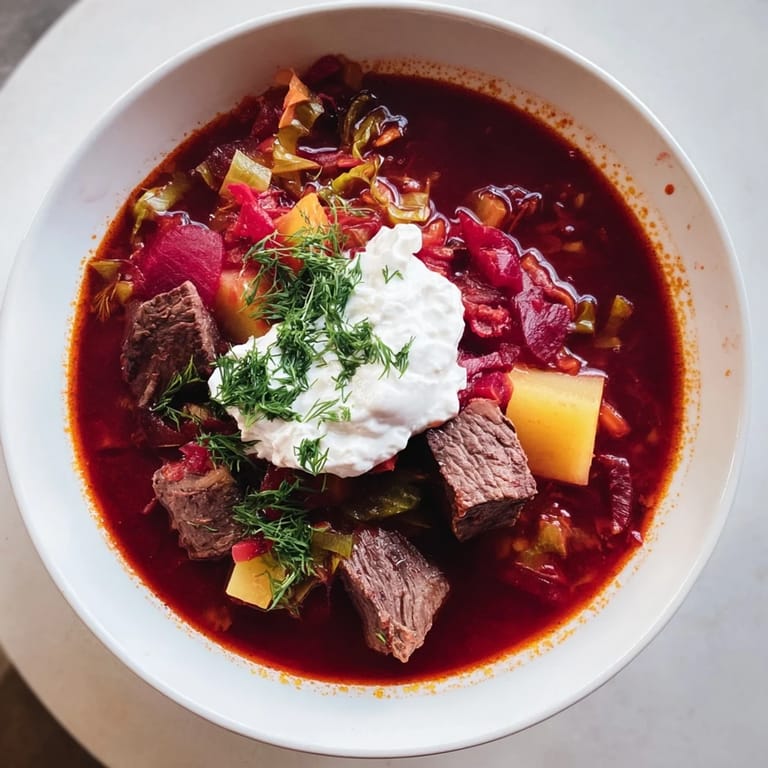
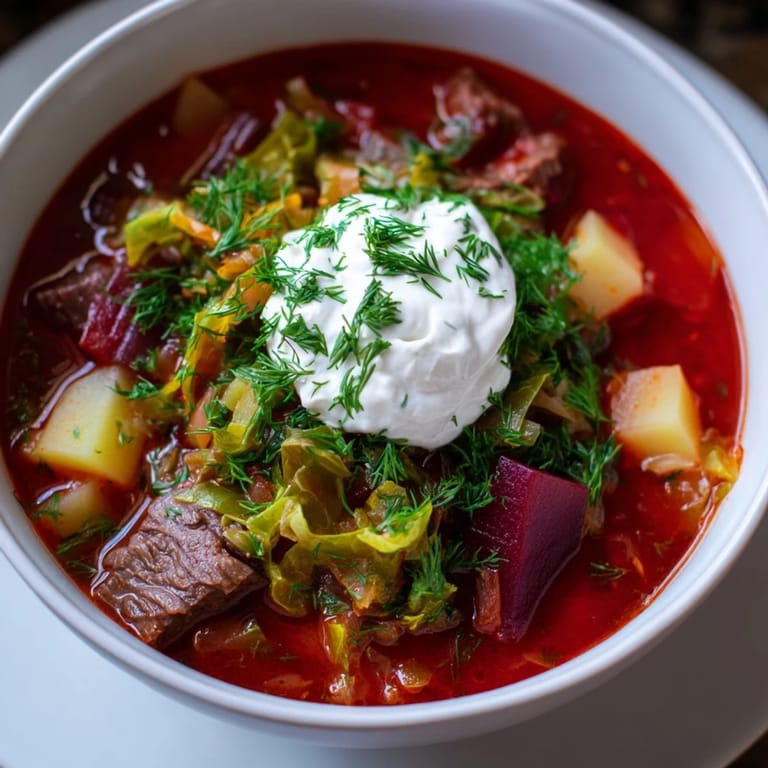
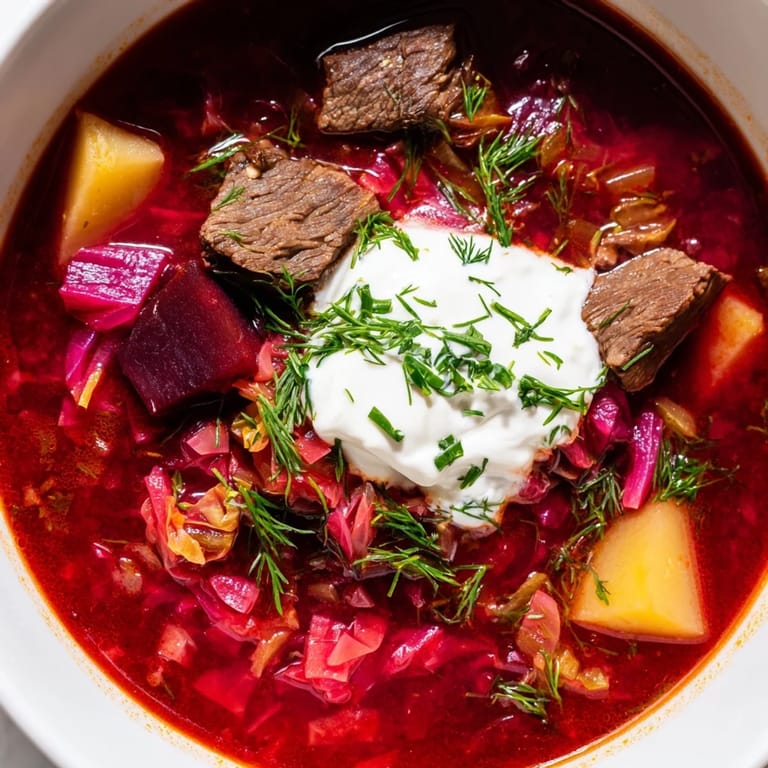
Serve it hot in deep bowls with a generous dollop of sour cream melting into the center and fresh dill scattered across the top. Rye bread on the side is traditional and perfect for soaking up every last bit. If you want to make it vegetarian, just skip the beef and use vegetable broth—the soup works beautifully that way too, though it becomes something different and equally good.
- A squeeze of fresh lemon juice right before eating adds brightness that cuts through the richness.
- Leftover borscht keeps in the fridge for days and actually tastes better reheated.
- If the color fades slightly as it sits, it hasn't gone bad—that's just how beets behave, and the flavor is still there.
 Save
Save This is the kind of soup that tastes like someone cared while making it, and once you've learned how to balance the flavors, it becomes something you'll turn to again and again.
Recipe Q&A
- → What cuts of beef work best for this dish?
Beef chuck or brisket are ideal for their tenderness and flavor when slow-cooked in the broth.
- → How do the vegetables contribute to the final flavor?
Grated beets and carrots sautéed with onion and tomato paste add sweetness and depth, while cabbage and potatoes provide texture and heartiness.
- → Can I make this dish gluten-free?
Yes, it is naturally gluten-free if served without bread and by using gluten-free sour cream and tomato paste.
- → Why is vinegar added during cooking?
Vinegar balances the earthiness of beets and enhances the overall tangy flavor of the broth.
- → What is the purpose of letting the dish rest before serving?
Resting allows flavors to meld and deepen, improving complexity and richness in each bite.
- → Are there vegetarian alternatives to this dish?
Yes, omitting beef and using vegetable broth creates a flavorful vegetarian version.