 Save
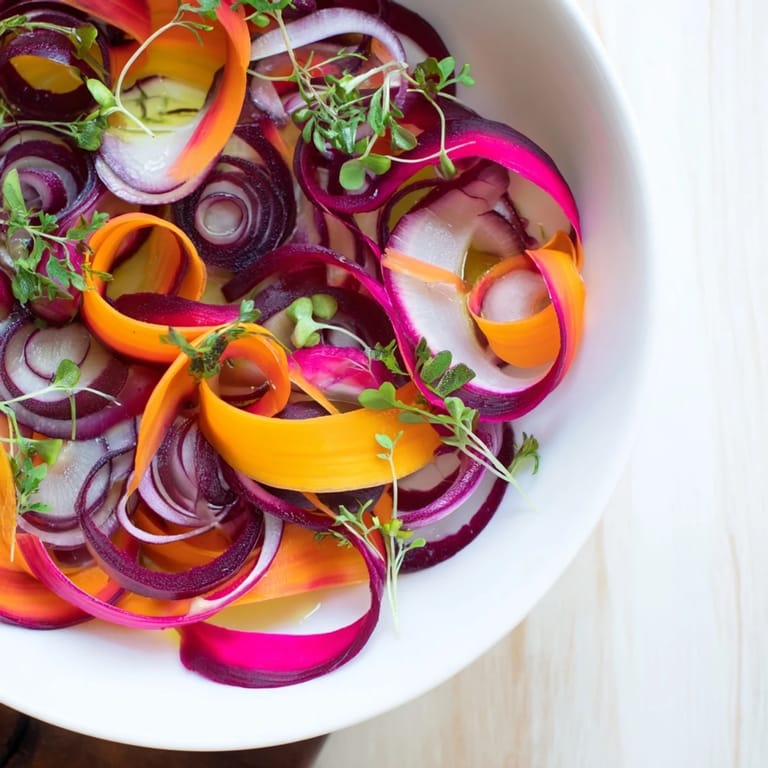
Save I discovered this salad by accident while organizing my kitchen one afternoon, staring at a mandoline I'd bought months earlier and never used. My neighbor had just dropped off a bundle of rainbow carrots from her garden, and I was stuck with the question: what does one actually do with such vibrant vegetables? That evening, I started slicing almost without thinking, mesmerized by how thin I could make each ribbon, and by the time I'd arranged them in a spiral, something clicked. The dish felt less like food and more like edible art, and I realized I'd stumbled onto something that could transform a simple salad into a moment.
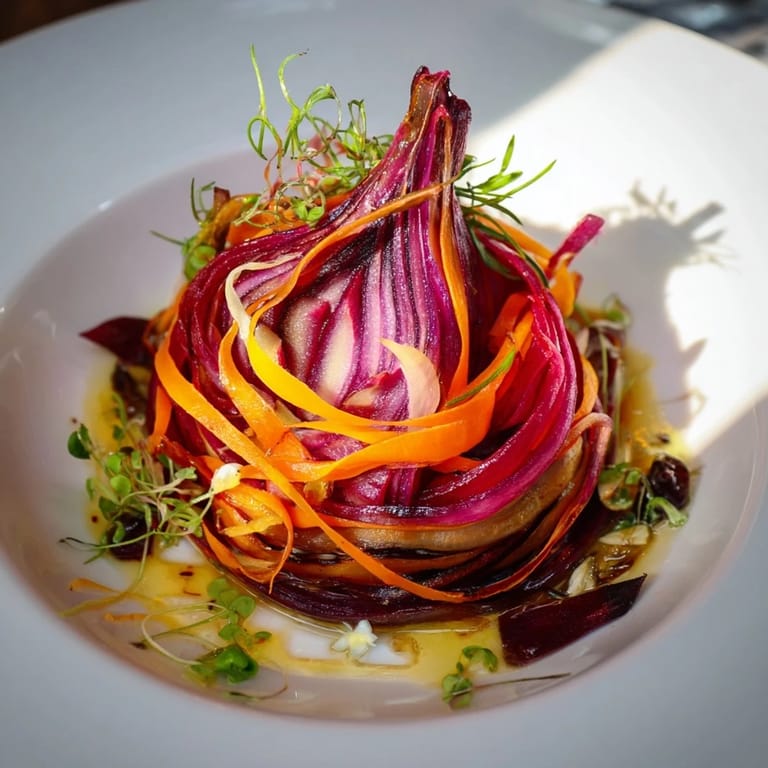
I made this for my sister's birthday dinner last spring, and she walked into the kitchen mid-preparation, gasped at the spiral arrangement, and immediately asked for her phone to take a photo before we'd even eaten it. That moment—when food becomes so visually compelling that people forget to be hungry for just a second—is exactly when I knew this salad belonged in regular rotation. She's made it three times since then, always calling me midway through the mandoline stage to confirm she's slicing thin enough.
Ingredients
- Fennel bulb: The slightly sweet, licorice-forward base that most people don't expect in a salad—it stays wonderfully crisp and adds an elegant, unexpected flavor.
- Rainbow carrots: Use different colors if you can find them; the visual contrast is half the appeal, and each color brings its own subtle sweetness.
- Golden beet: Earthier than red beets and won't bleed color everywhere, which keeps your spiral looking pristine.
- Red onion: A small amount gives you a gentle bite without overwhelming the plate.
- Fresh dill and chervil: These herbs are delicate enough to feel like garnish but contribute real flavor—don't skip them for something heavier.
- Microgreens: They add that final textural pop and look beautiful scattered across the outer edges.
- Extra-virgin olive oil: Use something good here; it's tasted directly without cooking to mellow it.
- Lemon juice and honey: The combination balances acid and sweetness in a way that lets the vegetables shine.
- Dijon mustard: Just enough to emulsify and add subtle depth without announcing itself.
Tired of Takeout? 🥡
Get 10 meals you can make faster than delivery arrives. Seriously.
One email. No spam. Unsubscribe anytime.
Instructions
- Slice your vegetables razor-thin:
- Set up your mandoline with confidence and use steady, controlled strokes—this is where patience pays off. If you're nervous about your fingers, use the guard every single time; these blades don't forgive.
- Ice bath for crispness:
- Submerge those ribbons in ice water for 5 to 10 minutes and watch them curl slightly at the edges, creating that natural dimension you're after. This step isn't optional if you want the vegetables to hold their shape.
- Mix your dressing separately:
- Whisk the oil, lemon juice, honey, mustard, salt, and pepper together in a small bowl until it emulsifies slightly and turns a touch creamy. Taste it before you commit to the salad—this is your only chance to adjust.
- Arrange in a spiral:
- Start from the center of your plate and work outward in a tight circular pattern, overlapping each ribbon just slightly and letting the outer edges blur and extend naturally. Think of it like you're creating movement even though everything is still.
- Herb the edges:
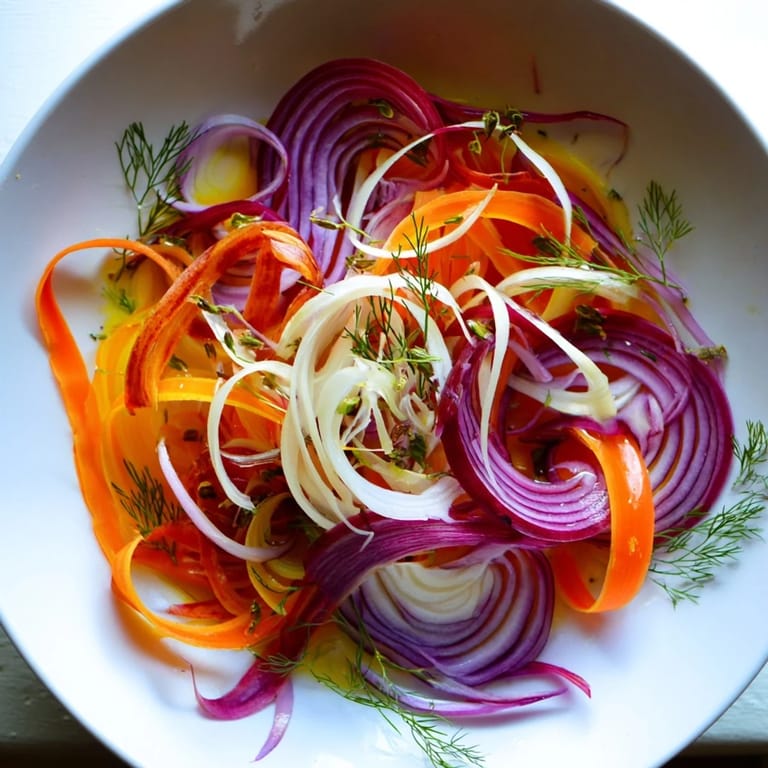
- Scatter your dill, chervil, and microgreens over the top, concentrating more toward the outer ring so the herbs frame the whole composition. This layering keeps the presentation looking intentional and alive.
- Dress at the last moment:
- Drizzle your dressing right before serving, never before—wet vegetables lose their crispness and the spiral starts to wilt within minutes.
 Save
Save What struck me most about this salad wasn't the taste or even the presentation, but the conversations it sparked—people would lean in close to examine how each vegetable was arranged, trace the spiral with their eyes, and suddenly they were talking about texture and color and flavor in ways they usually reserve for other things. Food became something to really look at, not just consume.
Choosing Your Vegetables Wisely
The real secret to this salad's visual impact is picking vegetables that are genuinely beautiful to begin with. Rainbow carrots in purple, orange, and yellow make the spiral feel more dynamic than all-orange ones ever could, and a golden beet avoids the disaster of bright pink water bleeding across your white plate. I've learned to plan this salad around farmers market finds rather than starting with a set recipe—whatever looks most vibrant and fresh that day usually becomes the best version.
The Mandoline Technique
Using a mandoline transforms this from a tedious knife job into something almost meditative if you approach it with respect for the blade. The thinner your ribbons, the more elegant the final dish looks and feels—but there's a point of diminishing returns where you're just trying to see through the vegetable. I aim for almost-transparent but still intact, which usually means going slow and keeping my fingers wrapped firmly around the guard.
Serving and Variations
This salad reaches its peak the moment you set it on the table, so timing matters—you want guests to see it at maximum crispness before anyone disturbs the arrangement. Add thinly shaved radishes or cucumber ribbons if you want more texture, or layer in some paper-thin apple slices for unexpected sweetness. The foundation stays the same, but the vegetables can shift with what looks good and what you're craving.
- Pair this with a crisp white wine like Sauvignon Blanc to echo the fresh, bright flavors.
- Make the dressing up to an hour ahead and keep it separate so you control when things get wet.
- If you're serving a crowd, arrange the salad right before people arrive so it hasn't had time to wilt.
 Save
Save This salad taught me that sometimes the most memorable meals aren't complicated—they're just beautifully observed and carefully put together. Every time I make it, I'm reminded that food can be both nourishment and art.
Recipe Q&A
- → How can I achieve the thin vegetable ribbons?
Using a mandoline slicer or a sharp vegetable peeler allows you to create uniform, translucent ribbons essential for this salad's texture and presentation.
- → Why soak the shaved vegetables in ice water?
Soaking crisps and curls the vegetable ribbons, enhancing their texture and making them visually delicate and refreshing.
- → Can I substitute the herbs used in this salad?
Yes, fresh herbs like chervil, parsley, dill, and microgreens can be swapped for others with similar delicate flavors to maintain balance.
- → What dressing best complements the salad?
A light vinaigrette made from extra-virgin olive oil, lemon juice, honey, and Dijon mustard provides a fresh and tangy finish without overpowering the vegetables.
- → How should this salad be served?
Arrange the vegetable ribbons loosely in a circular pattern on a large platter, drizzle dressing just before serving to maintain crispness and vibrant appearance.
- → Is there a way to add more color to the salad?
Including multicolored carrots, golden beets, or thinly shaved radishes and cucumber can add variety and visual appeal.