 Save
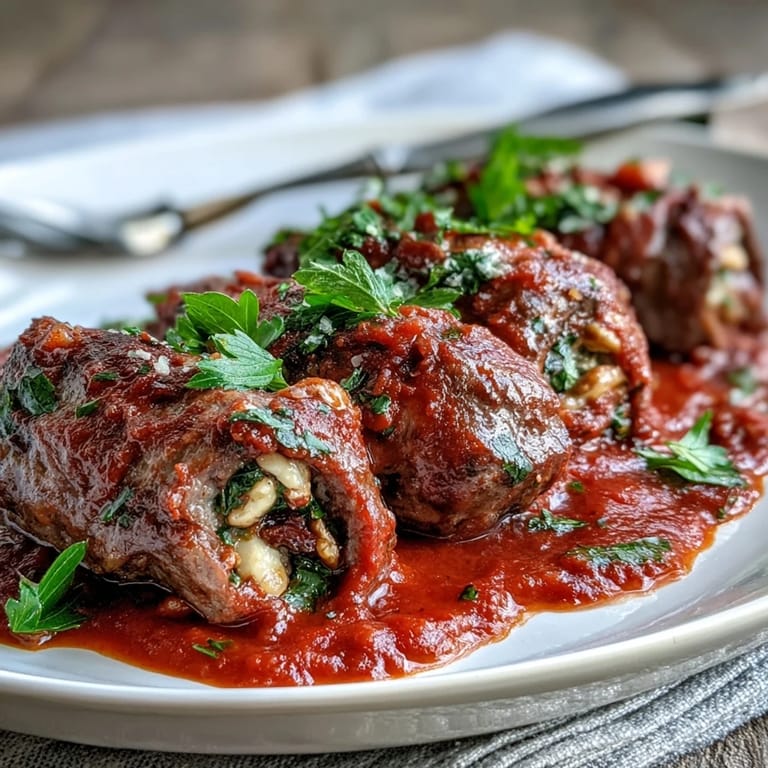
Save My neighbor Maria taught me this on a Sunday afternoon when I couldn't stop watching her kitchen window fill with steam and the smell of simmering tomatoes. She didn't measure anything, just sprinkled and tasted, and when I asked for the recipe she laughed and said it was different every time. I learned it by standing next to her, tying twine around those little beef bundles while she told me stories about her nonna's kitchen in Palermo. The raisins surprised me at first, but one bite and I understood why this dish has survived generations.
I made this for my family's first real dinner party in our new apartment, and I was so nervous I over-salted the filling. But once those rolls hit the tomato sauce and started braising, the whole place smelled like an Italian grandmother lived there. My brother-in-law, who usually just nods politely at food, asked for seconds and then the recipe. That night I realized some dishes don't just feed people, they make a room feel like home.
Ingredients
- Beef top round or flank steak: Thin slices are essential so they roll without tearing, and pounding them gently helps tenderize the meat while keeping it intact for a clean spiral.
- Pecorino cheese: Its sharp, salty bite balances the sweetness of raisins and adds that distinctly Sicilian tang you can't replicate with milder cheeses.
- Pine nuts: Toasting them lightly before adding releases their buttery flavor and prevents them from tasting raw inside the roll.
- Raisins: They plump up as the braciole simmers, adding bursts of sweetness that surprise your palate in the best way.
- Fresh parsley and basil: Freshness matters here because dried herbs won't give you that bright, grassy contrast against the rich filling.
- Garlic: Minced fine so it melts into the filling and doesn't create harsh bites when you slice into the rolls.
- Breadcrumbs: Just enough to bind the filling together without making it pasty or dry.
- Crushed tomatoes: A good-quality canned brand makes all the difference since the sauce is simple and the tomato flavor needs to shine.
- Dry red wine: Optional but worth it for the depth it adds when deglazing all those caramelized bits from searing the beef.
- Dried oregano: A pinch brings warmth and a hint of earthiness that ties the sauce to the filling.
Tired of Takeout? 🥡
Get 10 meals you can make faster than delivery arrives. Seriously.
One email. No spam. Unsubscribe anytime.
Instructions
- Prep the Beef:
- Lay each slice flat on a cutting board and use a meat mallet to gently pound it to about 1/4-inch thickness, working from the center outward to avoid tearing. Season both sides with salt and pepper, being generous but not heavy-handed.
- Make the Filling:
- In a medium bowl, toss together the pecorino, toasted pine nuts, raisins, parsley, basil, minced garlic, and breadcrumbs until evenly mixed. The texture should be crumbly but cohesive enough to stay put when you roll.
- Roll and Tie:
- Spoon an even layer of filling onto each beef slice, leaving about half an inch around the edges so nothing spills out. Roll tightly from one short end to the other, tucking in the sides as you go, then secure with kitchen twine or a few toothpicks to hold the shape during cooking.
- Sear the Braciole:
- Heat 2 tablespoons of olive oil in a large skillet over medium-high heat until shimmering, then add the rolls and sear on all sides until deeply browned, about 6 to 8 minutes total. Remove them to a plate and don't worry if some filling peeks out, it will soften into the sauce.
- Build the Sauce:
- In the same skillet, add another 2 tablespoons of olive oil and sauté the chopped onion until soft and translucent, about 3 minutes, then stir in the garlic and cook for another minute until fragrant. If using wine, pour it in now and let it bubble and reduce by half while you scrape up all the browned bits stuck to the pan.
- Simmer Together:
- Add the crushed tomatoes, oregano, salt, pepper, and a pinch of sugar if your tomatoes taste sharp. Bring the sauce to a gentle simmer, then nestle the seared braciole back into the pan, spooning sauce over the tops, and cover with a lid.
- Braise Low and Slow:
- Turn the heat to low and let everything simmer gently for about an hour and fifteen minutes, turning the rolls occasionally so they cook evenly and soak up the sauce. The beef should be fork-tender and the sauce thickened and glossy.
- Finish and Serve:
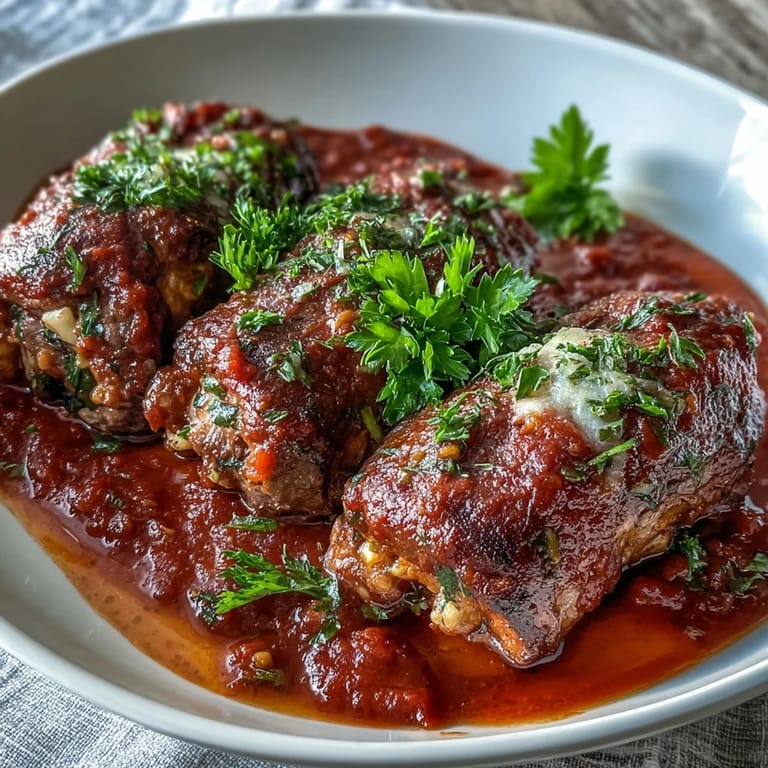
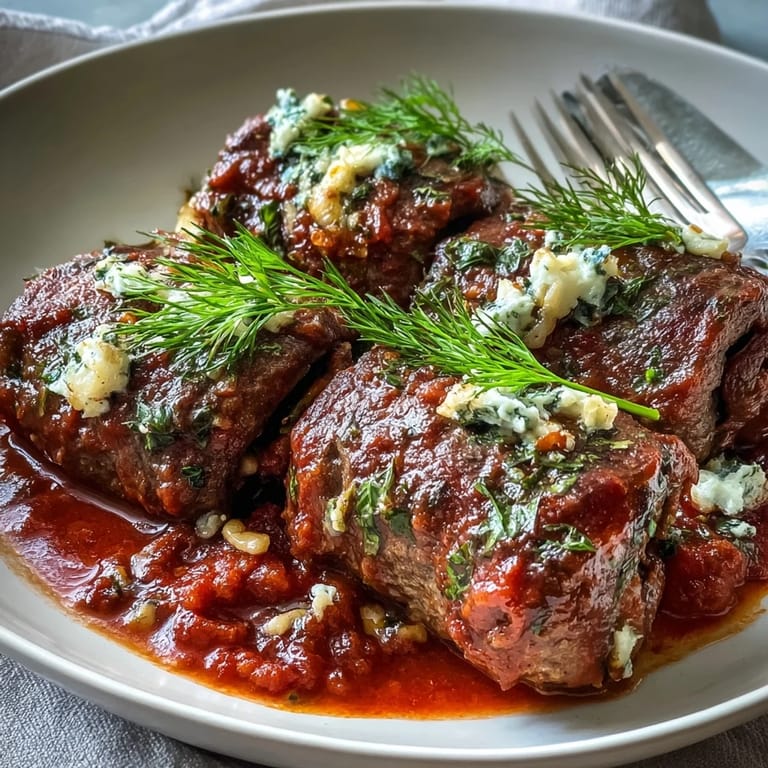
- Carefully remove the braciole from the sauce, snip off the twine or pull out the toothpicks, and slice each roll into thick rounds. Spoon the rich tomato sauce over the top and serve hot.
 Save
Save  Save
Save One winter evening I served this with a loaf of bread still warm from the oven, and we ended up sitting at the table for three hours, dipping crust into the sauce and talking about nothing important. My friend who never cooks asked if she could take some home, and I watched her carry it out the door in a glass container like it was treasure. That's when I knew this recipe wasn't just mine anymore.
What to Serve Alongside
I like to serve these braciole over a pile of creamy polenta or a tangle of spaghetti tossed in a little of the sauce. A simple arugula salad with lemon and olive oil cuts through the richness, and crusty bread is non-negotiable for mopping up every last bit. If you want to go all out, roasted vegetables like zucchini or bell peppers add color and a slight char that plays well with the sweetness in the filling.
How to Store and Reheat
Leftover braciole keeps beautifully in an airtight container in the fridge for up to three days, and honestly, the flavor deepens overnight. Reheat gently in a covered pan with a splash of water or broth to loosen the sauce, or microwave individual portions on medium power to avoid drying out the beef. You can also freeze the cooked rolls in sauce for up to two months, then thaw in the fridge overnight and warm on the stovetop until heated through.
Little Tweaks That Make It Yours
Some people tuck a slice of hard-boiled egg or a thin ribbon of prosciutto into the filling for extra richness and a pop of color when you slice the rolls. If you don't have pine nuts, chopped walnuts or almonds work in a pinch, though the flavor will be a bit earthier. You can also swap pecorino for Parmigiano-Reggiano if that's what you have, but you'll lose a little of that sharp, tangy edge that makes the dish feel authentically Sicilian.
- Try adding a pinch of red pepper flakes to the sauce if you like a gentle kick of heat.
- Use white wine instead of red for a lighter, more delicate flavor in the braising liquid.
- Finish each plate with a drizzle of good olive oil and a sprinkle of fresh basil for brightness.
 Save
Save 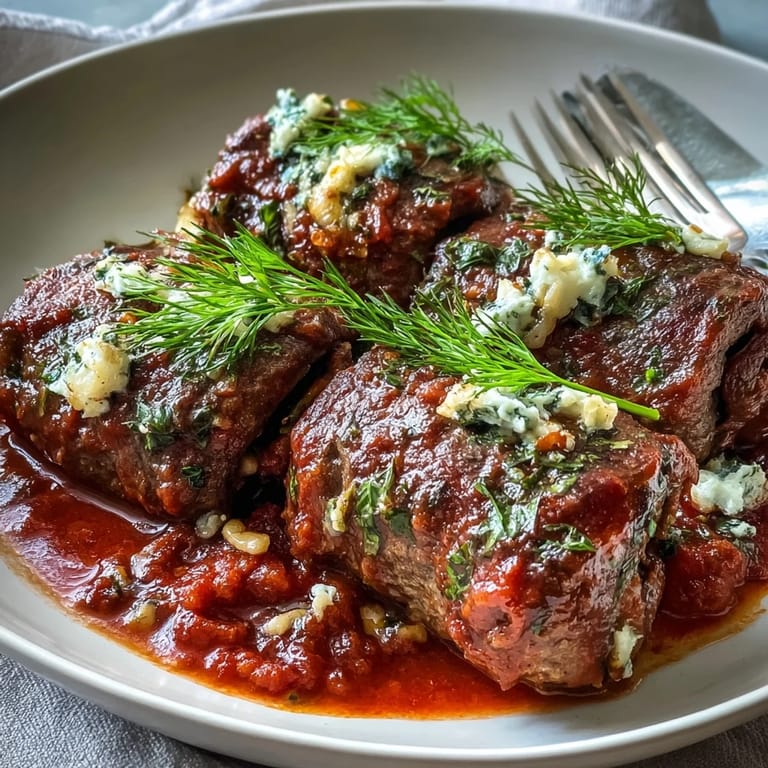 Save
Save This is the kind of dish that makes your kitchen smell like love and your table feel like a celebration, even on a regular Tuesday. I hope it becomes one of those recipes you return to when you want to slow down and remember why cooking matters.
Recipe Q&A
- → Can I use a different cut of beef for braciole?
Yes, flank steak, top round, or even thinly sliced sirloin work well. The key is to pound the meat to an even 1/4-inch thickness for easy rolling and tender results.
- → What can I substitute for pine nuts?
Chopped walnuts, almonds, or even sunflower seeds make good alternatives. Toast them lightly first to enhance their flavor and texture in the filling.
- → How do I prevent the rolls from unraveling during cooking?
Secure them tightly with kitchen twine or toothpicks before searing. Make sure the filling doesn't overhang the edges, and roll them snugly from one end to the other.
- → Can I make braciole ahead of time?
Absolutely. Prepare and sear the rolls up to a day in advance, then refrigerate. When ready, simmer them in the sauce as directed. They also freeze well for up to 3 months.
- → What side dishes pair best with braciole?
Serve with pasta tossed in the tomato sauce, creamy polenta, roasted vegetables, or crusty Italian bread to soak up the flavorful sauce.
- → Why add sugar to the tomato sauce?
A pinch of sugar balances the natural acidity of tomatoes, creating a smoother, more rounded flavor. Adjust to taste depending on the sweetness of your tomatoes.