 Save
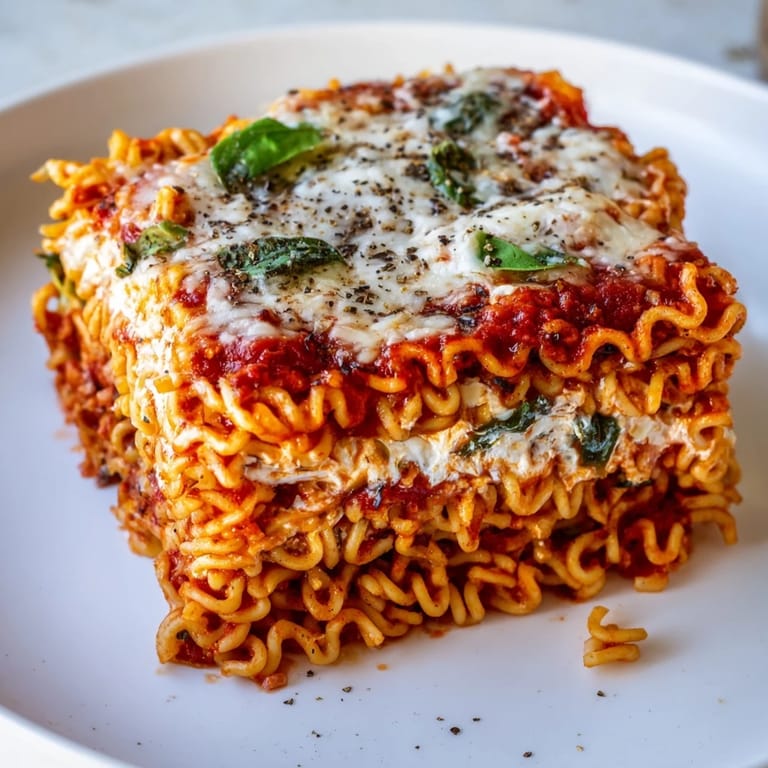
Save My roommate challenged me to make lasagna on a shoestring budget, and I stared at my pantry thinking: ramen, tomato sauce, cheese. Why not? That night, pulling a bubbling golden casserole from the oven felt like I'd cracked some delicious code—proof that the best meals don't need fancy ingredients, just a little courage to break the rules.
The real test came when I made it for friends who didn't know what was in it. Watching them take that first forkful, expecting disappointment, then pause—that's when I knew this wasn't a gimmick, it was genuinely delicious. Someone asked for seconds before I'd even sat down to eat.
Ingredients
- Instant ramen noodle bricks (3): Buy the cheap kind—tear up the seasoning packets and save them for something else or toss them. The noodles themselves become tender and perfect vehicles for sauce.
- Tomato pasta sauce (2 cups): Any brand works, but the one you already love in your cabinet is the right choice here.
- Dried Italian herbs (1 teaspoon): This whispers sophistication into something humble, but skip it if you don't have it.
- Garlic powder (1/2 teaspoon): A small pinch that makes a big difference in depth.
- Shredded mozzarella cheese (2 cups): This is your melty glue—get the stuff that's pre-shredded if it makes your life easier.
- Grated Parmesan cheese (1/2 cup): The sharper flavor cuts through all that richness beautifully.
- Ricotta or cottage cheese (1 cup): Cottage cheese saves you money and works just as well, creating creamy layers that hold everything together.
- Fresh basil leaves: Optional but worth grabbing if you pass the produce section—a handful scattered on top at the end feels like a small luxury.
Tired of Takeout? 🥡
Get 10 meals you can make faster than delivery arrives. Seriously.
One email. No spam. Unsubscribe anytime.
Instructions
- Heat your oven and prep the sauce:
- Turn the oven to 375°F and give your tomato sauce a quick stir with the Italian herbs and garlic powder. You're building layers of flavor before anything even hits the dish.
- Mix your cheese filling:
- Combine ricotta and half the Parmesan in a bowl—this mixture becomes creamy pockets between noodle layers that make every bite feel rich.
- Build your first layer:
- Spread 1/4 of the sauce across the bottom of your greased 8x8-inch baking dish, then arrange one ramen brick on top, breaking it to fit the corners.
- Layer ricotta, mozzarella, and repeat:
- Add 1/3 of the ricotta mixture over the noodles, then 1/3 of the mozzarella. Repeat this pattern two more times—sauce, ramen, ricotta, mozzarella—until you end with sauce on top.
- Crown it and add moisture:
- Sprinkle the remaining mozzarella and Parmesan over the top. Pour 1/2 cup of water around the edges so the ramen noodles can hydrate and soften as everything bakes.
- Two-stage bake:
- Cover with foil and bake for 20 minutes, then remove the foil and bake another 10 minutes until the cheese bubbles at the edges and turns golden. The foil keeps things steamy first, then you let the top develop color.
- Rest before serving:
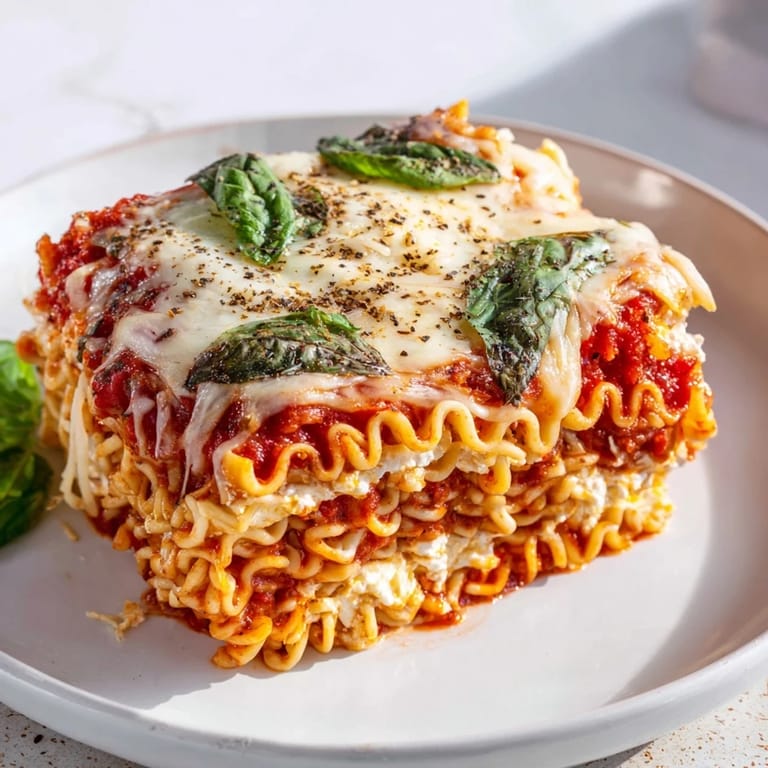
- Let it sit for 5 minutes—this isn't wasted time, it's when the layers set enough to slice cleanly. Scatter basil and cracked pepper over the top if you have them.
 Save
Save There's something magical about serving food that breaks every rule and somehow tastes better for it. This dish has become my proof that creativity in the kitchen doesn't need permission or expensive ingredients—just curiosity and the willingness to see an ingredient differently than it was meant to be used.
How to Make It Your Own
Ramen lasagna is a blank canvas, honestly. Sauté some diced zucchini, mushrooms, or spinach and layer them in with the cheese if you want more vegetables sneaking into every bite. Brown some ground beef or Italian sausage first for a heartier, meatier version—nothing fancy, just brown it in a pan with a little garlic and fold it into the sauce before assembling. Even a splash of hot sauce stirred into the tomato sauce transforms it into something spicy and bold. The bones of the recipe stay the same, but your preferences shape it completely.
Storage and Reheating
Make this dish the day before if your schedule is hectic—it actually tastes better after the flavors have had time to mingle overnight. Cover it tightly with foil after it cools completely, then reheat covered at 350°F for about 15 minutes until warmed through. You can even freeze it after baking and give it 30 minutes in the oven straight from the freezer when hunger strikes. It travels well to potlucks too, if you can resist the urge to eat it in the car.
Final Thoughts and Pro Moves
This is the kind of recipe that teaches you something about improvisation and confidence in the kitchen. It proves that respecting tradition and breaking it open for something new aren't opposites—sometimes they're exactly the same thing.
- Use a mix of cottage cheese and ricotta if you want the creamiest possible filling without spending extra money.
- Pour the water around the edges, not over the top, so it doesn't wash away your beautiful cheese topping while baking.
- Leftovers taste incredible eaten cold straight from the fridge the next day, if any somehow last that long.
 Save
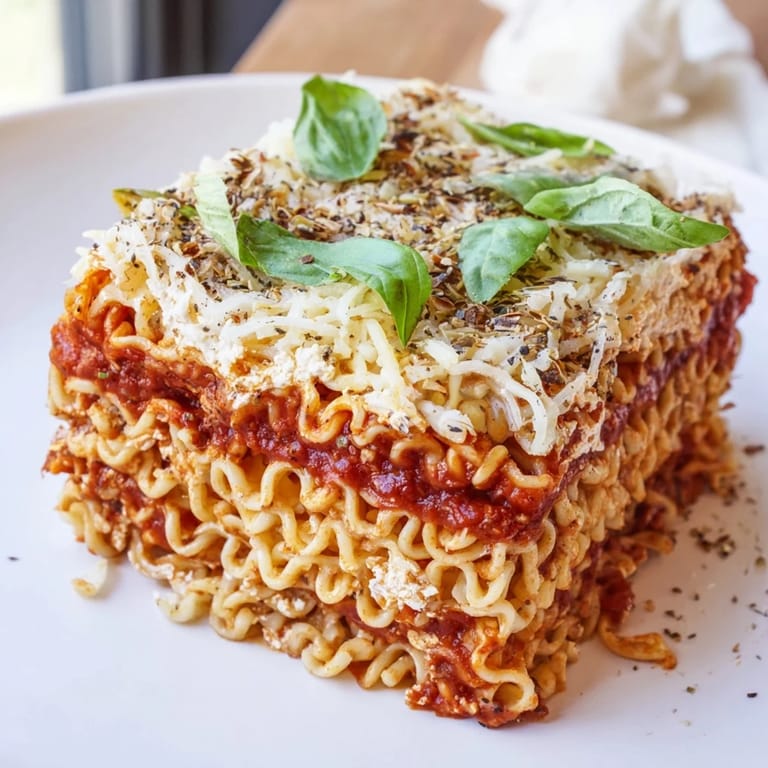
Save Every time you make this, you're reclaiming the joy of simple cooking. That's worth celebrating.
Recipe Q&A
- → Can I use regular pasta instead of ramen noodles?
Yes, regular pasta like lasagna sheets or broken spaghetti can be substituted, but cooking times and texture may vary slightly.
- → What cheese works best for layering?
Combining shredded mozzarella with ricotta and grated Parmesan offers creamy, melty texture and rich flavor, but variations can include cottage cheese or other melts.
- → Is it necessary to discard the seasoning packets from the ramen?
Yes, discarding seasoning packets prevents overpowering salty or artificial flavors, allowing the tomato sauce and herbs to shine.
- → How do I make the layers hold together well?
Spread sauces evenly and press layers gently. Adding water around edges before baking helps soften noodles and meld layers.
- → Can I prepare this dish ahead of time?
Absolutely, it can be assembled ahead and refrigerated, then baked when ready. This enhances flavor melding and convenience.
- → What optional ingredients enhance flavor?
Sautéed vegetables, cooked ground meat, or chili flakes can be added for extra flavor and texture variations.