 Save
Save My grandmother kept a worn wooden board scarred from decades of rolling dough, and I didn't fully understand its purpose until I made pierogi for the first time in my own kitchen. The dough came together faster than expected, soft and forgiving under my fingertips, and suddenly I was folding little pockets of creamy potato and cheese like she must have done countless times before. That first batch—some perfectly sealed, others a bit uneven—taught me that pierogi aren't about perfection; they're about feeding people you care about with something warm and comforting.
I once brought a container of these to a potluck where I didn't know many people, nervous they'd seem too homemade or unfamiliar. Within minutes, someone asked for the recipe, then someone else, and by the end of the night the pierogi were completely gone while fancier dishes sat untouched. That's when I realized the power of food that tastes like it came from someone's kitchen, not a restaurant kitchen—it connects you to people in an honest way.
Ingredients
- All-purpose flour (3 cups): This is your dough foundation, and the amount seems generous until you knead it and realize the sour cream and egg create a tender, almost silky texture that needs the flour's structure.
- Egg (1 large): Binds everything together while keeping the dough elastic enough to roll thin without tearing.
- Lukewarm water (¾ cup): Temperature matters here—too hot and you'll partially cook the egg, too cold and the dough fights you.
- Sour cream (2 tbsp): The secret to that tender, slightly tangy dough that doesn't dry out as you work with it.
- Unsalted butter (2 tbsp melted, plus 3 tbsp more for serving): Use real butter; it makes a difference in both dough and caramelized onions.
- Salt (1 tsp plus more to taste): Essential in both dough and filling—don't skip it or undersalt.
- Russet potatoes (1 ½ lbs): These are starchy and mash smoothly, creating a filling that's creamy without being gluey.
- Farmers cheese or ricotta (1 cup): Farmers cheese is traditional and tangier, but well-drained ricotta works beautifully if that's what you have.
- Sharp cheddar cheese (½ cup grated): The sharpness cuts through the richness of the potatoes and adds real flavor—don't use mild cheddar or pre-shredded cheese with anti-caking agents.
- Onions (1 small for filling, 2 large for serving): The small onion sautéed into the filling adds sweetness and depth, while the large ones become jammy and golden through slow caramelization.
- Sour cream (for serving): A cool, tangy contrast to warm, crispy pierogi—use full-fat if you can.
Tired of Takeout? 🥡
Get 10 meals you can make faster than delivery arrives. Seriously.
One email. No spam. Unsubscribe anytime.
Instructions
- Mix and knead the dough:
- Combine flour and salt in a bowl, make a well, and add your egg, melted butter, sour cream, and water. The mixture will look shaggy at first—don't panic. Knead on a floured surface for 5–7 minutes until the dough becomes smooth and slightly elastic, then cover it with a damp towel and let it rest for 30 minutes while you prepare the filling.
- Cook and mash the potatoes:
- Boil cubed russet potatoes in salted water for 15–18 minutes until they break apart easily with a fork, then drain them thoroughly in a colander—excess moisture is the enemy of good pierogi filling. Mash them while still warm until completely smooth.
- Make the filling:
- In a skillet, melt 2 tbsp butter and sauté your finely chopped onion over medium heat for about 5 minutes until it's golden and soft. Combine the warm mashed potatoes, sautéed onion, farmers cheese, and sharp cheddar in a bowl, season generously with salt and pepper, and let it cool completely before filling—warm filling will make the dough sticky and hard to seal.
- Roll and cut the dough:
- On a floured surface, roll the rested dough to about ⅛-inch thickness; it should be thin enough to see your hand through it but sturdy enough not to tear. Use a 3-inch round cutter or the rim of a drinking glass to cut circles, rerolling scraps until all dough is used.
- Assemble the pierogi:
- Place about 1 heaping teaspoon of cooled filling in the center of each dough circle, fold it in half to create a half-moon, and pinch the edges firmly to seal—wiggle your fingers along the seal to make sure it's airtight. Cover finished pierogi with a clean towel to prevent them from drying out.
- Boil until they float:
- Bring a large pot of salted water to a gentle boil and cook pierogi in batches so they have room to move around. They're done when they float to the surface; let them cook 1–2 minutes more, then remove them with a slotted spoon and set aside on a plate.
- Caramelize the onions slowly:
- In a large skillet, melt 3 tbsp butter over medium-low heat, add your thinly sliced onions, and cook for 20–25 minutes, stirring often, until they're deeply golden and smell sweet and jammy. Patience is everything here—resist the urge to turn up the heat.
- Pan-fry to crispy perfection:
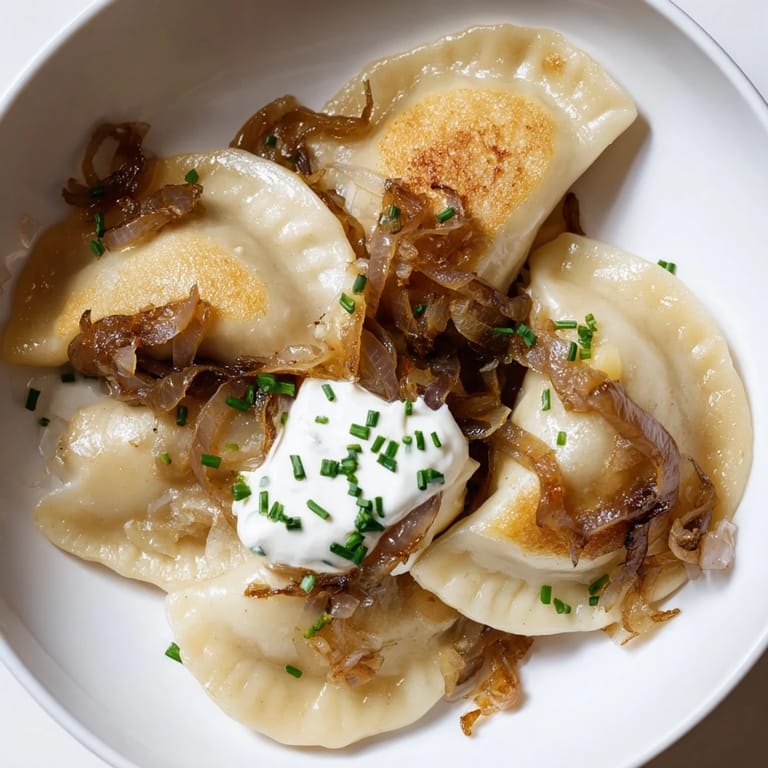
- In the same skillet with the caramelized onions, add your boiled pierogi in batches and fry for 2–3 minutes per side until they're golden brown and slightly crispy on the outside. Work in batches so you don't overcrowd the pan.
- Plate and serve:
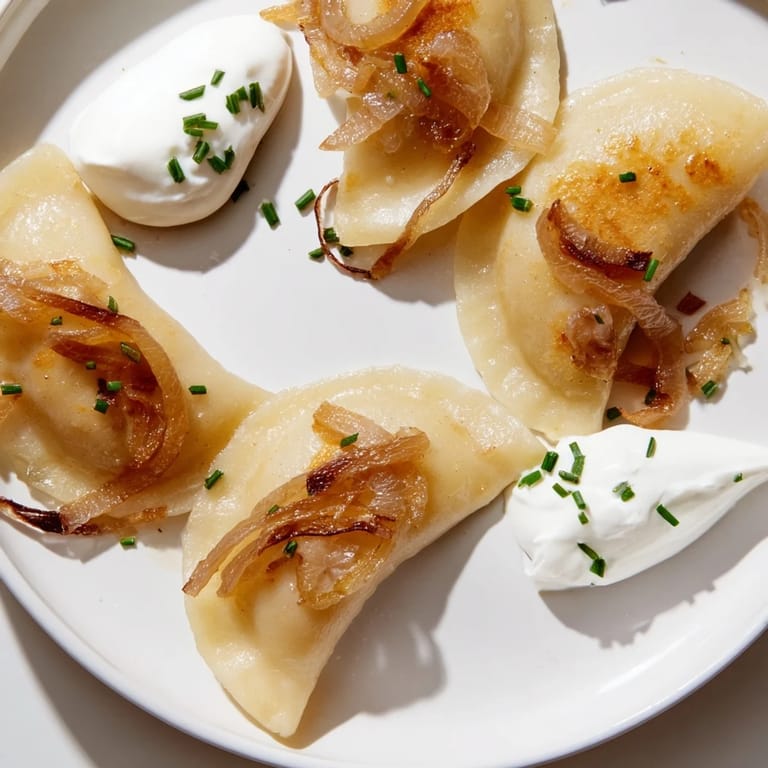
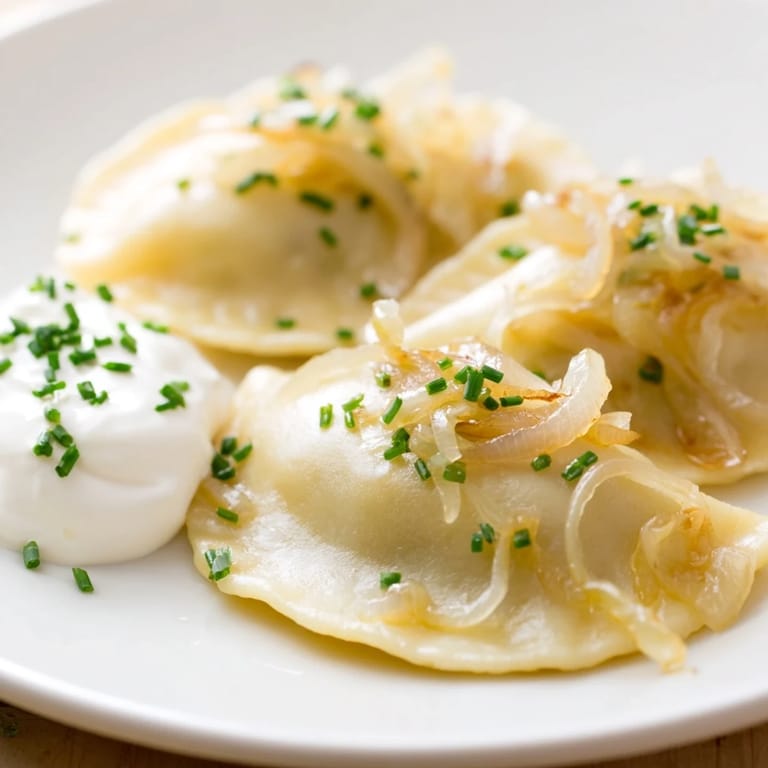
- Transfer to a serving platter, top generously with caramelized onions, a dollop of cool sour cream, and fresh chives or parsley if you have it.
 Save
Save I remember my mother-in-law watching me fry the first batch with the caramelized onions, and instead of critiquing my technique, she just smiled and said, "You're doing it right—listen to how they sound." That soft sizzle and the smell of butter and onions became comforting proof that I was on track, and now whenever I make pierogi, I listen for that sound and know I'm doing something good.
Dough Secrets
The sour cream in the dough might seem unusual if you've only made pasta dough before, but it's the difference between a dough that cracks at the edges and one that stays tender and forgiving as you work with it. The egg and lukewarm water create steam that helps the boiled pierogi puff slightly, while the butter keeps everything rich without making the dough greasy or difficult to handle. When you knead, you'll feel the transformation—it starts rough, then becomes silky and almost elastic, which is exactly what you want.
The Filling
This filling is a study in balance: the starchy comfort of potatoes, the tang of cheese, and the sweetness of the sautéed onion all working together so that no single flavor dominates. Russet potatoes are crucial because they're starchy and mash to a smooth consistency that holds together without becoming gluey, unlike waxy potatoes that stay grainy no matter how long you mash. The combination of farmers cheese (tangy and creamy) with sharp cheddar (bold and flavorful) creates a filling that tastes way more interesting than you'd expect from something so simple.
The Caramelized Onions and Other Variations
Caramelized onions are not a topping—they're the whole point, transforming simple boiled dumplings into something elegant and craveable. If vegetarian isn't your thing, crispy bacon lardons mixed into the caramelized onions add smoke and saltiness that's absolutely worth trying. You can also experiment with the filling itself: some people add a small amount of sharp blue cheese, others mix in crispy fried bacon or caramelized garlic, and a few brave souls even add fresh thyme or dill to the potato mixture.
- Freeze uncooked pierogi on a sheet tray, then transfer to freezer bags for up to 2 months—you can boil them directly from frozen, adding just a minute or two to cooking time.
- If farmers cheese is hard to find, well-drained cottage cheese or ricotta works fine, though the flavor will be slightly different.
- Serve with a crisp Polish lager or dry white wine to cut through the richness.
 Save
Save Pierogi are one of those dishes that seem intimidating until you make them once, and then they become part of your regular rotation because they're not actually that hard and they make people genuinely happy. Once you've mastered the basic potato and cheese version, you'll start experimenting with fillings and toppings, turning a traditional Polish dish into something that feels completely your own.
Recipe Q&A
- → How do I know when pierogi are cooked?
They float to the surface when fully cooked, then cook for an additional 1–2 minutes to ensure the filling is heated through.
- → What is the best way to achieve crispy edges?
After boiling, pan-fry the dumplings in butter on medium heat until both sides turn golden brown and crisp.
- → Can I prepare the dough in advance?
Yes, letting the dough rest covered for 30 minutes improves elasticity and makes rolling easier.
- → What cheeses work well for the filling?
Farmers cheese or well-drained ricotta combined with sharp cheddar provides a creamy and flavorful filling.
- → How do I make perfect caramelized onions?
Cook thinly sliced onions slowly in butter over low heat, stirring often until golden and sweet, about 20–25 minutes.
- → Can I freeze the uncooked dumplings?
Freeze uncooked pierogi on a tray before transferring to bags to keep them fresh for up to two months.