 Save
Save The smell of lemon and garlic hitting hot olive oil still takes me back to my tiny first apartment, where the kitchen was barely bigger than a closet but somehow always smelled amazing. My roommate and I discovered that cooking everything in one pan meant less cleanup and more time hanging out at the tiny table we'd squeezed against the wall. We made this on Tuesdays mostly, because Tuesdays needed something bright and forgiving after rough Mondays.
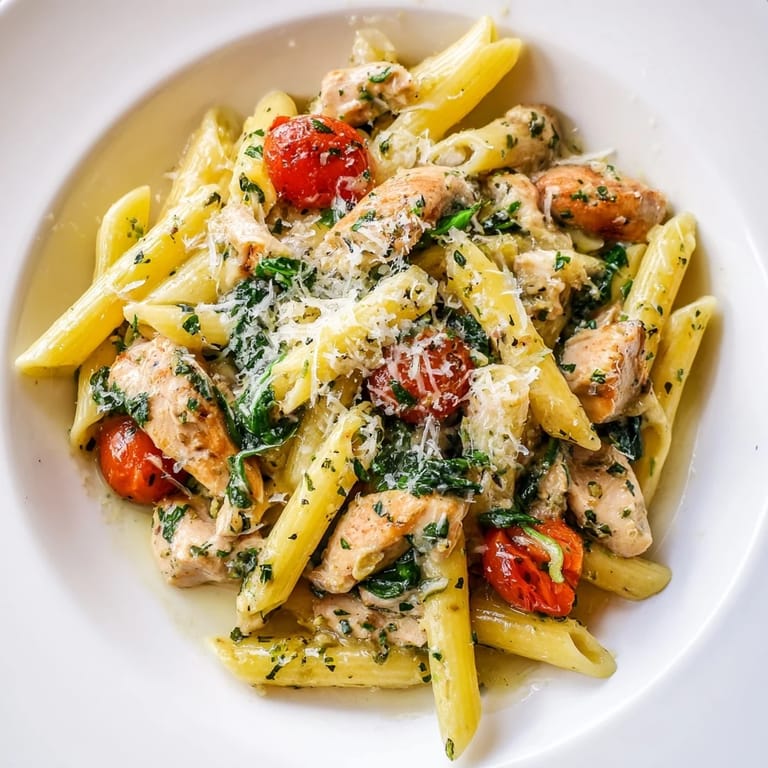
Last summer I made this for my dad, who's notoriously suspicious of anything with 'too much green stuff' in it. He watched me add the spinach with that skeptical eyebrow raise I know so well, but then proceeded to go back for thirds. The way the lemon cuts through the rich broth while the Parmesan creates these velvety pockets of sauce changed his entire stance on one-pot meals.
Ingredients
- 2 boneless skinless chicken breasts (about 400 g), cut into bite-sized pieces: Cutting the chicken into smaller pieces before cooking means it cooks faster and distributes more evenly throughout the pasta
- 300 g (10 oz) penne or fusilli pasta, uncooked: Choose a pasta with ridges or curves because those little crevices grab onto the creamy lemon sauce better than smooth noodles
- 2 tablespoons olive oil: This is your flavor foundation so use something decent quality that tastes good on its own
- 3 garlic cloves, minced: Fresh garlic matters here so avoid the pre-minced stuff in jars which can taste harsh and metallic
- 1 small onion, finely chopped: The onion sweetness balances the lemon's acidity so do not skip this step
- 1 lemon, zest and juice: Zest first before you juice because trying to zest a juiced lemon is surprisingly frustrating
- 150 g (1 cup) cherry tomatoes, halved: They burst during cooking and release their juices into the broth which makes everything taste brighter
- 60 g (2 cups) baby spinach: The spinach wilts down dramatically so what looks like a huge mountain will disappear into the dish
- 2 tablespoons fresh parsley, chopped: Add this at the very end so it stays vibrant and fresh tasting
- 1 tablespoon fresh basil, chopped: Tear the basil by hand instead of chopping it to prevent bruising which can make it taste bitter
- 1 teaspoon dried oregano: Dried oregano actually works better than fresh here because it stands up to the long simmer time
- 1 teaspoon dried thyme: This earthy herb grounds all the bright lemony flavors
- 900 ml (4 cups) low-sodium chicken broth: Low-sodium is crucial because the broth reduces and concentrates as the pasta cooks
- 40 g (1/4 cup) freshly grated Parmesan cheese, plus extra for serving: Buy a wedge and grate it yourself because pre-grated cheese has anti-caking agents that prevent smooth melting
- Salt and black pepper, to taste: Season at every stage rather than just at the end for the most balanced flavor
Tired of Takeout? 🥡
Get 10 meals you can make faster than delivery arrives. Seriously.
One email. No spam. Unsubscribe anytime.
Instructions
- Get your chicken going:
- Heat that olive oil in your large deep skillet over medium-high heat until it shimmers slightly then add your chicken pieces with a generous pinch of salt and pepper. Let them cook undisturbed for about 3 minutes so they develop a nice golden brown color then flip and cook another minute.
- Build your flavor base:
- The same pan you cooked the chicken in now becomes your flavor engine so do not wash it. Toss in your onion and garlic and cook for just 2 minutes until they're fragrant and translucent but not browned.
- Start the pasta party:
- Add your uncooked pasta right into the pan along with the chicken broth, lemon zest, lemon juice, oregano, and thyme. Give everything a good stir to combine then bring it to a gentle boil.
- Let it simmer:
- Reduce your heat to medium-low, cover the pan, and let it simmer for about 8 minutes. You will want to stir occasionally to prevent the pasta from sticking to the bottom of the pan.
- Bring everyone back together:
- Return your partially cooked chicken to the pan and add those halved cherry tomatoes. Cook uncovered for another 7 to 8 minutes until the pasta is tender but still has a little bite and most of the liquid has been absorbed into a silky sauce.
- The grand finale:
- Stir in your spinach, parsley, basil, and Parmesan cheese. The spinach will wilt almost immediately and the cheese will melt into the broth creating these incredible creamy pockets throughout the pasta.
- Taste and adjust:
- This is your moment so take a bite and add more salt, pepper, or lemon juice until everything pops just right. Sometimes an extra squeeze of lemon makes all the difference.
 Save
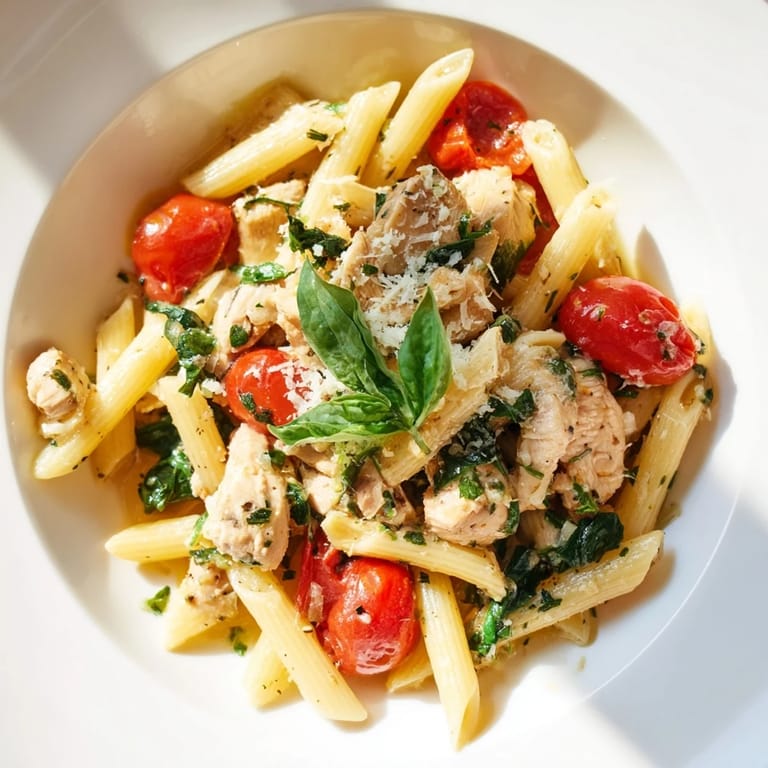
Save My friend Sarah accidentally used vegetable broth once when she could not find chicken broth and it was still delicious, just different. The chicken broth adds depth and richness but the vegetable version keeps it lighter if that is your preference. We still argue about which is better.
Getting The Pasta Perfect
The trickiest part is knowing when the pasta is done since you are tasting it in the sauce rather than boiling water. I pull out a piece, run it under cold water quickly, and taste it. It should be tender with just a tiny bit of resistance in the center because it will finish cooking in that hot sauce while you are stirring everything together.
Making It Your Own
Sometimes I add a pinch of red pepper flakes with the garlic if I want something with a little kick. Other times I swap the spinach for arugula when I want that peppery bite against the creamy lemon sauce. The recipe is incredibly forgiving once you understand the basic technique.
Serving Suggestions
This is one of those rare dishes that feels complete on its own but also plays nicely with others. I love it with a simple green salad dressed with nothing but olive oil and vinegar. The freshness balances the rich pasta perfectly.
- A crusty piece of bread for sopping up any remaining sauce is practically mandatory
- A chilled white wine like Sauvignon Blanc cuts through the creaminess beautifully
- Extra Parmesan at the table is not optional in my house
 Save
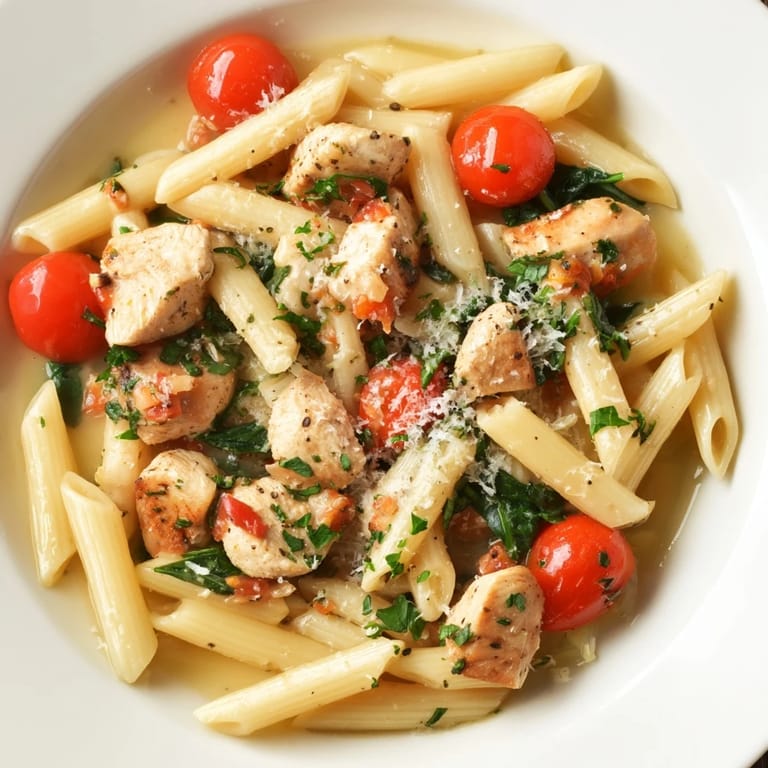
Save There is something deeply satisfying about a meal that comes together in one pan but tastes like you spent hours at the stove. This pasta has saved countless weeknights in my house and I bet it will in yours too.
Recipe Q&A
- → Can I use different pasta shapes?
Yes, any short pasta like rotini, rigatoni, or farfalle works well. Just adjust cooking time as needed since different shapes may require slightly different cooking durations.
- → Is it necessary to pre-cook the pasta?
No, the pasta cooks directly in the chicken broth, absorbing all the flavors while simmering. This one-pan method eliminates the need for a separate pot of boiling water.
- → Can I make this dairy-free?
Simply omit the Parmesan cheese or substitute with nutritional yeast or a dairy-free Parmesan alternative. The dish will still be flavorful from the lemon and herbs.
- → How should I store leftovers?
Store in an airtight container in the refrigerator for up to 3 days. The pasta will absorb more liquid over time, so add a splash of broth or water when reheating.
- → Can I use dried herbs instead of fresh?
Yes, use one-third the amount of dried herbs compared to fresh. For example, substitute 2 teaspoons dried parsley for the 2 tablespoons fresh parsley called for in the garnish.
- → What other proteins work well?
Turkey breast, shrimp (added during the last 5 minutes), or Italian sausage work beautifully. For a vegetarian version, try chickpeas or white beans instead of chicken.