 Save
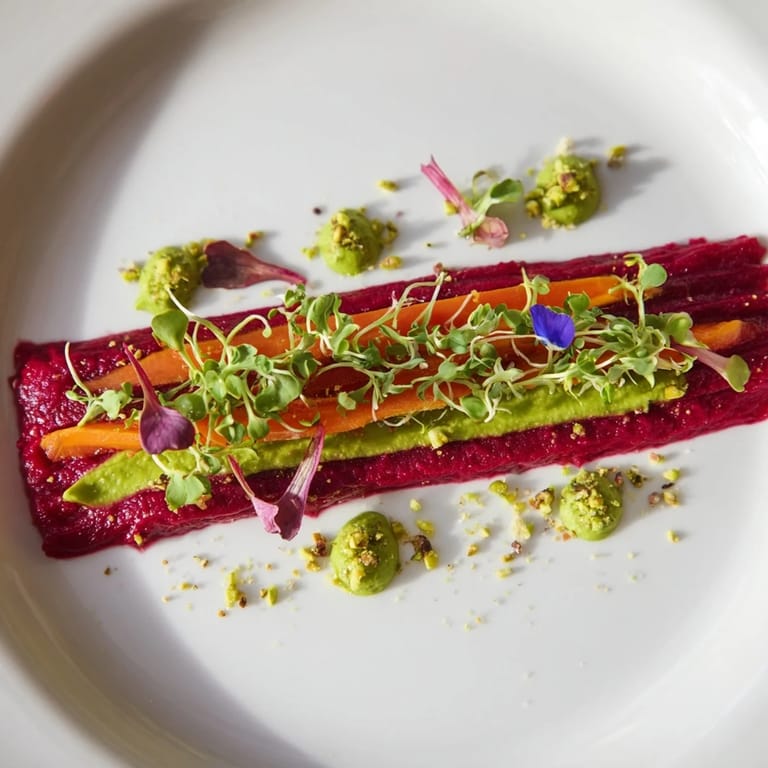
Save I discovered the power of a single stripe quite by accident during a dinner party when I knocked over three separate vegetable purées I'd been arranging on individual plates. As they blended together into one dramatic line across the board, my guests leaned in closer than they had all evening. That chaotic moment taught me something: sometimes the most striking presentations come from embracing simplicity rather than fussing with complexity. This modernist stripe became my favorite way to celebrate vegetables without any pretense, letting color and texture speak louder than any fancy plating technique.
The first time I served this to my sister, who'd been eating the same boring salads for months, she actually closed her eyes while eating. When I asked what she was doing, she said she wanted to taste each color separately. That comment stuck with me because it made me realize this dish isn't about being fancy—it's about paying attention to what we're eating and letting each flavor matter.
Ingredients
- Medium beets: Choose ones roughly the same size so they roast evenly and give you that deep, almost sweet earthiness that anchors the whole stripe.
- Olive oil: Use your better-quality bottle here since it's the only fat in the beet component and you'll taste it directly.
- Fresh ginger: This isn't just a spice—it adds brightness and a little heat that cuts through the carrot's natural sweetness in the best way.
- Ripe avocado: The one that yields to gentle pressure, not the rock-hard ones sitting out waiting; timing matters more than you'd think.
- Greek yogurt: It gives the avocado creaminess without making it dense, and the tang balances the richness perfectly.
- Microgreens and edible flowers: These aren't garnish distractions—they add texture and a peppery brightness that makes people notice the stripe first and everything else second.
Tired of Takeout? 🥡
Get 10 meals you can make faster than delivery arrives. Seriously.
One email. No spam. Unsubscribe anytime.
Instructions
- Get the beets roasting:
- Preheat your oven to 400°F and toss diced beets with olive oil and salt, spreading them in a single layer so they caramelize rather than steam. Check them at 30 minutes—you want them fork-tender and slightly wrinkled at the edges.
- Soften the carrots:
- While beets roast, steam or boil your carrot slices until they're so soft they practically dissolve under light pressure, about 15 to 20 minutes. Don't skip this step because undercooked carrots create a grainy purée that ruins the silky effect you're after.
- Blend the beet purée:
- Once roasted beets have cooled slightly, add them to your blender with lemon juice and blend for a full minute, scraping down the sides. Add just a splash of water only if the mixture seems stiff—you want it smooth enough to spread, not soupy.
- Create the carrot & ginger purée:
- Blend your cooked carrots with fresh ginger, butter, and salt until completely silky, which takes about 2 minutes depending on your blender's power. Taste it and adjust salt—this purée should taste like concentrated carrot with a whisper of warmth.
- Make the avocado cream:
- Mash your ripe avocado in a bowl with the yogurt, lime juice, and just a pinch of salt, stirring until it's perfectly smooth with no chunks. Transfer immediately to a piping bag or squeeze bottle if you have one, or just use the back of a spoon.
- Spread the beet stripe:
- On your serving board, use an offset spatula or the back of a large spoon to create one bold, 3-inch-wide stripe of beet purée down the center. Take your time here because this becomes the foundation for everything else, and imperfections are part of the charm.
- Layer the other purées:
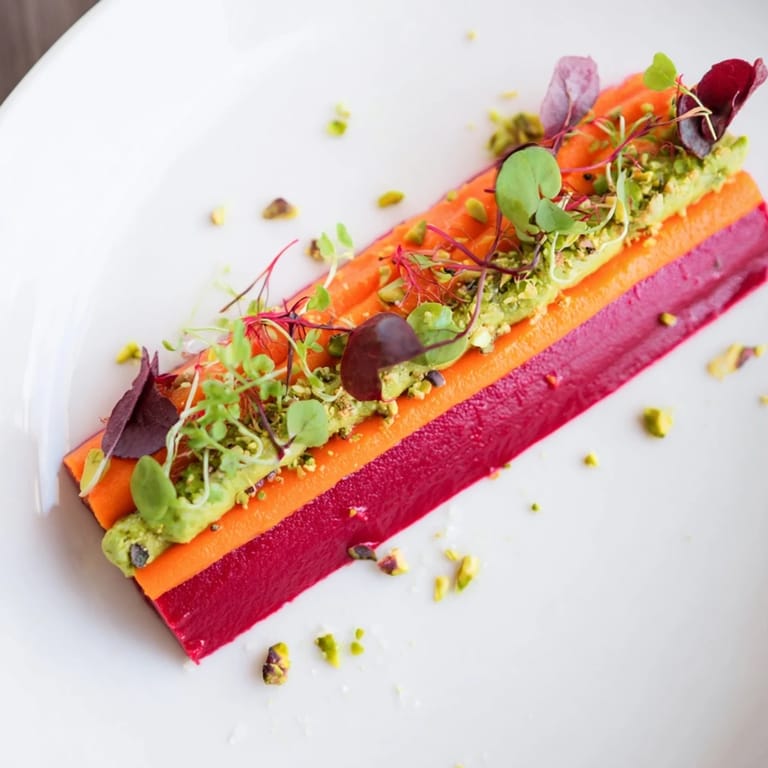
- Pipe or spoon the carrot purée and avocado cream in artistic strokes or small dots directly over the beet stripe, letting them nestle together naturally. Don't overthink the pattern—let your instincts guide you.
- Finish with garnish:
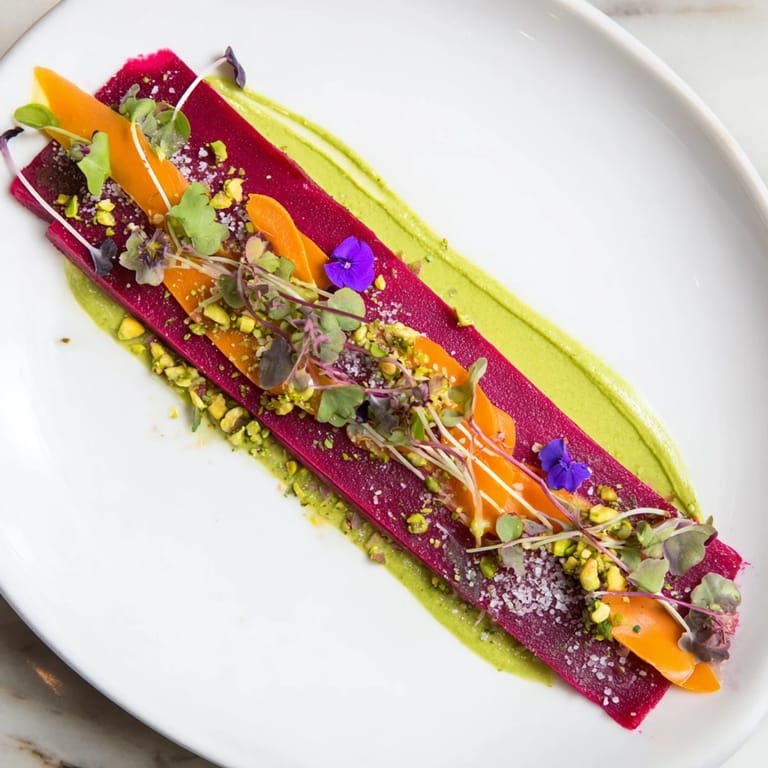
- Scatter microgreens, edible flowers, crushed pistachios, and flaky sea salt across the entire stripe in clusters rather than evenly distributed. This makes it feel intentional and inviting.
- Serve with intention:
- Bring it to the table immediately and encourage guests to scoop directly from the stripe using bread, crackers, or spoons. The warmth of the room and the anticipation matter more than you'd think.
 Save
Save The moment I realized this dish had real meaning was when someone asked if they could bring it to their wedding. I'd never thought of it as anything more than my little plating experiment, but they saw it as something worth sharing with 80 people. Suddenly it felt less like food and more like permission to make beautiful things without complicated reasons.
Why This Works as Modernist Cooking
Modernist cooking isn't about complexity for its own sake—it's about clarity. This stripe strips away everything unnecessary and asks one question: what if we just let vegetables be the most interesting thing on the plate? The purées concentrate flavor and make textures matter, the single line creates drama from restraint, and suddenly a carrot tastes like an event.
Playing with Color and Texture
Once you understand how this stripe works, you can break the rules in specific ways. Try roasted sweet potato for orange, blanched pea for bright green, or roasted butternut squash for golden warmth. Each brings its own character, and layering them teaches you how colors work together—which ones sing, which ones whisper, which ones need something sharp to stand against them.
Making It Your Own
The real lesson here is that a framework doesn't limit creativity—it focuses it. Once you've made the basic stripe three times, you'll notice small instinctive choices: maybe you prefer your beet purée thicker, or you always add a tiny pinch of smoked salt to the carrot, or you discover that a drizzle of good balsamic over the top changes everything. These aren't deviations; they're you understanding the dish deeply enough to make it personal.
- Add roasted chickpeas or pickled onions for a textural contrast that keeps guests coming back for another scoop.
- Pair with crisp white wine like Sauvignon Blanc, which cuts through richness and echoes the brightness of the lime and lemon.
- Prepare all purées ahead—they keep refrigerated for two days, letting you focus entirely on plating when guests arrive.
 Save
Save This stripe taught me that the most memorable meals don't need to be complicated, just intentional. It's a reminder that sometimes the bravest thing you can do in the kitchen is say no to everything except what matters.
Recipe Q&A
- → What vegetables are featured in this dish?
The dish highlights roasted beets, carrot and ginger purée, and creamy avocado layers.
- → How is the bold stripe created on the serving board?
A wide spatula is used to spread a thick, even line of beet purée down the center of a clean board.
- → Can the garnishes be substituted?
Yes, garnishes like microgreens, edible flowers, and crushed pistachios can be swapped for other fresh or crunchy toppings.
- → Is there a vegan option available for this dish?
Butter and Greek yogurt can be replaced with plant-based alternatives like olive oil and coconut yogurt for a vegan version.
- → What cooking techniques are used in preparing this dish?
The preparation includes roasting beets, steaming carrots, blending purées, and precise plating for visual impact.
- → How should this dish be served?
Serve immediately on a clean board so guests can scoop layered purées directly from the stripe.