 Save
Save There's something about the aroma of Hungarian paprika that instantly transports me back to a chilly autumn evening when a friend brought me to her family's kitchen in Budapest. She was teaching me to make the real deal—not the hurried version, but the kind you sit with for hours, letting the beef soften until it practically melts. That first spoonful changed how I understood comfort food.
I made this for my partner during a stretch of gray, endless days when we both needed something that felt like a hug. We sat at the kitchen table while it simmered, talking about nothing important, and somehow by the time dinner came around, the whole mood had shifted. Food does that sometimes—it's not magic, but it's close.
Ingredients
- Beef chuck (2 lbs): This cut is your secret weapon because it's marbled with fat that breaks down into silky tenderness, not tough and stringy like leaner cuts would be.
- Hungarian sweet paprika (3 tbsp): This is non-negotiable for authenticity and depth. Domestic paprika tastes like sadness by comparison, so find the good stuff if you can.
- Onions (2 large): They disappear into the sauce and become its backbone, so don't skip the sautéing step.
- Garlic (2 cloves): Just enough to whisper in the background, not shout.
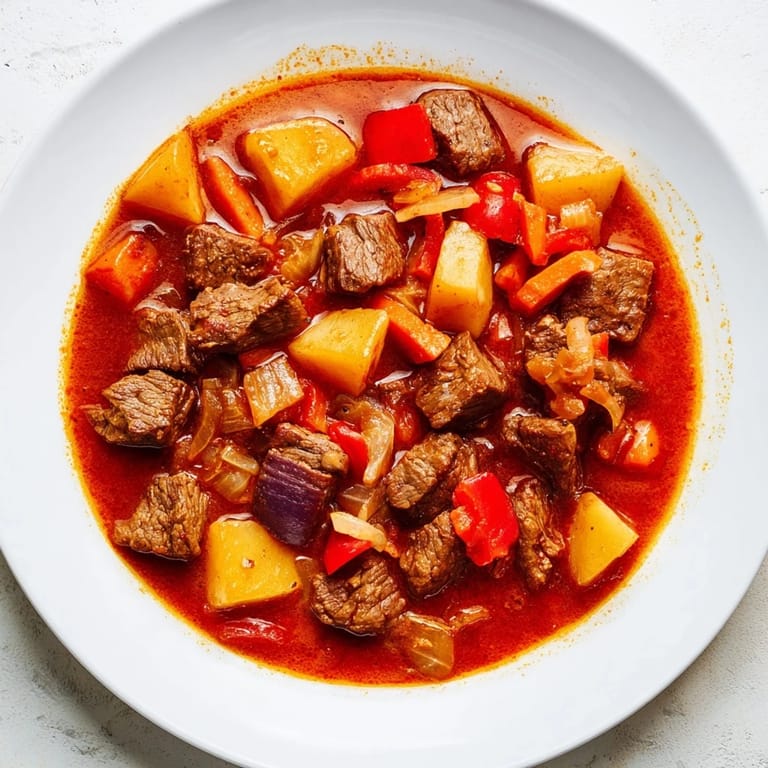
- Carrots (2 medium) and red bell pepper (1 large): These stay slightly distinct in the stew and add natural sweetness that balances the paprika.
- Potatoes (2 medium, optional): I learned the hard way not to add them at the beginning or they'll turn to mush, so they go in near the end.
- Caraway seeds (1 tsp): Tiny but unmistakably Hungarian—they taste like nothing else and make people ask what that flavor is.
- Beef broth (4 cups): Use the good kind, not the salty substitute brands.
- Tomato paste (2 tbsp): This adds umami depth that makes people think you've been cooking for days.
- Bay leaf, marjoram, black pepper, salt, and oil: The supporting cast that ties everything together.
Tired of Takeout? 🥡
Get 10 meals you can make faster than delivery arrives. Seriously.
One email. No spam. Unsubscribe anytime.
Instructions
- Start with the foundation:
- Heat your oil in a heavy pot and let the onions go golden and soft for about eight minutes—don't rush this part because caramelized onions are where the flavor lives. The smell alone will tell you when they're ready.
- Wake up the garlic:
- Stir in your minced garlic and let it bloom for a minute until the kitchen smells impossibly good. This brief moment prevents raw garlic from hiding in your stew.
- Sear the beef:
- Add your beef cubes and let them brown on all sides, about five minutes total. You're not cooking them through yet, just creating a golden crust that locks in flavor.
- The paprika moment:
- This is where I almost always hesitate—sprinkle the paprika over the meat and onions and stir quickly to coat everything without letting it burn. Burnt paprika tastes bitter and ruins the whole thing, so move fast here.
- Build the complexity:
- Add your tomato paste, caraway seeds, marjoram, pepper, and salt. Stir it all together until you can't see the white bits of tomato paste anymore. The smell shifts here into something recognizably Hungarian.
- Add the vegetables and liquid:
- Toss in your carrots, bell pepper, and bay leaf, then pour in the beef broth while scraping up all those caramelized bits stuck to the pot bottom. That brown stuff is flavor gold. Bring everything to a simmer.
- First long cook:
- Cover the pot and let it bubble gently for an hour, stirring occasionally so nothing sticks and everything cooks evenly. Your kitchen will smell like a Hungarian grandmother's is living in it.
- Final push:
- If you're using potatoes, add them now along with any extra salt you think it needs. Simmer uncovered for another forty-five to sixty minutes until the beef is so tender it falls apart and the broth has thickened slightly from all the gelatin released from the meat.
 Save
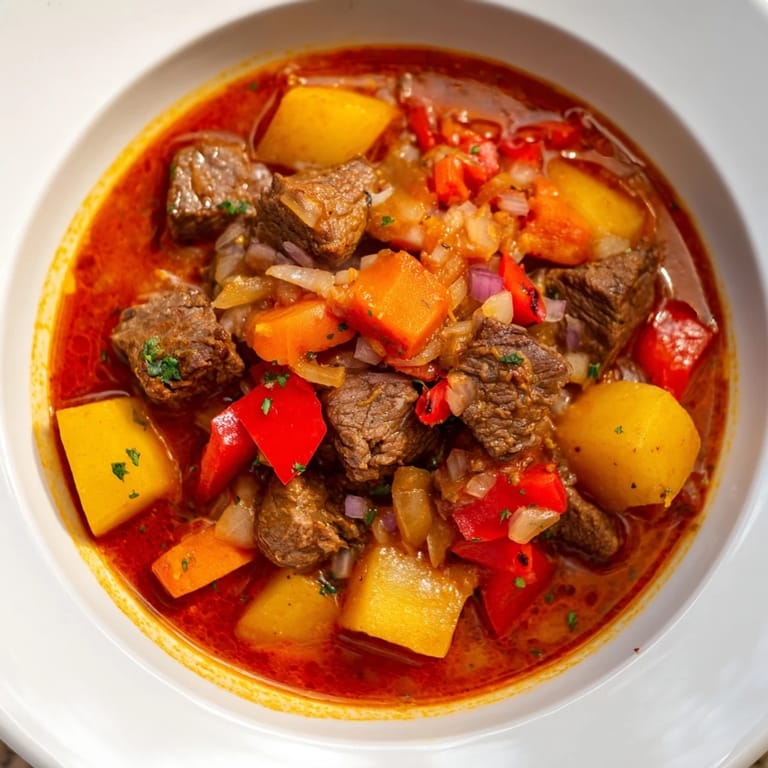
Save The real revelation came when I realized this stew is better the next day—the flavors had married overnight and become something deeper and more harmonious. I started making it intentionally on the day before I knew we'd need comfort, just so it would be ready when we did.
What Makes This Hungarian and Not Just Any Stew
Hungarian goulash is defined by paprika in a way that's impossible to replicate with substitutes—it's the heart of the dish and the reason it tastes completely different from a beef stew. The caraway seeds add something almost perfume-like that you can't quite name but that your brain recognizes as specifically Hungarian. This isn't about being precious about tradition, it's just that these ingredients create something you genuinely can't make any other way.
Serving and Pairing Ideas
I've served this with thick slices of crusty bread for soaking up the sauce, with egg noodles for something more formal, and once with those tiny Hungarian dumplings called csipetke that I'll never have the patience to make from scratch again. It pairs beautifully with a full-bodied red wine or even just a cold beer if you're in the mood for something simple. The stew is substantial enough to be dinner all on its own, but a green salad alongside feels like a good balance if your appetite or timing demands it.
Storage and Make-Ahead Magic
Goulash is one of those rare dishes that actually tastes better the next day and even better the day after that, as if the flavors are slowly falling in love with each other in your fridge. It keeps beautifully for about four days covered, and it freezes for months without losing anything essential. I've thawed it straight from the freezer and reheated it gently on the stovetop without any trouble, though give it time to warm through rather than blasting it with high heat.
- Make it two days ahead of time if you can and taste it before serving—you might only need to adjust the salt.
- If it's too thin when you reheat it, let it simmer uncovered for ten minutes to reduce, and if it's somehow too thick, add a splash of broth.
- Reheat gently on the stovetop over low heat to avoid scorching the bottom or drying out the meat.
 Save
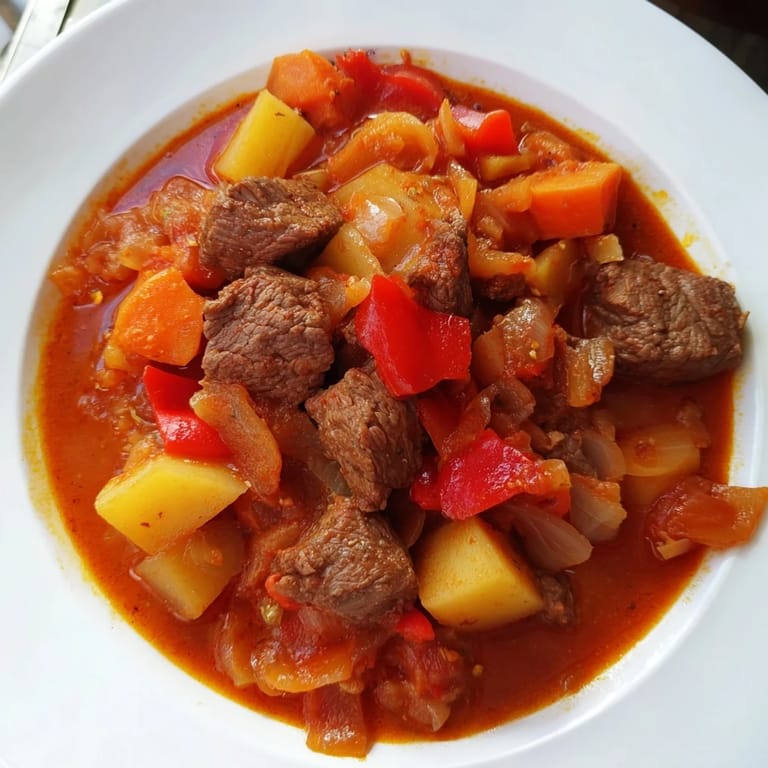
Save This is the kind of stew that reminds you why people have gathered around tables for thousands of years to share food. It asks for your time but gives back comfort, warmth, and the kind of full stomach that makes everything feel a little lighter.
Recipe Q&A
- → What cut of beef works best for this stew?
Beef chuck cut into 1-inch cubes is ideal for its tenderness and marbling, which keeps the meat juicy during slow cooking.
- → Can I make the stew spicier?
Yes, adding a pinch of hot paprika or a chopped chili enhances the heat without overpowering the traditional flavors.
- → Is it better to use beef broth or stock?
Beef broth is preferred for its rich flavor, complementing the paprika and vegetables perfectly in this stew.
- → How long should the stew simmer for optimal flavor?
Simmer gently for about 2 hours, allowing the beef to become tender and the flavors to meld beautifully.
- → What are good side options to serve with this dish?
Rustic bread, egg noodles, or Hungarian csipetke dumplings are traditional and delicious accompaniments.
- → Can potatoes be added to the stew?
Yes, cubed potatoes can be added toward the end of cooking to thicken the stew and add extra heartiness.