 Save
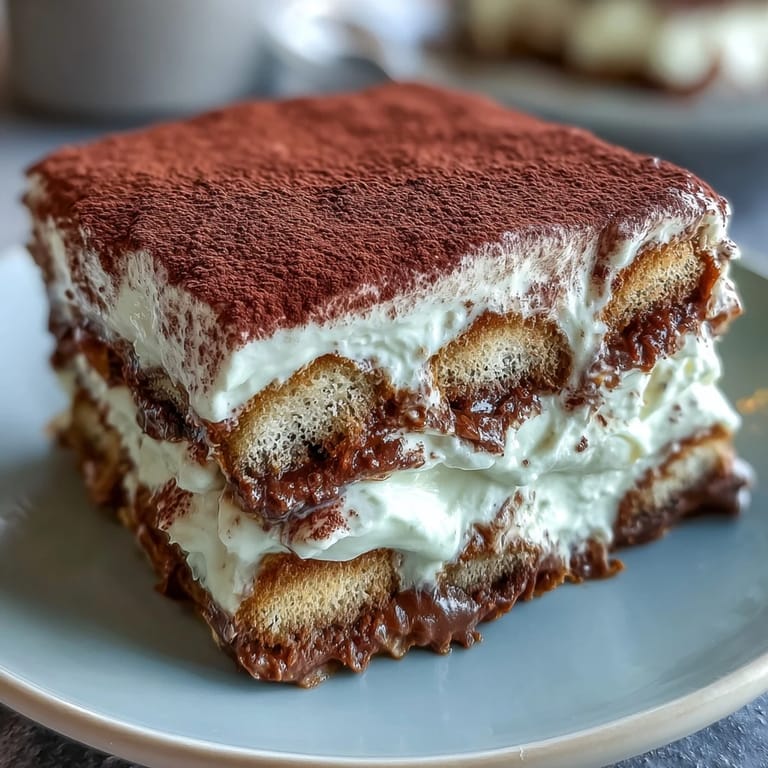
Save One quiet afternoon, I was rearranging my tea shelf when a tin of hojicha caught the light, and I suddenly remembered how my friend described its toasty, almost nutty warmth. That same day, I'd been craving tiramisu but wanted something different, something that felt like a bridge between two worlds I love. The idea came together in that moment—why not blend the creamy Italian classic with this earthy Japanese tea? Four hours later, after the layers had settled in the fridge, I pulled out something entirely unexpected: a dessert that tasted like a conversation between two cultures.
I made this for my book club last month, and watching everyone's faces when they tasted it reminded me why I love cooking for a crowd. One person said it tasted like "dessert from a dream," which might be the best compliment I've ever received. What started as a quiet kitchen experiment had become something people actually wanted the recipe for.
Ingredients
- Hojicha loose leaf tea: Use real leaves if you can find them—the flavor is deeper and more authentic than bags, though bags work fine in a pinch and honestly, nobody will know the difference once it's mixed into the syrup.
- Mascarpone cheese: Let it soften at room temperature for at least 30 minutes before using, otherwise you'll have little lumps that refuse to incorporate smoothly no matter how hard you fold.
- Egg yolks: The double boiler method feels fussy but it actually matters—it gently cooks the eggs while whipping in air, creating that cloud-like texture that makes tiramisu special.
- Heavy cream: Keep it cold, and whip it to stiff peaks just before folding; if you do it too early, it'll start to separate and weep.
- Ladyfinger biscuits: The dip-and-layer method is crucial—soak them too long and they become mush, but a quick second-long dip gives them just enough moisture to soften without falling apart.
- Cocoa powder or hojicha powder: Dust this right before serving so it stays vibrant and doesn't absorb moisture from the cream below.
Tired of Takeout? 🥡
Get 10 meals you can make faster than delivery arrives. Seriously.
One email. No spam. Unsubscribe anytime.
Instructions
- Brew your hojicha moment:
- Boil water and steep the hojicha for exactly five minutes—any longer and it becomes bitter and unpleasant. Strain it while still hot, stir in the sugar until it dissolves, then let it cool completely, which takes longer than you'd think but is worth the wait.
- Create the silky egg base:
- Set your heatproof bowl over barely simmering water and whisk the egg yolks and sugar for five to seven minutes until the mixture is pale, fluffy, and leaves a ribbon trail when you lift the whisk. This is the moment you'll hear the kitchen get quiet as you focus entirely on the whisking sound.
- Build the cream layers:
- Whip the cold heavy cream to stiff peaks, which usually takes about two to three minutes if your mixer is cold too. In a separate bowl, beat the mascarpone with vanilla until it's smooth and creamy, then gently fold in the cooled egg mixture, and finally fold in the whipped cream using a rubber spatula with slow, deliberate strokes.
- Assemble with intention:
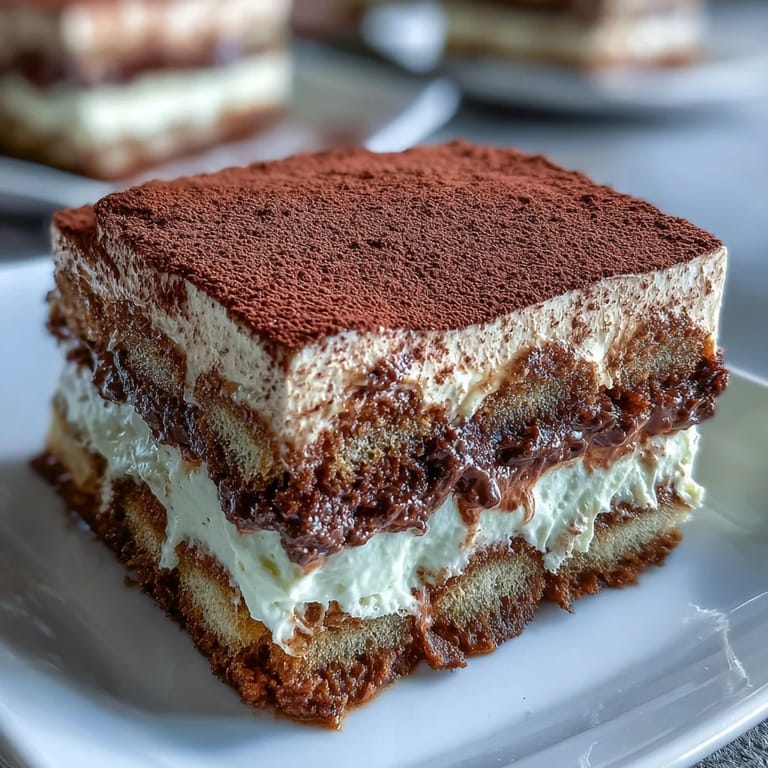
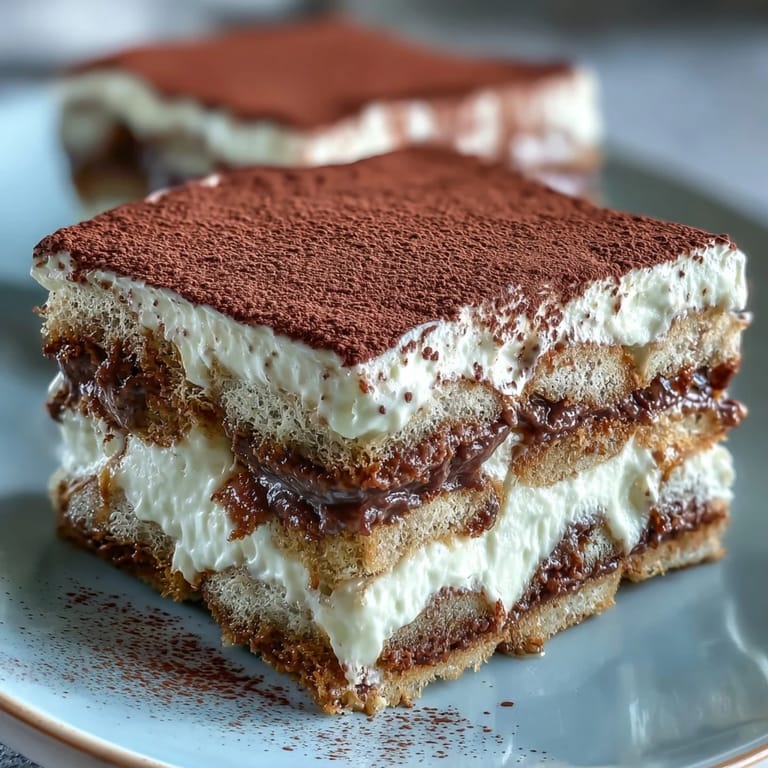
- This is where patience becomes an actual ingredient—dip each ladyfinger into the hojicha syrup for just one second per side, arrange them in a single layer in your baking dish, then spread half the mascarpone cream evenly over them. Repeat with another layer of dipped ladyfingers and the remaining cream.
- Let time do its work:
- Cover the dish and refrigerate for at least four hours, though overnight is truly better because it lets all the flavors meld and settle. The dessert firms up, the hojicha deepens in the mascarpone, and everything becomes more cohesive.
- Finish with flourish:
- Just before serving, dust the top generously with cocoa powder or hojicha powder using a sifter, so the powder falls evenly and looks intentional.
 Save
Save There's something magical about lifting the cover on a tiramisu you made four hours ago and seeing it has transformed into something structured, elegant, and entirely your own creation. My sister tried it and said it reminded her of an upscale cafe we visited in Kyoto, which is the moment I realized this fusion thing was actually working.
The Hojicha Difference
Hojicha is roasted green tea, which means it has none of the grassy, sometimes bitter notes that make some people hesitant about tea desserts. Instead, it tastes warm, slightly caramelized, and almost like toasted nuts—qualities that work beautifully with the richness of mascarpone and eggs. The first time I actually understood hojicha was when I smelled it steeping in hot water, and suddenly everything clicked about why it belonged in a dessert.
Timing and Temperature Matter
I learned the hard way that rushing the cooling process doesn't save time—it just means your mascarpone cream gets warm and separates when you fold in the cooled egg mixture. Everything needs to be at the right temperature: the syrup completely cool, the eggs slightly warm or room temperature, the cream cold, the mascarpone softened but not warm. It's like conducting an orchestra where all the players need to come in at exactly the right moment.
Flavor Flexibility and Custom Touches
This recipe feels both traditional and experimental at the same time, which means you can tweak it without completely changing what it is. Some people add a splash of liqueur to the syrup for complexity, others swap the hojicha for matcha if they prefer brightness over earthiness, and one friend of mine garnished hers with toasted sesame seeds because she said it made it taste "more Japanese." The core structure stays sturdy while the flavor can shift depending on what you're in the mood for.
- If you want extra richness, brush a tiny bit of coffee liqueur or Marsala wine into the hojicha syrup before dipping the ladyfingers.
- For a nuttier finish, toast some sesame seeds or chop roasted almonds and sprinkle them alongside the final powder dusting.
- Make sure your baking dish is at least seven by eleven inches, or the layers will be too thick and won't set properly in the time it takes to chill.
 Save
Save This dessert sits at the intersection of two food traditions and somehow feels like it belongs in both places. Make it once, and you'll understand why fusion cooking, when done thoughtfully, creates something worth sharing.
Recipe Q&A
- → What is hojicha and how does it affect the flavor?
Hojicha is a roasted Japanese green tea known for its toasty, earthy notes. It adds a deep, warm flavor that complements the creamy layers.
- → Can I make the tea syrup ahead of time?
Yes, prepare the hojicha syrup in advance and refrigerate it until ready to assemble; this helps flavors deepen and saves prep time.
- → How should ladyfingers be dipped for best texture?
Dip ladyfingers briefly in cooled tea syrup to avoid sogginess, preserving a light crispness between creamy layers.
- → Is mascarpone cream difficult to prepare?
The mascarpone cream involves gently thickening egg yolks and folding them into whipped cream and mascarpone for a silky, airy texture that’s rewarding to make.
- → Can this dessert be adapted for different flavors?
Yes, substituting matcha for hojicha or adding coffee liqueur to the syrup can add interesting twists to the flavor profile.