 Save
Save I'll never forget the first time I built a glazed ham board for my family's holiday gathering. I was nervous—hosting seemed so formal, so intimidating. But as I stood in my kitchen, brushing that sweet, caramelized glaze onto the ham while it roasted, something shifted. The aroma filled the house, and I realized that the most memorable meals aren't about perfection; they're about generosity and warmth. This board became my signature way to say 'welcome' without fussing over a rigid three-course dinner.
I remember my aunt bringing a crudités platter to Thanksgiving one year, and it felt so tired. When I made this glazed ham board for our first holiday at our new house, my sister turned to me and said, 'This is what entertaining should feel like.' Not stressful. Just beautiful and abundant and warm. That comment stuck with me.
Ingredients
- 1 (3–4 lb) boneless ham: This is your star. Boneless means less fuss when carving, and this size is perfect for feeding a crowd without overwhelming your oven—I've learned that smaller hams dry out, larger ones take forever.
- 1/2 cup brown sugar: The sweetness here isn't cloying; it caramelizes in the oven and becomes something magical, almost like a glaze you'd find at a fancy restaurant.
- 1/4 cup honey: This adds a subtle depth to the glaze and helps it stick to the ham beautifully as it roasts.
- 2 tbsp Dijon mustard: The secret ingredient that keeps the glaze from being one-note sweet—it adds a gentle tang that balances everything.
- 1 tbsp apple cider vinegar: Trust this. It brightens the glaze and makes people taste something they can't quite name but know they love.
- 1/4 tsp ground cloves (optional): If you use this, it whispers warmth without shouting spice. I've found that even people who think they don't like cloves can't resist it here.
- 6 oz aged cheddar, sliced: Sharp and reliable—this is your backbone cheese that everyone gravitates toward.
- 6 oz brie, cut into wedges: Soft, elegant, a little indulgent. It's the cheese that makes people feel like they're at something special.
- 4 oz blue cheese, crumbled: For the adventurous bites. I've watched people's faces light up when they try it with a piece of apple.
- 4 oz gouda, sliced: Smooth, slightly sweet, it builds a bridge between the sharp cheddar and creamy brie.
- 1 cup red grapes, on the vine: Keep them on the vine—it looks generous and rustic, and people naturally want to pluck them.
- 1 cup green grapes, on the vine: The color contrast matters more than you'd think when you're building something this visual.
- 1 cup fresh strawberries, halved: Cut them just before serving so they don't weep and stain everything, but I've learned that halving them makes them easier to eat while standing up.
- 1 apple, thinly sliced: Use a mandoline if you have one, and squeeze a little lemon juice on it so it doesn't brown—this is a trick that's saved me more times than I can count.
- 1 cup cherry tomatoes: The bright pops of color matter, and honestly, they taste fresher and sweeter than big tomatoes in this context.
- 2 mini cucumbers, sliced: They're crisp and refreshing, a palate cleanser between rich bites of cheese and ham.
- 1/2 cup dried apricots: These create pockets of concentrated sweetness and chewy texture that people expect less on a board like this.
- 1 baguette, sliced: Buy a good one if you can. Slicing it the morning of keeps it from drying out too much.
- 8 oz assorted crackers: Mix textures—some seeded, some herbed, some simple. Variety keeps people reaching for just one more bite.
- 4 oz breadsticks: These are fun and easy to eat standing up, and they add height and dimension to your board.
- 1/2 cup whole grain mustard: Coarser than Dijon, more personality. People use this for dipping and spreading.
- 1/2 cup fig jam: This sounds fancy but tastes like comfort. I drizzle it across the board in little strategic spots.
- 1/2 cup mixed olives: Get good ones. Their briny punch balances all the sweetness and richness happening everywhere else.
- 1/2 cup cornichons (small pickles): These are sharp and crunchy, the thing that keeps your palate awake through all those bites of ham and cheese.
- 1/2 cup roasted nuts (almonds or pecans): Texture and protein. I've noticed that the pecans disappear fastest, but almonds feel a little more refined.
- Fresh herbs (rosemary, thyme) for garnish: A handful scattered at the end transforms it from assembled to intentional. The aroma as people eat adds something subtle but real.
Tired of Takeout? 🥡
Get 10 meals you can make faster than delivery arrives. Seriously.
One email. No spam. Unsubscribe anytime.
Instructions
- Make your glaze:
- Combine brown sugar, honey, Dijon mustard, apple cider vinegar, and cloves in a small saucepan. Heat gently, stirring occasionally, until the sugar dissolves completely and you have something that looks glossy and syrupy—this takes about 5 minutes. The kitchen should smell warm and inviting. Don't rush this; let the ingredients meld.
- Prepare the ham:
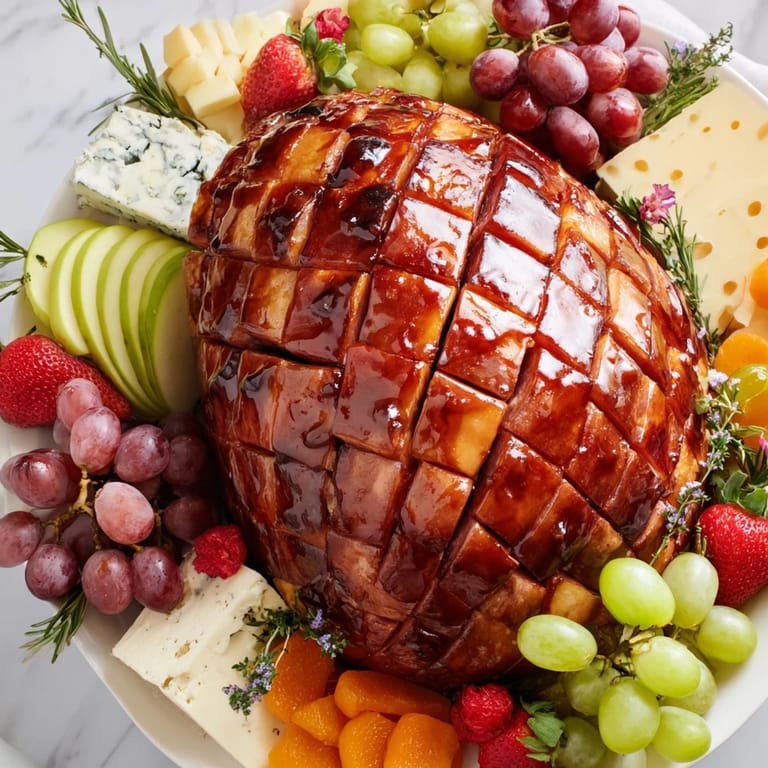
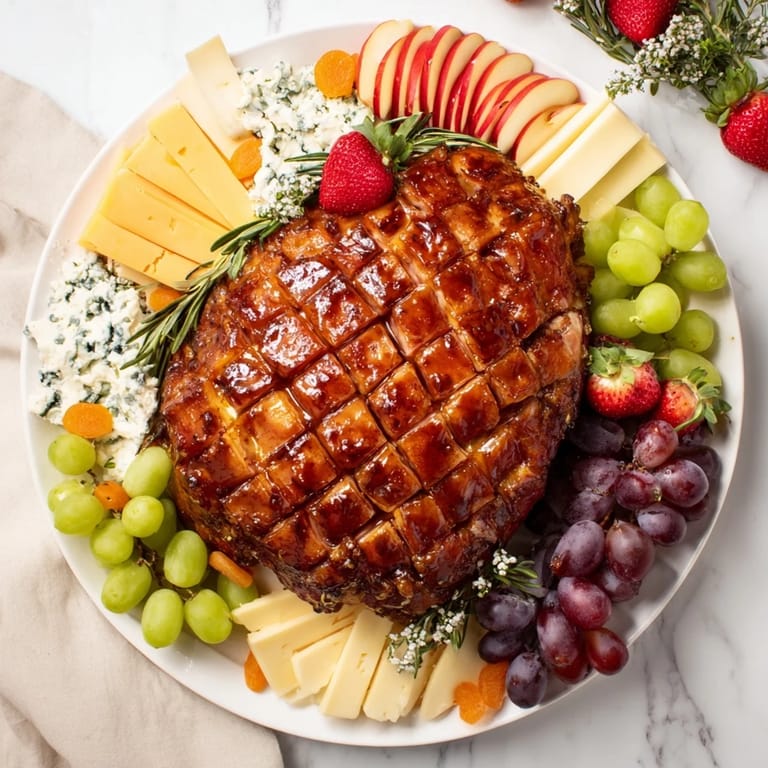
- Preheat your oven to 350°F. Remove the ham from its packaging and pat it dry with paper towels—this helps the glaze stick. Place it in a roasting pan, and using a sharp knife, score the surface in a diagonal diamond pattern, cutting maybe 1/4 inch deep. This creates more surface for the glaze to caramelize and makes it look intentional and beautiful.
- Glaze and roast:
- Brush the ham generously with your glaze, working it into those scored lines. Roast for 1 to 1.5 hours, basting with more glaze every 20 minutes. The ham should look increasingly dark and caramelized as it cooks. You'll know it's done when it's heated through and the edges are deeply brown and sticky. This is the moment when your kitchen fills with the smell that says 'something special is happening.'
- Rest the ham:
- Remove it from the oven and let it rest for 15 minutes before you touch it. This is non-negotiable—it keeps the meat tender. You can use this time to arrange your board.
- Build your canvas:
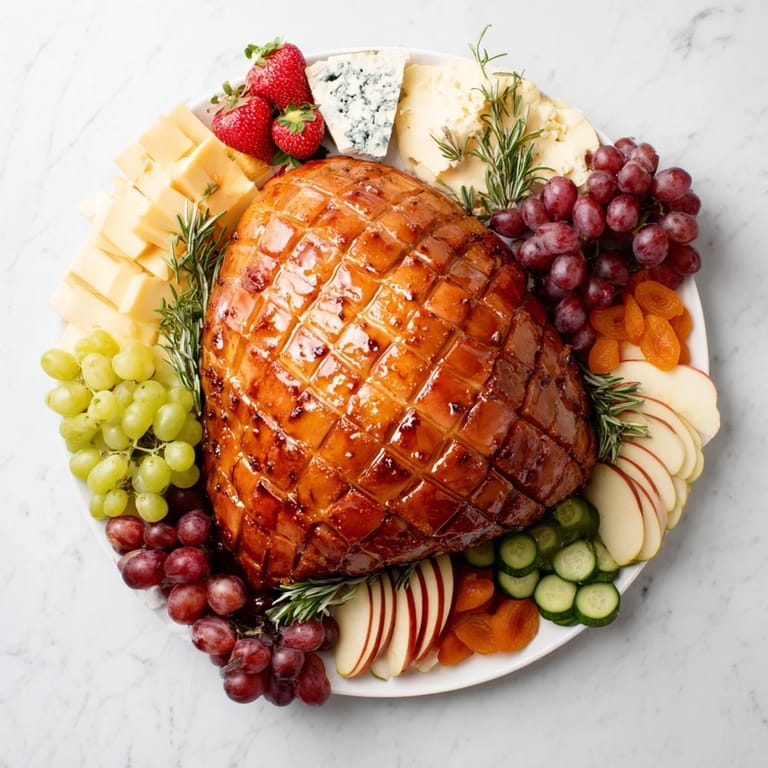
- Use a large board or platter—you want generosity, not crowding. If your ham is whole, place it in the center. If you're slicing it or shaping it into roses (which I've learned takes practice but looks stunning), arrange those slices or roses in the middle as your anchor point.
- Arrange with intention:
- Think of your board like a color wheel. Arrange similar items together—all the red fruits on one side, cheeses clustered nearby, breads in another section—but let them flow naturally, not too rigidly. Leave small gaps where you'll add your jams and mustards. Step back occasionally and look at the balance. You're aiming for something that looks abundant but not chaotic.
- Add the finer touches:
- Drizzle fig jam in a few strategic spots. Add little piles of mustard, olives, nuts, and pickles in the gaps. Scatter fresh rosemary and thyme sprigs across the top like you're being generous but careful. These final touches are what transform it from nice to 'did you go to culinary school?'
- Serve with confidence:
- Bring it to the table while the ham is still warm. Stand back and watch people's faces. This is your moment.
 Save
Save Years later, a friend told me that the first thing she noticed when she walked into a party wasn't the decorations or the music—it was that glazed ham board. She said it made her feel welcome before anyone even handed her a plate. That's when I understood that this recipe is really about generosity and love made visible.
The Art of Presentation
There's something about arranging food on a board that feels both creative and grounding. I've learned that the golden rule is contrast—dark cheeses next to bright fruits, soft textures beside crisp crackers. Your eye should be able to travel across the board and find something different every few inches. Don't fuss too much about symmetry; boards look best when they feel natural and inviting, not like they're trying too hard.
Timing and Preparation
The beauty of this board is that you can do most of the work ahead. The glaze can be made hours in advance and gently reheated. The ham can be roasted the morning of and eaten at room temperature or quickly reheated. The day before your gathering, you can cut your cheeses and store them properly, prep your fruits (keeping the apple slices separate until the last minute), and arrange your crackers and breads in containers. When your guests arrive, you're just assembling, not panicking. I've found that this approach lets me actually enjoy the time with people instead of sweating in the kitchen.
Wine and Serving Suggestions
Serve this board with sparkling wine if you want to feel celebratory, a dry cider if you want something that complements the ham's sweetness without overpowering it, or a light-bodied red wine like Pinot Noir if you're leaning into the richness. I've also learned that having good water available matters more than people think—it's the quiet hero of any gathering. Set out small plates and napkins, but expect people to eat standing up, hands full of ham and cheese, completely happy.
- If you want to go ahead and make this a full brunch, add some deviled eggs or pickled vegetables to fill in any gaps on the board
- Prepare the glaze in advance and store it in the fridge—you can gently reheat it before basting
- If any of your ingredients are left over, you have the best problem: a well-stocked fridge and leftovers that taste just as good tomorrow
 Save
Save This board is my answer to the question 'how do I entertain without losing my mind?' It's generous without being complicated, and it always feels like the meal of the moment.
Recipe Q&A
- → How is the glazed ham prepared for the board?
The ham is scored and roasted with a sweet glaze made from brown sugar, honey, Dijon mustard, apple cider vinegar, and cloves, then rested before slicing or shaping.
- → What types of cheeses complement the ham on this board?
Aged cheddar, brie, blue cheese, and gouda offer a balanced variety of textures and flavors alongside the ham's sweetness.
- → Which fruits are used to enhance the board’s flavor and appearance?
Red and green grapes, fresh strawberries, apples, and cherry tomatoes add freshness and vibrant color to the display.
- → Can this board be adapted for dietary preferences?
Yes, turkey ham can be substituted for a pork-free option and additional elements like deviled eggs or pickled vegetables can be added for variety.
- → What accompaniments are suggested for serving with this board?
Whole grain mustard, fig jam, mixed olives, cornichons, roasted nuts, and fresh herbs enhance the flavors and texture contrasts.