 Save
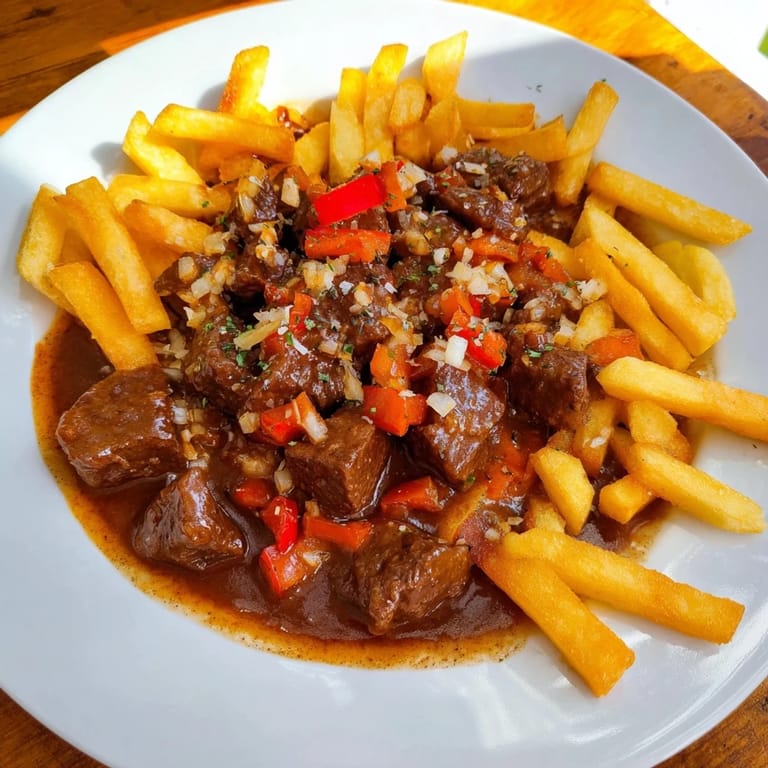
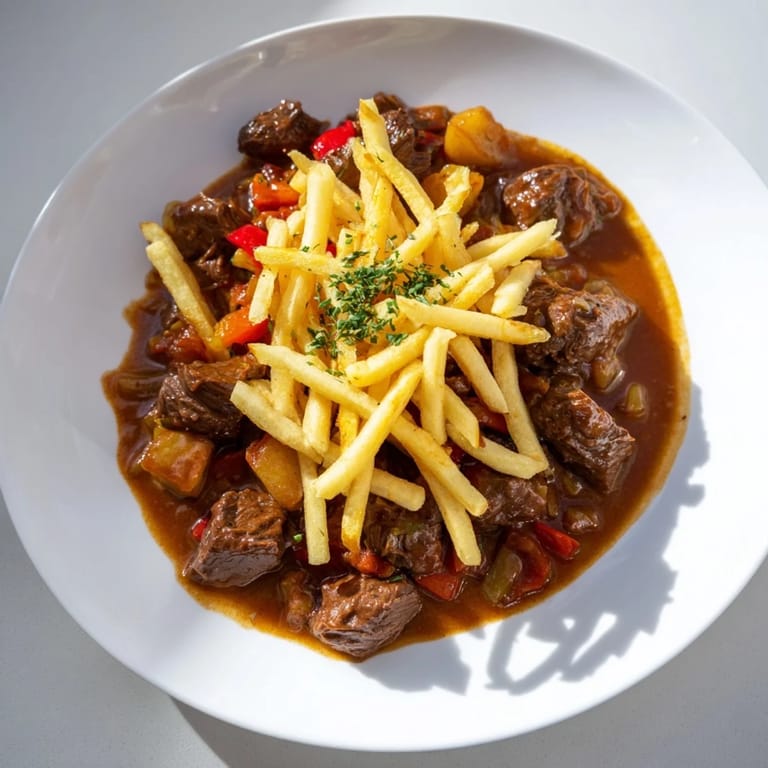
Save The first time I made Czech goulash, I wasn't trying to be authentic—I was just hungry and desperate to recreate what a friend had served me on a cold Prague evening. What emerged from my pot that night wasn't fancy, but it was honest: deep mahogany meat so tender it fell apart, swimming in a sauce that tasted like paprika smoke and time. The potato strips came later, almost by accident, when I realized I had potatoes left over and a pan that needed purpose. That crispy contrast changed everything.
I cooked this for my partner on a rainy Sunday, and he took one bite and went quiet in that specific way that means the food is doing its job. We sat at the kitchen counter with bowls getting cold because we kept talking, reaching for another forkful, the paprika staining everything. That's when I knew this recipe wasn't just sustenance—it was the kind of thing that makes someone feel looked after.
Ingredients
- Beef chuck, cut into 2.5 cm cubes: This cut has enough marbling to stay tender through two hours of simmering without turning to mush; buy it in one piece and cut it yourself if you can, the knife work takes two minutes and the flavor difference is real.
- Sweet Hungarian paprika: Don't use the generic stuff; find real Hungarian paprika—it's floral and deep, not just red powder, and it's the reason this tastes like goulash instead of beef stew with attitude.
- Caraway seeds: Half a teaspoon feels tiny, but these little seeds carry the whole Czech soul of the dish—slightly sweet, slightly rye bread, slightly mysterious.
- Beef broth: Use real stock if you have time, or good quality broth in a carton; the goulash will taste like what you put in.
- Potatoes for frying: Waxy potatoes hold their shape better than starchy ones, but honestly, whatever you have will work if you dry them properly—moisture is the enemy of crispiness.
- Tomato paste: Just a spoonful, enough to deepen the color and add a gentle tang; too much turns this into something else entirely.
Tired of Takeout? 🥡
Get 10 meals you can make faster than delivery arrives. Seriously.
One email. No spam. Unsubscribe anytime.
Instructions
- Start with the onions and patience:
- Heat the oil in your heavy pot and let the onions go golden and soft, not rushed—this takes about eight minutes and you'll smell them before they're ready. The golden color means the sugars have caramelized and you're building flavor, not just cooking vegetables.
- Wake up the spices:
- Stir in the garlic, caraway seeds, and paprika and let them bloom for exactly one minute, stirring so the paprika doesn't scorch and taste bitter. You'll smell the shift—the spices go from raw to aromatic, and that's your signal to move forward.
- Brown the meat properly:
- Add the beef and don't touch it for the first couple minutes; let the heat do its job and create a dark crust. This takes about five minutes total, and you need that browning for depth of flavor.
- Build the sauce:
- Add the tomato paste, herbs, salt, pepper, and bay leaf, then dust everything with flour and stir until the meat is coated. The flour will thicken the sauce as it cooks and won't taste raw or floury if you've got heat under the pot.
- Bring it to a simmer:
- Pour in the broth, add the bell pepper, bring everything to a boil, then drop the heat to low, cover, and forget about it for ninety minutes to two hours. Stir every twenty minutes or so, not because it needs it, but to make sure nothing sticks to the bottom and to check that the meat is getting tender.
- Prepare the potatoes while you wait:
- Cut them into thin matchsticks while the goulash cooks—a mandoline is faster, but a sharp knife works fine if you're patient. Rinse them in cold water to remove the starch, then dry them thoroughly with a towel because any dampness will steam instead of fry.
- Fry the strips until golden:
- Heat the oil to 180°C, working in batches so the temperature stays steady, and fry until they're golden and crispy, about three to four minutes per batch. Drain them on paper towels and salt them while they're hot—they'll crisp up more as they cool.
- Finish and serve:
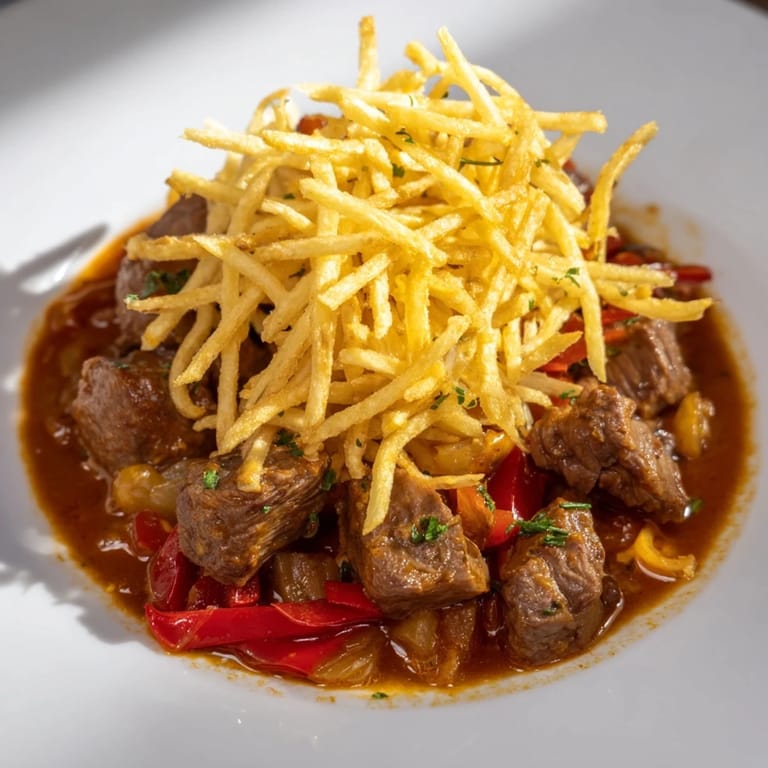
- Fish out the bay leaf from the goulash, taste the sauce, adjust the salt and pepper, then ladle the goulash into bowls and top with a handful of the crispy potato strips. The heat from the goulash keeps the potatoes from softening right away, giving you that crucial moment of contrast.
 Save
Save There's a moment in cooking when you realize something has become more than the sum of its ingredients, when the smells and the patience and the timing converge into something that tastes like care. That's what happens with this goulash, usually somewhere around the ninety-minute mark when the beef is surrendered to tenderness and the paprika has stained everything a deep rust color.
Why This Dish Feels Like Home
Goulash exists in that category of food that doesn't ask for much from you except time and a few good ingredients—it's honest work, not flashy technique. The beauty is in the low and slow cooking, in letting heat and steam do what they're meant to do. It's the kind of dish that fills your kitchen with warmth before it ever reaches the table, and that warmth lingers after you've finished eating.
The Secret of the Potatoes
I used to think the potatoes were optional, a garnish, until someone older than me took a bite and closed their eyes and said, "This is what makes it Czech." The contrast between the soft, spiced meat and the sharp crunch of fried potato isn't accidental—it's been perfected over generations of cooks figuring out that you need both textures to make the dish sing. The potatoes also catch some of the sauce when you're eating, turning golden-brown in spots, and that's where the magic lives.
How to Make This Meal Feel Special
Serve the goulash with a cold dollop of sour cream—not mixed in, just a spoonful on top that melts into the heat—and scatter fresh parsley over everything. A good Czech Pilsner or a light red wine transforms this from dinner into an occasion, even if you're eating alone. The combination of the paprika warmth and the cold beer or the wine's acidity is one of those kitchen discoveries that feels like it should have always been obvious.
- If you want heat, add hot paprika or a pinch of chili flakes, but taste as you go because paprika can surprise you.
- Leftover goulash freezes beautifully for up to three months, though I rarely have leftovers.
- Make the potatoes fresh on the day of serving—they don't stay crispy, but that's not really a problem because you'll eat them immediately anyway.
 Save
Save This goulash is the kind of recipe that teaches you something every time you make it, whether it's about timing or about why your friends keep asking you to cook it again. It's worth making, worth eating slowly, and absolutely worth the two hours it asks of you.
Recipe Q&A
- → What cut of beef is best for this dish?
Beef chuck cut into cubes is ideal as it becomes tender and flavorful after slow cooking.
- → How are the potato strips prepared for crispiness?
They are cut thin, rinsed, dried well, then deep-fried in hot oil until golden and crunchy.
- → Which spices enhance the goulash flavor?
Sweet Hungarian paprika, caraway seeds, marjoram, and garlic create the rich, aromatic sauce.
- → Can this dish be made gluten-free?
Yes, by using gluten-free flour for thickening and checking all ingredients for gluten content.
- → What side or garnish complements this meal?
Fresh parsley and a dollop of sour cream add freshness and richness to the hearty flavors.
- → How long should the beef simmer for best tenderness?
Simmer gently for 1.5 to 2 hours until the beef is very tender and the sauce thickens.