 Save
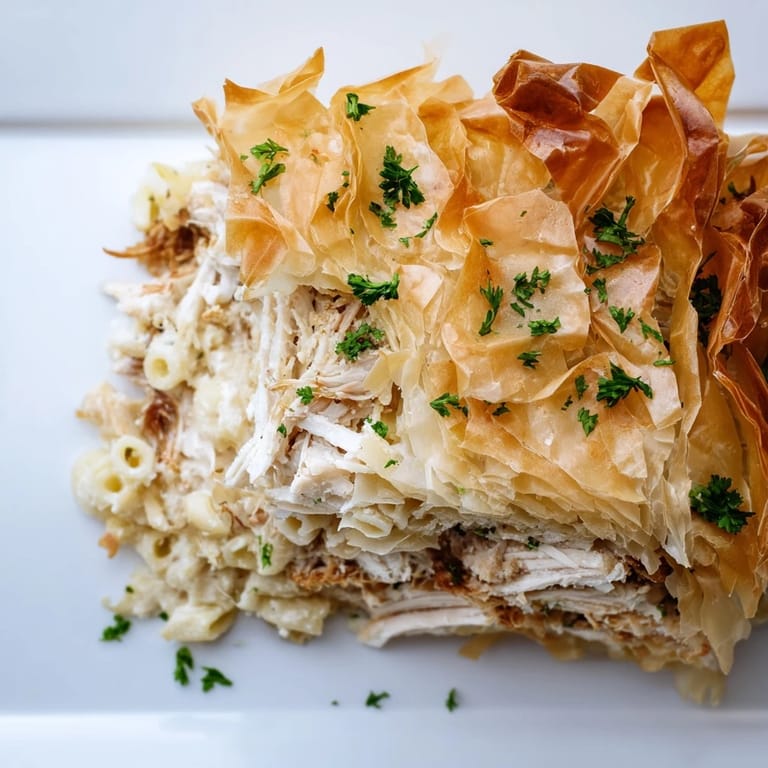
Save The first time I made a phyllo crinkle cake, I was mesmerized by how those crumpled sheets turned golden and shattery in the oven. So when I found myself with leftover shredded chicken and a box of ditalini pasta, I thought: why not bring that same magic to a savory dish? The result was unexpectedly brilliant—layers of buttery, crispy phyllo cradling tender chicken and pasta, all held together by a silky custard that soaks through everything. It's become the kind of recipe I reach for when I want to impress people without spending all day in the kitchen.
I remember my neighbor stopping by while this was baking and the smell pulled her straight into the kitchen. She sat at the counter watching steam rise off it, asking if it was some kind of fancy Italian thing. When I explained it was phyllo and pasta and chicken all married together in a custard, she laughed and said it sounded confused but smelled like confidence. That's exactly what it is.
Ingredients
- Cooked chicken breast, shredded (2 cups): Use rotisserie chicken if you're short on time; it adds a subtle smokiness that's actually better than plain poached chicken.
- Cooked ditalini pasta (1 cup): This small tube pasta catches the custard beautifully and doesn't get lost among the layers.
- Ricotta cheese (1 cup): This is your base note—creamy and mild, it lets the other flavors sing instead of overpowering them.
- Shredded mozzarella cheese (1 cup): It melts into every crevice and gives you those slight strings when you pull a slice apart.
- Grated Parmesan cheese (½ cup): Don't use the pre-grated stuff here; shred a wedge yourself for a sharper, fresher bite.
- Fresh parsley (2 tablespoons, chopped): Adds a bright green note that cuts through the richness—taste the filling before adding it, as parsley's flavor varies by season.
- Garlic powder (1 teaspoon): Keeps things simple and prevents raw garlic pieces from catching when the phyllo crisps.
- Dried oregano (½ teaspoon): The quiet backbone of Italian flavor; don't skip it even though it seems small.
- Salt and black pepper: Season as you taste the filling; the cheeses bring their own saltiness.
- Phyllo dough sheets (16 sheets): Thaw it in the fridge overnight if you can—rushed thawing makes the sheets tear.
- Unsalted butter, melted (½ cup): You'll brush between layers and on top; clarified butter works even better and doesn't brown as easily.
- Eggs, milk, heavy cream (custard): This combination creates a custardy center that won't curdle; the whole milk and cream matter more than you'd think.
Tired of Takeout? 🥡
Get 10 meals you can make faster than delivery arrives. Seriously.
One email. No spam. Unsubscribe anytime.
Instructions
- Set the stage:
- Heat your oven to 375°F and butter your 9x13-inch baking dish thoroughly—those corners tend to catch if you're not careful. Having everything ready before you touch the phyllo makes a real difference.
- Build your filling:
- In a large bowl, combine chicken, pasta, ricotta, mozzarella, Parmesan, parsley, garlic powder, oregano, salt, and pepper. Mix gently until it holds together but doesn't look worked to death. The filling should taste slightly bold since it'll meld with the mild custard later.
- Prepare the phyllo (this is the part that feels fiddly but isn't):
- Unroll your phyllo stack and immediately drape a damp kitchen towel over it—it dries out fast and becomes impossible to work with. Working quickly, take one sheet, lay it flat, brush lightly with melted butter, then gently scrunch it accordion-style into loose, crumpled folds. It should look almost chaotic but still hold together.
- Build the bottom layer:
- Place your first scrunched sheet into the baking dish and position it however feels natural—these don't need to be perfect. Repeat with 7 more sheets, arranging them side by side so they cover the bottom. There should be little gaps and overlaps; that's what creates the crispy texture.
- Spread the filling:
- Spoon the chicken mixture evenly over the phyllo base, pressing it down gently. You want it distributed so every slice gets layers of filling and pasta.
- Top with phyllo (now you're almost done):
- Repeat the scrunching and buttering with the remaining 8 sheets, placing them on top to cover completely. Drizzle any leftover melted butter across the top and tuck some sheets under where needed.
- Make the custard:
- Whisk together eggs, milk, cream, salt, and pepper until smooth. This custard is what transforms everything from a casserole into something more delicate.
- The pour:
- Pour the custard slowly and evenly over the assembled cake, letting it seep down through the phyllo layers. You'll see it soak through; that's exactly what you want.
- Bake until golden:
- Bake for 35–40 minutes until the top is deep golden brown and the phyllo crackles when you move the dish. The custard will set but stay slightly creamy underneath. Let it cool for 10 minutes before slicing—this helps it hold together.
 Save
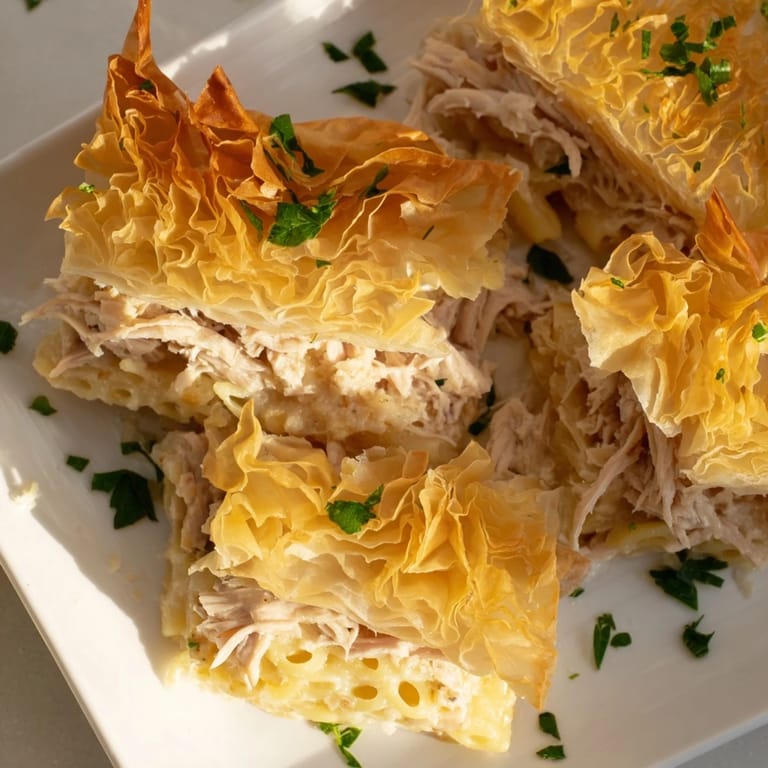
Save What surprised me most was how this dish brought people together in a completely different way than a traditional pasta would. There's something about the layers and the textures that makes everyone slow down and actually taste what they're eating instead of just consuming it.
Why This Works Better Than You'd Expect
The phyllo does something remarkable here: it creates this brittle, shattering surface that contrasts with the creamy filling underneath. Meanwhile, the custard acts almost like an edible glue, binding everything together while adding richness without heaviness. The ditalini pasta is crucial too—those tiny tubes catch and hold sauce in ways that regular shapes can't. It's a dish where every component actually needs to be there.
Variations Worth Trying
Once you've made this once, you'll start seeing it as a canvas. Sautéed mushrooms add an earthy depth that makes the whole thing feel more autumnal. Fresh spinach (squeezed dry) works beautifully and doesn't change the texture at all. A pinch of crushed red pepper brings a warmth that lingers without making anyone cough. Even adding a tablespoon of fresh dill or some sun-dried tomatoes transforms it into something new while keeping the structure exactly the same.
The Serving and Pairing Game
Serve this warm but not steaming hot—it holds together better when it's had a few minutes to settle. A crisp white wine like Sauvignon Blanc or a light Pinot Grigio cuts through the richness beautifully. If you're feeding a crowd, this is the kind of dish that looks impressive plated individually but also holds up well in a casual family-style spread.
- Fresh parsley or basil scattered on top right before serving adds a finish that looks intentional.
- It reheats gently in a 300°F oven for about 15 minutes, and honestly tastes just as good the next day.
- Leftover slices taste great at room temperature too, so don't be surprised if they disappear.
 Save
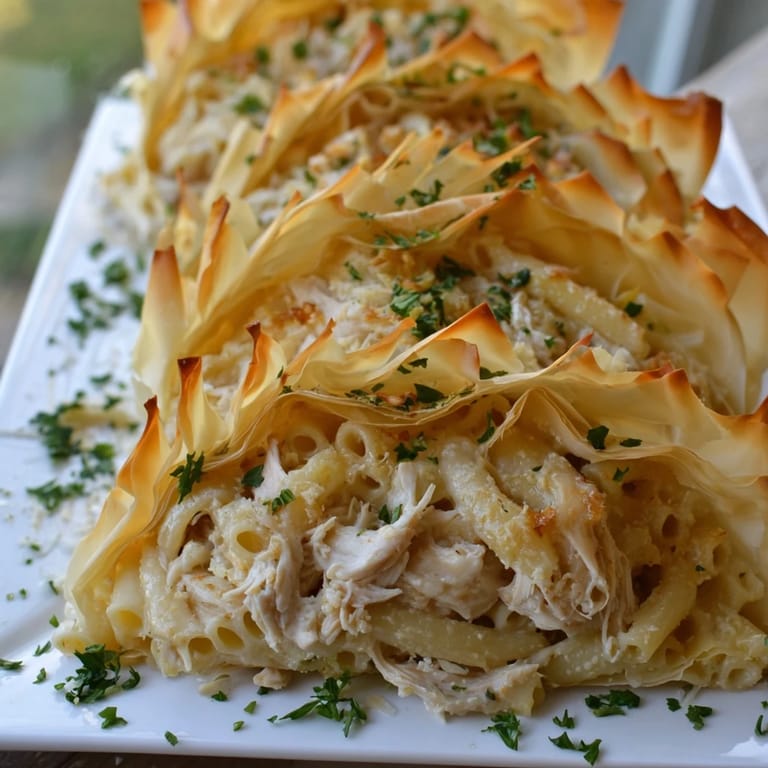
Save This recipe turned into one of those dishes I make when I want to feel like I'm doing something clever in the kitchen without actually spending hours there. It's become a quiet favorite, the kind of thing people ask for by name.
Recipe Q&A
- → What type of pasta works best in this dish?
Ditalini pasta is ideal due to its small, tubular shape, allowing it to blend well with the chicken and cheeses for a uniform filling texture.
- → Can I prepare this dish ahead of time?
Yes, you can assemble it earlier and refrigerate before baking. Bring to room temperature slightly before placing in the oven for best results.
- → How do you prevent phyllo dough from drying out?
Keep phyllo sheets covered with a damp towel while working to maintain moisture and brush each layer with melted butter to ensure crispness and flavor.
- → What herbs enhance the flavor of this crinkle cake?
Fresh parsley, garlic powder, and dried oregano complement the chicken and cheeses, adding aromatic depth to the filling.
- → Can I add vegetables to the filling?
Yes, sautéed mushrooms or spinach are great options to boost flavor and add a nutritious touch without overpowering the main ingredients.