 Save
Save My neighbor stopped by on a particularly gray afternoon, and I had nothing but chicken breasts, vegetables, and broth in my kitchen. Within forty minutes, we were sitting at the table with steaming bowls, and she asked for the recipe before finishing her first spoonful. That's when I realized this soup wasn't just about ingredients—it was about how quickly it transforms a random Tuesday into something warm and welcoming.
I made this soup for my daughter when she was recovering from being under the weather, and she asked for a second bowl before I'd even finished cleaning up. That's when I knew this recipe had earned its place in the regular rotation—it's the kind of dish that feels like a hug in a bowl, simple enough for weeknights but comforting enough for moments that matter.
Ingredients
- Boneless, skinless chicken breasts (2, about 350 g): Diced into bite-sized pieces, they cook quickly and stay tender when you don't overdo the heat—the key is keeping them moist, not rubbery.
- Medium onion (1): Diced fine so it softens completely and becomes almost invisible in the broth, adding sweetness and depth that you taste but don't quite identify.
- Medium carrots (2): Sliced thin enough to cook through in the time it takes the rest of the soup to come together, adding natural sweetness and that essential color.
- Celery stalks (2): Sliced and chopped, they're the quiet backbone of the flavor profile, bringing an almost herbal quality that makes the whole thing feel more sophisticated than it is.
- Garlic cloves (2): Minced fine, they bloom in the hot oil and fill your kitchen with that unmistakable aroma that signals something delicious is happening.
- Low-sodium chicken broth (1.5 liters or 6 cups): The foundation of everything—low-sodium lets you control the salt and lets the other flavors shine without overpowering you.
- Egg noodles (120 g or 4 oz): These absorb the broth beautifully and have a tender texture that works better than other pasta shapes in soup.
- Bay leaf (1): It steeps in the broth and adds a subtle earthiness that you might not consciously notice but would definitely miss if it wasn't there.
- Dried thyme (1/2 teaspoon): A classic pairing with chicken that brings warmth without being assertive—fresh thyme is lovely if you have it, but dried works just as well here.
- Dried parsley (1/2 teaspoon, plus extra for garnish): Stir it in while cooking, then use fresh or extra dried as a garnish for brightness and color.
- Salt and freshly ground black pepper: Always taste as you go near the end—the broth may already have salt, so you're adjusting to your preference, not following a rule.
- Olive oil (2 tablespoons): The starting point for building flavor, heating properly so the vegetables release their sweetness rather than steam.
Tired of Takeout? 🥡
Get 10 meals you can make faster than delivery arrives. Seriously.
One email. No spam. Unsubscribe anytime.
Instructions
- Warm the oil and start the vegetables:
- Pour olive oil into a large pot and let it heat over medium until you can feel the warmth radiating if you hold your hand above it. Add the diced onion, carrots, and celery all at once, stirring so everything gets coated in that hot oil, and let them cook for four to five minutes until the onion turns translucent and the edges of the carrots start to soften.
- Bloom the garlic:
- Stir in the minced garlic and let it cook for just one minute—you want it fragrant but not brown, which would make it bitter. The smell will tell you when it's ready, that sharp garlic perfume filling the kitchen.
- Cook the chicken:
- Add your diced chicken to the pot, stirring constantly for three to four minutes until the outside turns opaque and you don't see any more pink. The pieces don't need to be cooked through yet—they'll finish in the broth.
- Build the broth:
- Pour in the chicken broth slowly, then add the bay leaf, thyme, parsley, and a generous pinch of salt and pepper. Stir well and let everything come to a gentle boil—watch for small bubbles breaking the surface rather than a rolling boil, which would make the chicken tough.
- Let it simmer:
- Once it reaches that gentle boil, reduce the heat to medium-low and let it bubble softly for about ten minutes. This is when the flavors really start to meld together, and if you've got ten minutes, this is the perfect time to set a table or have a cup of tea.
- Add the noodles:
- Stir in the egg noodles and let them simmer for eight to ten minutes, stirring occasionally so they don't clump together at the bottom. They'll soften and swell as they absorb the broth, and the whole pot will smell like Sunday dinner.
- Finish and taste:
- Remove the bay leaf with a spoon, then taste a spoonful of broth carefully. Add more salt, pepper, or even a splash of lemon juice if something feels like it's missing—trust your palate, not the recipe.
- Serve with love:
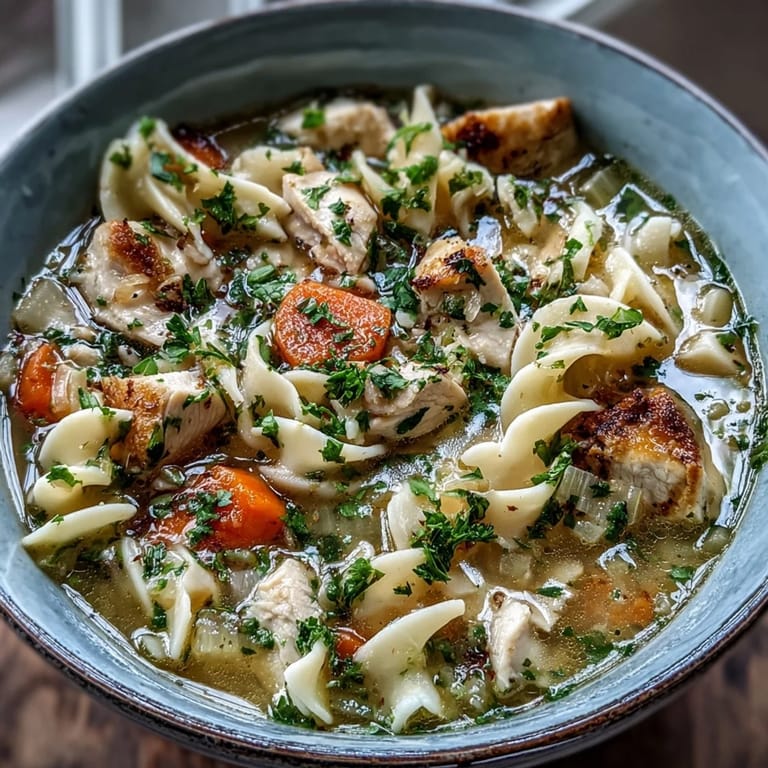
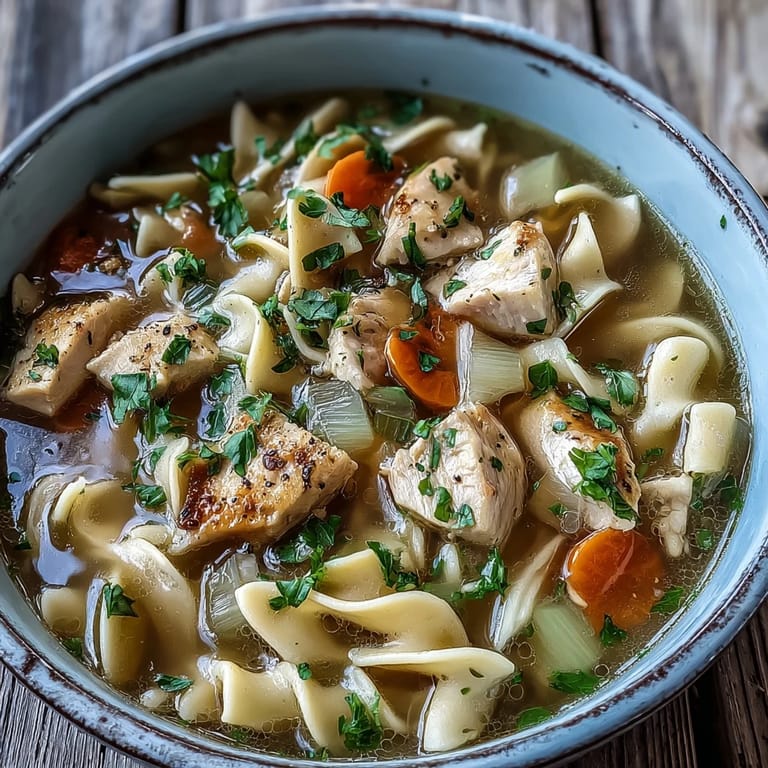
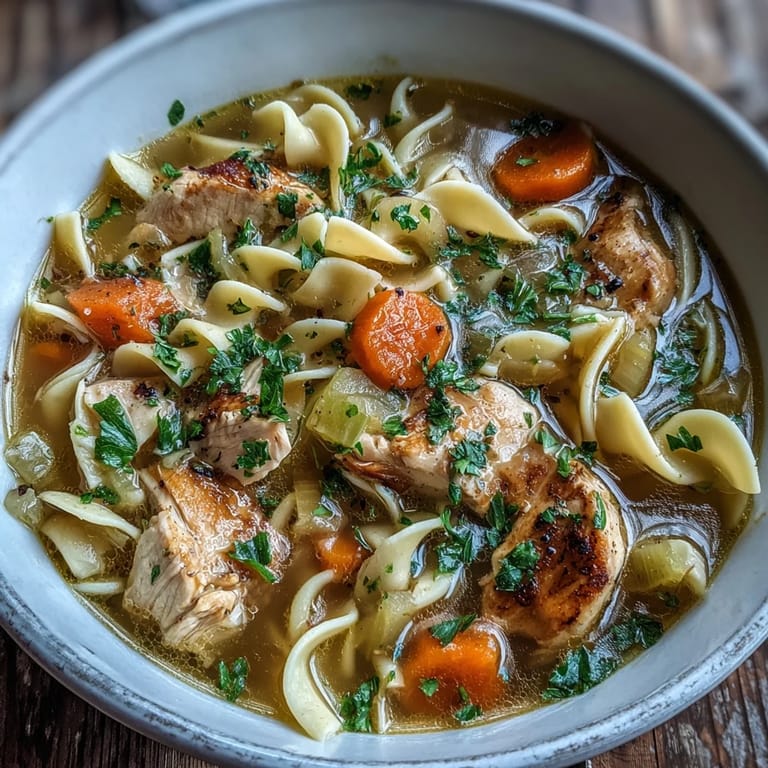
- Ladle the soup into bowls, making sure each one gets a good amount of chicken, vegetables, and noodles, then scatter fresh or dried parsley on top for color and freshness. Serve it immediately with crusty bread alongside.
 Save
Save There's a moment in every pot of this soup, right when the noodles are almost done and the kitchen is filled with steam, where everyone stops what they're doing and asks what smells so good. That's when you know you've made something that matters—not because it's complicated, but because it's honest and nurturing.
Making It Your Own
Once you've made this soup a few times, you start seeing where your own preferences fit. I've added spinach near the end, extra garlic when I'm feeling bold, and even a splash of white wine if I'm in that kind of mood. The beauty is that the foundation is so solid that you can play with it without breaking anything.
Storage and Make-Ahead Magic
This soup keeps beautifully in the refrigerator for three to four days, and the flavors actually deepen as it sits. If you're storing it, I keep the noodles separate and add them when I reheat—this prevents them from getting mushy. You can also freeze the broth and chicken separately before adding noodles, and it thaws without any loss of quality.
Variations and Pairings
The skeleton of this recipe invites so many variations, whether you're adapting for dietary needs or just following what's in your pantry. A splash of lemon juice right before serving brightens everything; gluten-free noodles work perfectly if that's what you need; and bone-in chicken thighs create an even richer broth if you have time to shred them after cooking.
- Pair it with a slice of crusty bread or a light white wine like Sauvignon Blanc for a simple, satisfying meal.
- Leftover soup tastes even better the next day when the flavors have had time to get to know each other.
- If you're feeding a crowd, this recipe doubles easily without any adjustments to technique or timing.
 Save
Save This soup has become my answer to almost every question about comfort—when someone's had a hard day, when the weather turns cold, when you need something that tastes like home. That's the real magic of it.
Recipe Q&A
- → How long does homemade chicken noodle soup take to make?
Total time is 40 minutes with 15 minutes of preparation and 25 minutes of cooking. The chicken simmers in broth for 10 minutes before adding noodles, then cooks an additional 8-10 minutes until everything is tender.
- → Can I use rotisserie chicken instead of raw chicken breasts?
Yes, you can substitute cooked rotisserie chicken. Add shredded chicken during the last 5 minutes of simmering just to heat through, reducing total cooking time significantly.
- → What vegetables go best in chicken noodle soup?
The classic mirepoix combination of onions, carrots, and celery provides the traditional flavor base. You can also add diced potatoes, green beans, or peas for extra vegetables and heartiness.
- → How do I store leftovers and how long do they keep?
Store in an airtight container in the refrigerator for up to 4 days. The noodles may absorb broth as they sit, so you may need to add additional liquid when reheating. Freeze without noodles for up to 3 months.
- → Can I make this gluten-free?
Simply replace the egg noodles with gluten-free pasta or rice. Ensure your chicken broth is certified gluten-free, and your soup will be completely gluten-free and safe for those with sensitivities.