 Save
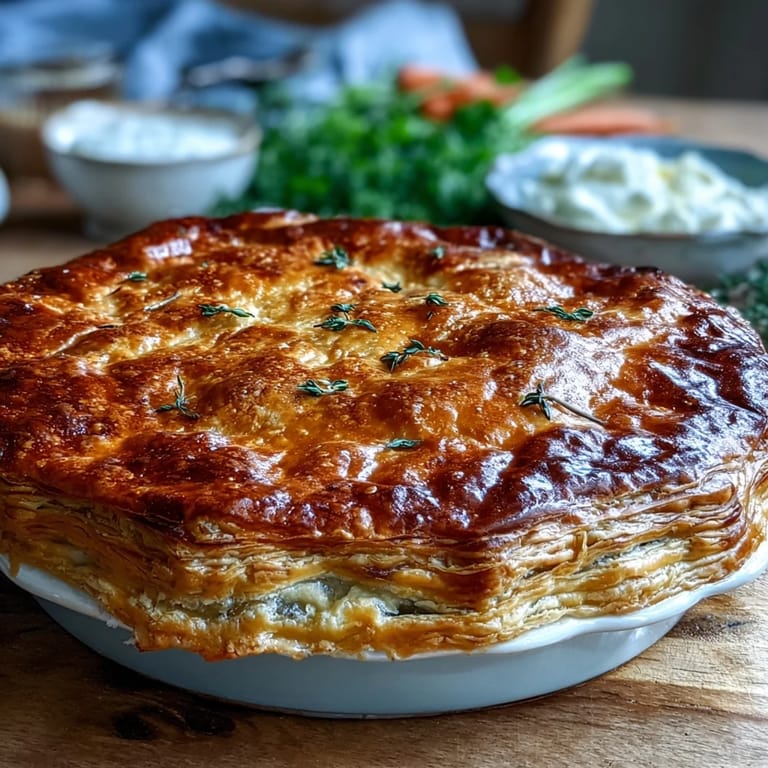
Save There's something about the smell of bacon crisping in a pan that makes you pause mid-morning and think about dinner. My mum used to make chicken and leek pie on grey afternoons when we needed something warm and substantial, and I've spent years trying to understand what made hers taste so effortlessly good. This version builds on that memory—tender chicken thighs instead of breast, smoky bacon woven through a silky cream sauce, leeks that soften into something almost sweet. It's the kind of dish that feels both humble and impressive, which is probably why it's never left my rotation.
I made this for friends on a winter evening when the heating was playing up and everyone arrived looking slightly desperate for comfort. By the time the pastry hit a deep golden brown and we cracked it open—steam rising, that butter-cream smell filling the room—I watched their faces shift from tired to actually present. That's when I knew this recipe was worth keeping close.
Ingredients
- Boneless, skinless chicken thighs (500 g): These hold moisture better than breast meat and have a richer flavor that won't get lost in the cream sauce.
- Smoked bacon lardons (100 g): Render them first to build the flavor base—the fat they release is liquid gold for sautéing the vegetables.
- Leeks (2 large): Split them lengthways and rinse thoroughly between layers where grit hides, then slice into half-centimeter rounds so they soften evenly.
- Carrots and celery (2 medium and 2 stalks): Dice them small so they soften in the same time as the leeks, creating a balanced texture throughout.
- Garlic (2 cloves): Mince it fine and add only after the softer vegetables have had time to break down, or it can turn bitter.
- Unsalted butter and plain flour (50 g and 40 g): Make a true roux by cooking them together for a full minute—this removes the raw flour taste that can lurk otherwise.
- Whole milk and chicken stock (400 ml and 200 ml): Add them gradually while whisking to avoid lumps forming, and watch how the sauce thickens into something glossy.
- Double cream (100 ml): Stir this in after removing from heat so it doesn't break or separate.
- Dijon mustard and fresh thyme (1 tsp each): These don't overpower—they just sharpen the flavors and make people say it tastes like something special.
- Ready-rolled puff pastry (320 g): Keep it cold until the last moment, and don't skip the egg wash—it's what makes the crust actually shine.
Tired of Takeout? 🥡
Get 10 meals you can make faster than delivery arrives. Seriously.
One email. No spam. Unsubscribe anytime.
Instructions
- Heat the oven and start with bacon:
- Set your oven to 200°C (180°C fan) or 400°F. In a large frying pan over medium heat, let the bacon cook until the edges crisp and the fat renders—this takes about 5 minutes and you'll see the color shift. Fish it out with a slotted spoon and let it rest on a plate lined with paper towel.
- Brown the chicken properly:
- Without washing the pan, increase the heat slightly and add the chicken pieces in a single layer. Don't move them around—let each side make contact with the hot pan for 2 to 3 minutes until they're golden, then turn. This takes 5 to 6 minutes total and gives you a deep flavor base that timid cooking can't achieve.
- Build your base with vegetables:
- Add the butter to the pan and let it foam, then stir in the onion, leeks, carrots, and celery. You'll know this is working when the kitchen starts smelling like a proper kitchen and the vegetables begin softening at the edges—about 8 to 10 minutes. Add the garlic in the final minute so it perfumes everything without burning.
- Make the roux:
- Sprinkle the flour over the vegetables and stir constantly for a full minute, letting it coat everything. You're cooking out the raw flour taste and creating the thickening agent that will transform your liquid into sauce.
- Combine milk and stock carefully:
- Pour in the milk and stock gradually while stirring constantly with a whisk or wooden spoon. Watch as it transforms from a thin liquid into something glossy and thick—you want to reach a simmer where it's just gently bubbling and thickened enough to coat the back of a spoon.
- Finish the sauce:
- Remove the pan from heat and stir in the cooked bacon, chicken, double cream, mustard, and thyme. Season generously with salt and pepper—this is where you taste and adjust, and remember that the filling will cool and flavors can dull slightly. Let it sit for 10 minutes so everything melds and the temperature drops.
- Assemble the pie:
- Pour the filling into a 1.5-liter pie dish and let it settle. Unroll the pastry sheet and lay it directly over the top, pressing the edges down around the rim to seal. Trim any excess overhang with a sharp knife and cut 3 or 4 small slits in the top—these vents let steam escape so the pastry doesn't get soggy.
- Apply egg wash and bake:
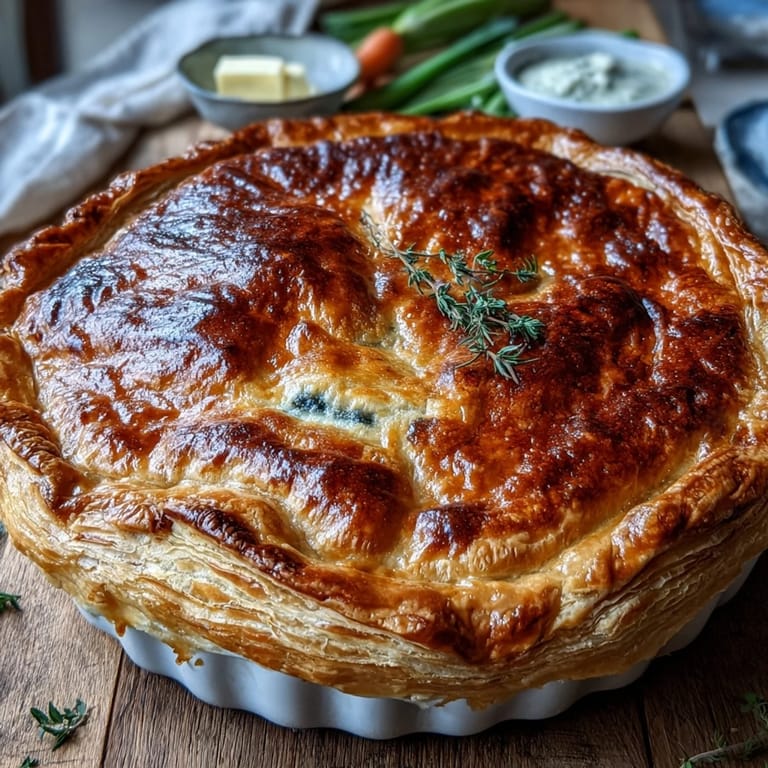
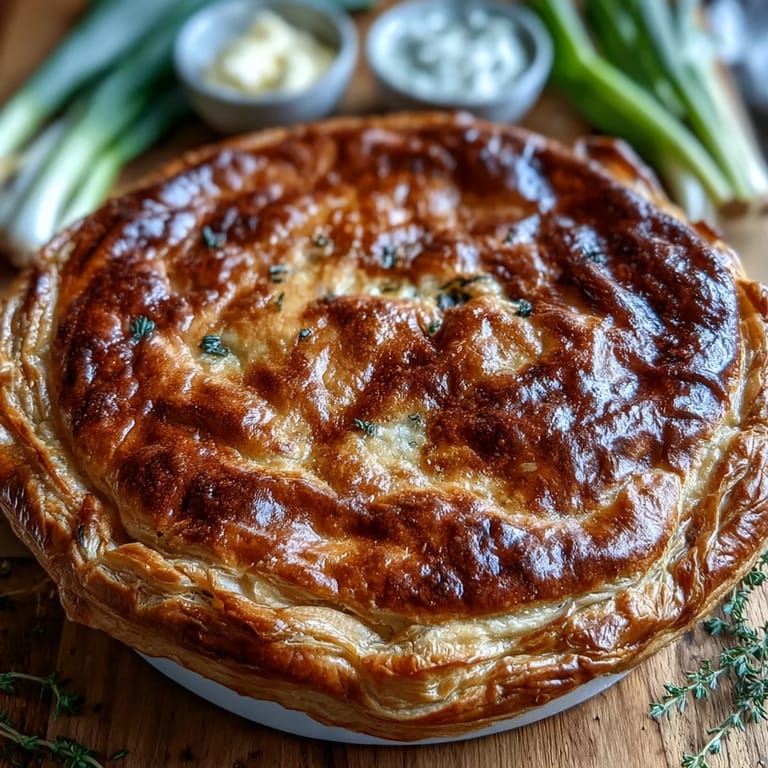
- Brush the pastry generously with beaten egg until it's glossy all over. Slide into the oven for 30 to 35 minutes until the pastry is deep golden and crisp—you want it to actually crackle under your knife. Let it rest for 5 minutes after coming out so the filling sets just enough to serve neatly.
 Save
Save I've served this pie at tables where people were quiet and tired, and watched them come alive at the first bite. There's a confidence in pastry crust and cream sauce that says you care, even when it's genuinely not difficult.
Why Chicken Thighs Actually Matter
For years I used whatever chicken was on sale, and the pie always came out a bit dry. Then someone pointed out that thighs have more fat running through them, which means they stay moist even when overcooked slightly. They also have a deeper, richer flavor that doesn't disappear into cream the way white meat can. Once I made the switch, the pie stopped being something I made out of habit and started being something people genuinely asked for.
Pastry Timing and Temperature
The secret to crisp pastry isn't actually much of a secret—it's cold filling under cold pastry going straight into a hot oven. If you assemble this while everything is still warm, the pastry will soften and steam and never develop that shatter. Letting the filling cool for 10 minutes and keeping your pastry cold right up to baking changes everything. The other thing nobody mentions is that pastry continues to cook a bit after it leaves the oven, so golden is better than pale.
Serving and Variations
This pie is perfect alongside buttery mashed potatoes or a sharp green salad—anything to cut through the richness slightly. You can add frozen peas for color and sweetness, or substitute half the milk with dry white wine if you want something a bit more elegant. For shortcuts, rotisserie chicken works perfectly and saves you browning time, and honestly nobody needs to know you didn't make the pastry.
- A handful of frozen peas stirred in at the end adds brightness without changing the cooking time.
- If your filling seems thin, you can always thicken it further by simmering uncovered for another few minutes.
- Leftovers reheat gently in a low oven so the pastry doesn't dry out.
 Save
Save This is the kind of pie that sits on the table and makes people feel looked after, even when it's just a quiet Wednesday evening. That's worth the 75 minutes it takes to make it.
Recipe Q&A
- → Can I make the filling ahead of time?
Yes, prepare the filling up to 24 hours in advance and store it in the refrigerator. Bring to room temperature before topping with pastry and baking.
- → Can I freeze this pie?
Assemble the complete pie and freeze uncooked for up to 3 months. Bake from frozen, adding 15-20 minutes to the cooking time, or thaw overnight in the refrigerator.
- → What can I use instead of puff pastry?
You can use shortcrust pastry for a more traditional finish, or try a mashed potato topping for a chicken and leek cottage pie variation.
- → Can I use cooked chicken?
Absolutely. Use leftover roast chicken or a rotisserie bird, adding it during step 7 so it heats through without becoming tough.
- → How do I prevent a soggy bottom?
Let the filling cool slightly before adding the pastry, and ensure the oven is fully preheated. You can also brush the pastry base with beaten egg before adding the filling.