 Save
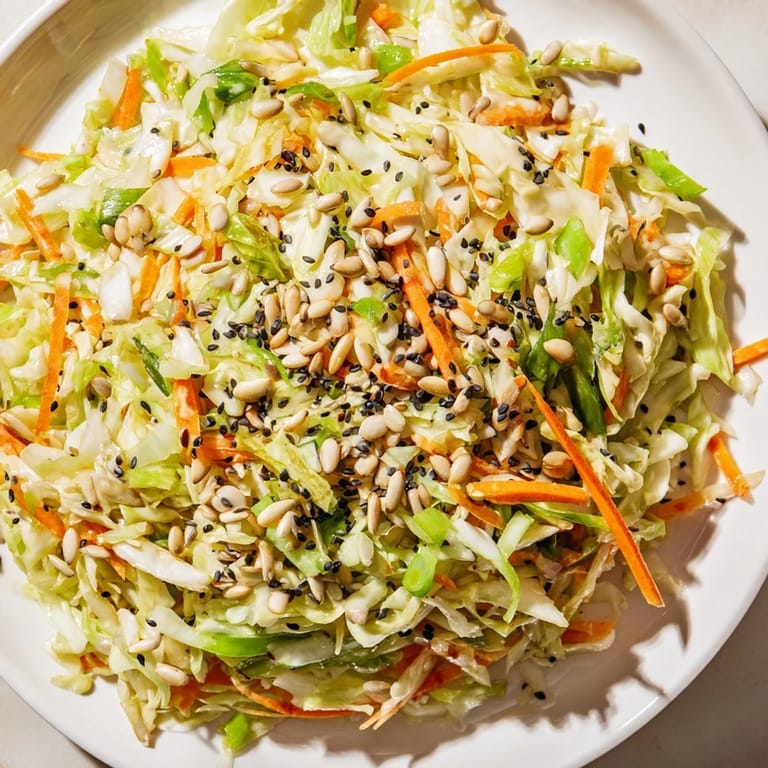
Save I discovered cabbage cores by accident one Tuesday evening when I was too tired to waste anything. My knife had split the head in half, and there it was—that dense, pale center most people toss. One quick taste raw and I was hooked by the crunch. Now when friends ask what makes my slaws different, I just smile and tell them it's all about working with what others overlook.
Last summer I brought this to a potluck where everyone had made the same tired pasta salad. Mine disappeared first, and a neighbor asked if I'd buy jars of it. That moment stuck with me—not because of the compliment, but because I realized I'd found something I could make without thinking that people genuinely wanted to eat.
Ingredients
- Cabbage cores, finely shredded: Two cups might sound like a lot, but these are the sweetest, crunchiest part of the cabbage and they hold their texture longer than leafy parts ever could.
- Green cabbage leaves: Add color variation and a softer texture that balances the dense cores, but don't skip the cores thinking the leaves alone will work.
- Carrot, julienned: The natural sweetness and bright orange cut through the earthiness and add visual pop without overwhelming the dish.
- Green onions, thinly sliced: A whisper of allium sharpness that makes you pause and taste again—use both white and green parts.
- Toasted sesame oil: This is where the magic lives; regular sesame oil tastes flat and thin by comparison, so don't substitute.
- Rice vinegar: Gentler and slightly sweeter than white vinegar, it lets the sesame flavor shine instead of fighting for attention.
- Soy sauce or tamari: A pinch of umami that deepens everything; tamari works for gluten-free and tastes just as good.
- Maple syrup or honey: Just enough to round out the dressing without making it sweet—you're balancing, not transforming.
- Fresh ginger and garlic: Grate them just before mixing so the oils are still alive and the flavors haven't started to fade.
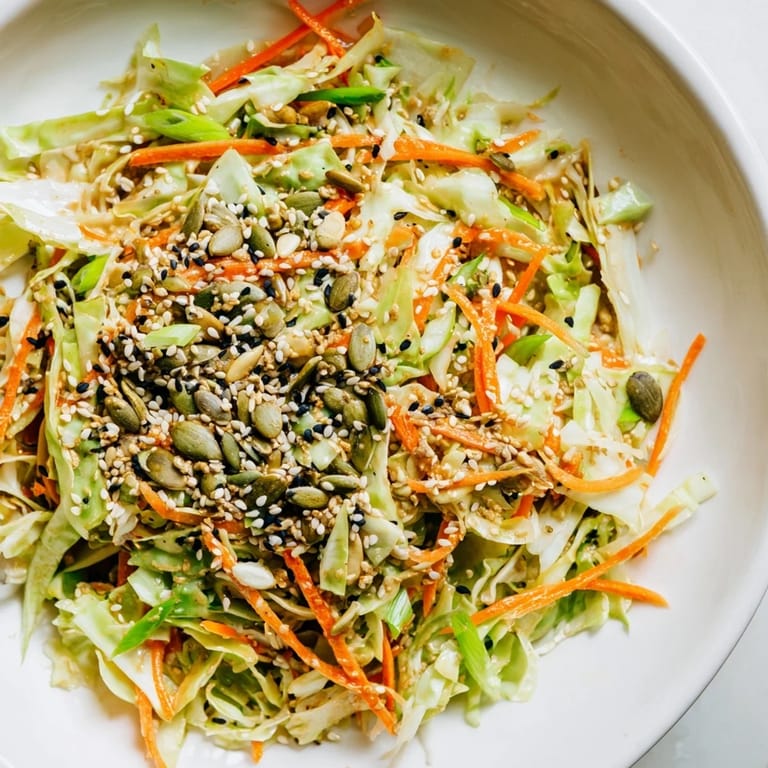
- Toasted sesame seeds, pumpkin seeds, and sunflower seeds: Toast them yourself if you can; they taste warmer and more complex than pre-toasted versions, and the kitchen smells incredible while you're at it.
Tired of Takeout? 🥡
Get 10 meals you can make faster than delivery arrives. Seriously.
One email. No spam. Unsubscribe anytime.
Instructions
- Shred and slice everything:
- Use a sharp knife and let the blade do the work—you want delicate ribbons, not chunky pieces that break your rhythm while eating. A food processor works too, but something gets lost when you can't feel the vegetables respond to your hand.
- Mix the dressing in a small bowl:
- Whisk until the oil and vinegar stop fighting and come together into something glossy and unified. This takes maybe a minute of real attention, not just a stir—you're emulsifying, even if the word feels fancy for a home kitchen.
- Combine vegetables and dressing:
- Pour it over and toss with both hands if you need to, making sure every piece gets coated. The heavier cores will sink, so give it an extra flip or two to get the carrot ribbons in there.
- Add the seeds:
- Save a handful for garnish if you want it to look intentional, then toss the rest through gently so they don't sink to the bottom. They'll absorb a tiny bit of dressing and soften just enough to lose their raw edge.
- Let it rest:
- Ten minutes might feel like nothing, but the flavors marry in that time and the vegetables soften a fraction without losing their snap. Taste before serving and adjust the vinegar or salt if your instinct tells you to.
 Save
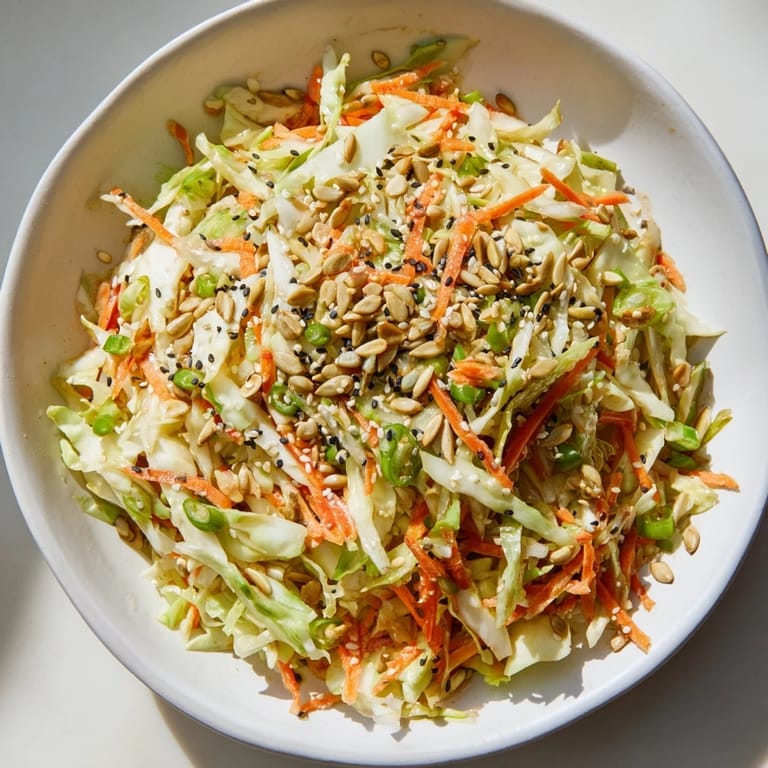
Save My partner brought this to a work lunch during a rough week and came home saying coworkers had asked for the recipe. Something about how simple it looked but how it actually tasted made people slow down and eat mindfully, which was never what I'd set out to do—I was just making lunch. But that's when I understood this salad had become more than vegetables.
Making It Your Own
The frame of this recipe stays the same, but the details bend to what you have and what you're in the mood for. I've made it with purple cabbage when I wanted drama, and with diced apples mixed in during fall when the sweetness felt right. Red chili oil turns it into something you want with grilled fish, while fresh mint makes it feel lighter than air on a summer evening.
Why Cabbage Cores Matter
Most people discard them out of habit, not because they're genuinely bad—they're just harder to slice quickly when you're in a rush. But if you slow down with them, you'll find they have more flavor and texture than the leaves, a subtle sweetness that only shows up when you're paying attention. The fiber content is higher too, which means this salad actually nourishes you instead of just tasting like it does.
Serving and Storage Ideas
Eat it right away for maximum crunch, or let it sit covered in the refrigerator for a day or two while the flavors deepen and soften into something almost pickled. It tastes different at each stage and neither version is wrong—it depends on whether you want snap or mellowness. It travels well in a container if you pack the seeds separately and add them just before eating, which makes it perfect for lunch boxes and picnics where you don't want everything to get soggy.
- If you're meal prepping, make the slaw the night before and add the seeds just before serving so they stay crispy.
- Any leftover keeps for three days in the fridge, though it gradually goes softer and more tender, which some people prefer to the first-night crunch.
- Double the recipe without hesitation—it never lasts as long as you think it will, and leftovers taste even better cold straight from the fridge the next morning.
 Save
Save This salad has become my answer to the question of what to make when I want something that feels nourishing without effort. It's taught me that the best dishes are often the simplest ones, built on respect for good ingredients and a willingness to notice what everyone else overlooks.
Recipe Q&A
- → What is the best way to shred cabbage cores?
Use a sharp chefs knife to finely slice the cabbage cores into thin strips, ensuring even texture and crunch.
- → Can I adjust the dressing for different flavor profiles?
Yes, swap maple syrup for honey or add chili oil for heat to customize the nutty sesame dressing to your taste.
- → How do toasted seeds enhance the salad?
Toasted sesame, pumpkin, and sunflower seeds add a crunchy texture and rich, nutty flavors that complement the fresh vegetables.
- → Is it necessary to let the slaw sit before serving?
Allowing the salad to rest for 10 minutes helps the dressing meld with the vegetables, enhancing overall flavor and texture.
- → Can this salad be adapted for soy or seed allergies?
Substitute soy sauce with coconut aminos and omit or replace seeds to accommodate allergies without sacrificing flavor.