 Save
Save There's something about building a charcuterie board at dusk that feels like you're creating edible art without trying. I discovered this particular combination on a quiet evening when my neighbor brought over a wedge of aged Manchego and suddenly the meats I'd been saving for a simple dinner transformed into something entirely different—not through effort, but through the simple act of arranging them with intention.
I made this for a small dinner party where everyone arrived simultaneously and I suddenly realized I'd forgotten the main course. Rather than panic, I pulled out what I had and arranged it with extra care—the rusticity of the board became the entire evening, and honestly, nobody missed anything else.
Ingredients
- Smoked beef, 120g: Sliced thickly or torn by hand to emphasize its rustic nature; the smoke adds depth that balances the delicate cheeses.
- Rustic country ham, 120g: Rough chop it to show its character—those jagged edges catch light beautifully on the board.
- Smoked sausage, 120g: Cut into thick rounds or wedges so each piece feels substantial and intentional.
- Parmigiano Reggiano, 60g: Use a cheese plane or vegetable peeler to create translucent shards that look more refined than slices.
- Aged Manchego, 60g: This one shaves like butter once it's properly cold; the pale gold ribbons add visual warmth.
- Gruyère, 60g: Slightly nuttier shavings that echo the toasted notes of the smoked meats.
- Cornichons, 1 small handful: Their tart snap cuts through the richness like a palate cleanser built into the board.
- Red onion, 1 small: Sliced thin so you get that sharp bite without overwhelming; it adds a unexpected pop of color.
- Grainy mustard, 2 tbsp: Dollop it casually—it's your flavor punctuation.
- Fresh thyme or rosemary: Not just garnish; the aroma signals that something special is happening on that board.
- Rustic country loaf or baguette, optional: If you're using bread, let it sit out for an hour so it firms up rather than surrendering when guests load it down.
Tired of Takeout? 🥡
Get 10 meals you can make faster than delivery arrives. Seriously.
One email. No spam. Unsubscribe anytime.
Instructions
- Start with the meats:
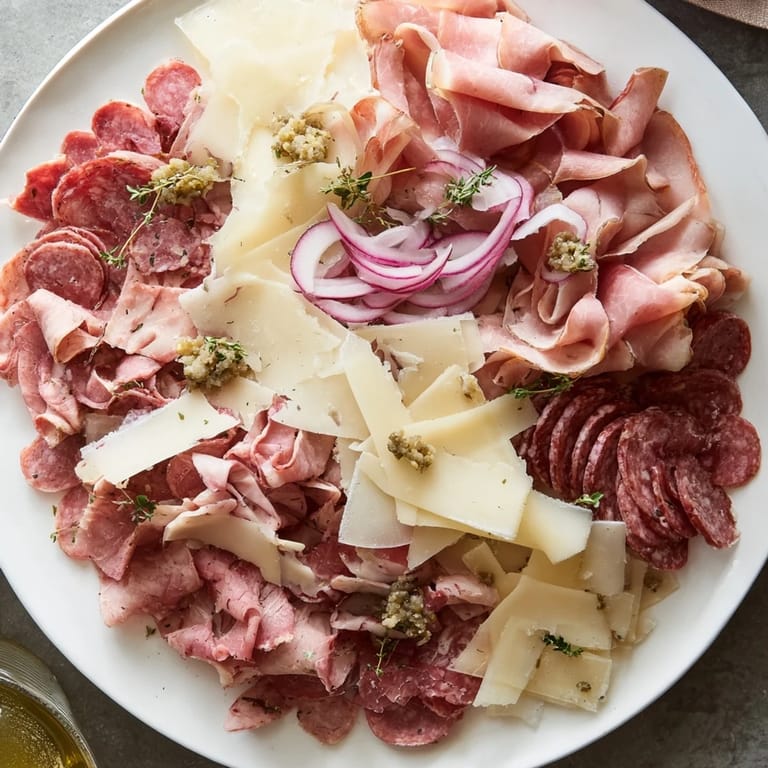
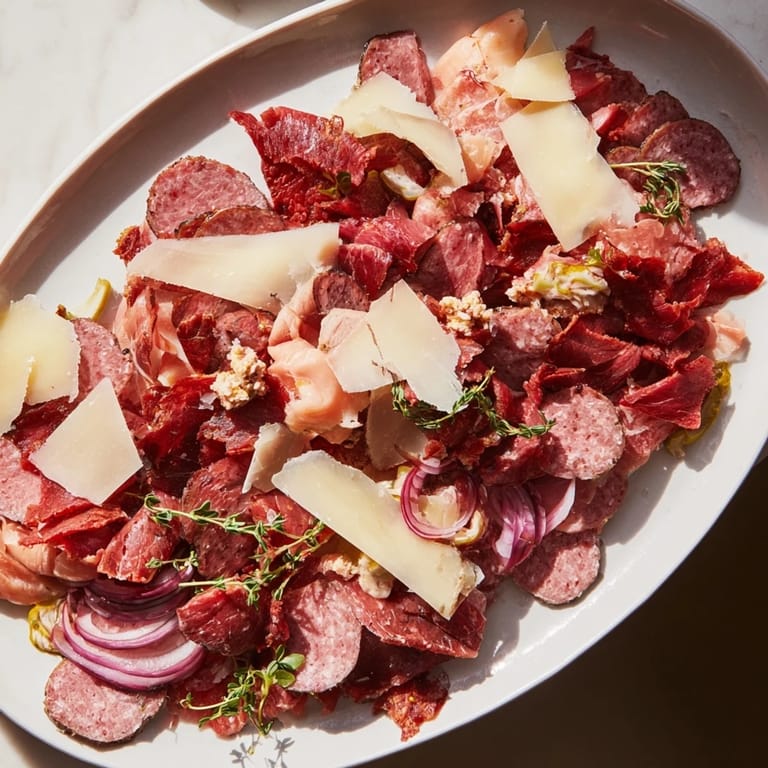
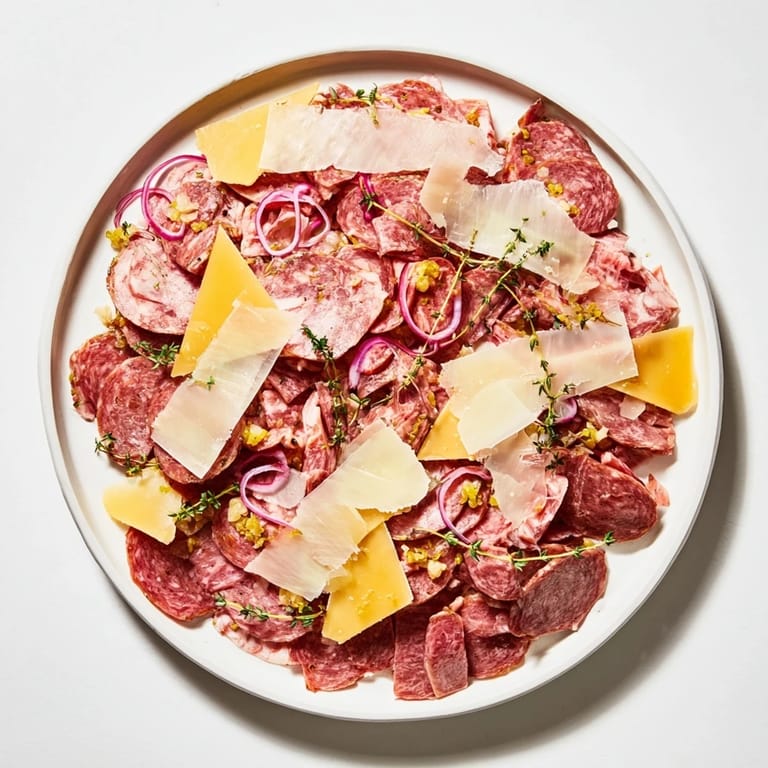
- Arrange them in overlapping layers or casual mounds across your wooden board—think less symmetrical, more intentional. The thick cuts and rough tears create shadow and texture that a uniform arrangement never achieves.
- Create cheese ribbons:
- If your cheese is cold from the fridge, it'll shave cleanly into those translucent ribbons. Drape them artfully over and alongside the meats, letting them catch light as they fall. This contrast between rough meat and delicate cheese is the whole visual story.
- Add the supporting players:
- Scatter cornichons and thin red onion slices around empty spaces, then add small dollops of mustard where they'll draw the eye. These aren't afterthoughts—they're flavor stops that make people keep tasting.
- Finish with fragrance:
- Tuck fresh thyme or rosemary sprigs around the board so their aroma rises as people lean in. Serve immediately while everything is at its best.
 Save
Save Someone once told me that sharing food this way—where you're inviting people to graze and discover rather than serve in order—creates a different kind of conversation. I've seen it happen every time; the board becomes less about hunger and more about exploring flavors together.
The Art of Arrangement
The board doesn't need perfect balance—in fact, asymmetry is more inviting. Start with the weightier meats anchoring one side, then let the cheese shavings and lighter elements drift across the board like they happened naturally. Leave small empty pockets for eyes to rest, and let colors play against each other. Warm browns and tans against pale cream and gold feels like autumn even in summer.
Cheese Selection and Substitutions
These three cheeses work together because they're all aged and firm enough to shave, but each brings something different—Parmigiano's crystalline crunch, Manchego's subtle sweetness, Gruyère's toasted nuttiness. If you can't find these exact ones, choose any aged, firm cheese that your cheese plane won't crumble into. The rule is texture over flavor; you want ribbons, not fragments.
Pairing and Serving
This board asks for boldness in what you serve alongside it—a full-bodied red wine with tannins that echo the smoke in the meats, or a crisp white with enough minerality to cut through the richness. The bread is optional but useful if guests need something to build on, and fresh fruits like grapes or sliced pear can drift onto the board if you find them.
- Serve at room temperature so flavors aren't muffled by cold.
- Set everything out no more than 30 minutes before guests arrive so meats stay fresh.
- Keep extra napkins close—this is meant to be eaten with your hands.
 Save
Save A great board isn't about fancy ingredients—it's about respect for what's already good, arranged so people want to linger. This one does exactly that.
Recipe Q&A
- → What meats work best for this platter?
Smoked beef, rustic country ham, and smoked sausage provide a hearty yet balanced mix of savory flavors and textures.
- → How should cheeses be prepared for this dish?
Thinly shave firm, aged cheeses like Parmigiano Reggiano, Manchego, and Gruyère to create delicate, translucent ribbons that complement the meats.
- → Can any accompaniments enhance the platter?
Cornichons, sliced red onion, grainy mustard, and fresh herbs add bright, tangy, and aromatic contrasts to the rich meats and cheeses.
- → Is bread necessary for serving?
Bread is optional but recommended; a rustic country loaf or crusty baguette adds a satisfying textural element and rounds out the flavors.
- → What tools aid in assembling this platter?
A sharp chef’s knife for meats, a cheese plane or vegetable peeler for the cheeses, and a large wooden board or platter for arranging are essential.